Cecilia Chamidah Nur
Almost a year after its initial coverage, the fan-developed Super Nintendo Entertainment System (SNES) port of Konami’s seminal Nintendo Entertainment System (NES) classic, Castlevania, by developer Rumbleminze, has seen a significant and highly anticipated update, introducing an optional 16-bit graphical makeover for players. This ambitious enhancement allows users to toggle between the original NES-inspired aesthetic and a newly designed, more detailed 16-bit visual style, bringing a fresh perspective to the iconic horror-action platformer while preserving the integrity of the original experience. The update, recently highlighted by VideoGameEsoterica, showcases the ongoing dedication within the retro gaming community to revitalize and reimagine beloved titles for new generations and platforms.
The Genesis of a Fan Port: Bringing NES Classics to the SNES
The journey of Castlevania to the SNES began as part of a growing trend within the homebrew and ROM hacking communities: the native porting of classic NES titles to the more powerful 16-bit SNES hardware. This movement aims to leverage the SNES’s superior graphical and audio capabilities, along with its enhanced processing power, to offer a refined experience of games originally constrained by the 8-bit architecture. Rumbleminze’s project to bring Castlevania to the SNES was initially announced and covered in July 2025, immediately capturing the attention of retro gaming enthusiasts worldwide.
Castlevania, known in Japan as Akumajō Dracula (Demon Castle Dracula), first terrorized players on the Famicom Disk System in September 1986 before arriving on the NES in North America and Europe in 1987. Developed by Konami, it swiftly established itself as a foundational title in the 2D platformer genre, lauded for its demanding difficulty, precise action, and an unforgettable orchestral-style soundtrack that perfectly complemented its gothic horror theme. Players stepped into the boots of Simon Belmont, a vampire hunter armed with his trusty whip, the "Vampire Killer," embarking on a perilous quest through Dracula’s castle to defeat the resurrected lord of darkness. The game’s innovative level design, iconic enemy roster, and atmospheric presentation cemented its legacy, spawning a franchise that would endure for decades and influence countless action-adventure titles.
Rumbleminze’s initial SNES port was not merely a direct emulation but a meticulous recreation, engineered to run natively on the 16-bit console. This initial release in 2025 was packed with features designed to enhance the player experience while respecting the source material. It offered three distinct challenge levels, catering to a range of player skills from casual fans to seasoned veterans seeking the ultimate test. A robust palette system provided 14 different color options, allowing players to customize the game’s visual presentation to their preference, an early indicator of the developer’s commitment to player choice. Crucially, the port included support for six MSU-1 soundtracks, a significant upgrade that brought CD-quality audio to the game, dramatically enriching the atmospheric score and sound effects beyond what was possible on the NES. Furthermore, the port integrated support for Retro-Bit’s new rumble controller, a peripheral developed in conjunction with the 2025 SNES port of DOOM, offering haptic feedback for a more immersive gameplay experience. Functional enhancements included the ability to throw subweapons using either the A or X buttons and the convenient option to swap between two different subweapons on the fly, streamlining combat and tactical decisions.
The 16-Bit Metamorphosis: A Visual Reimagining
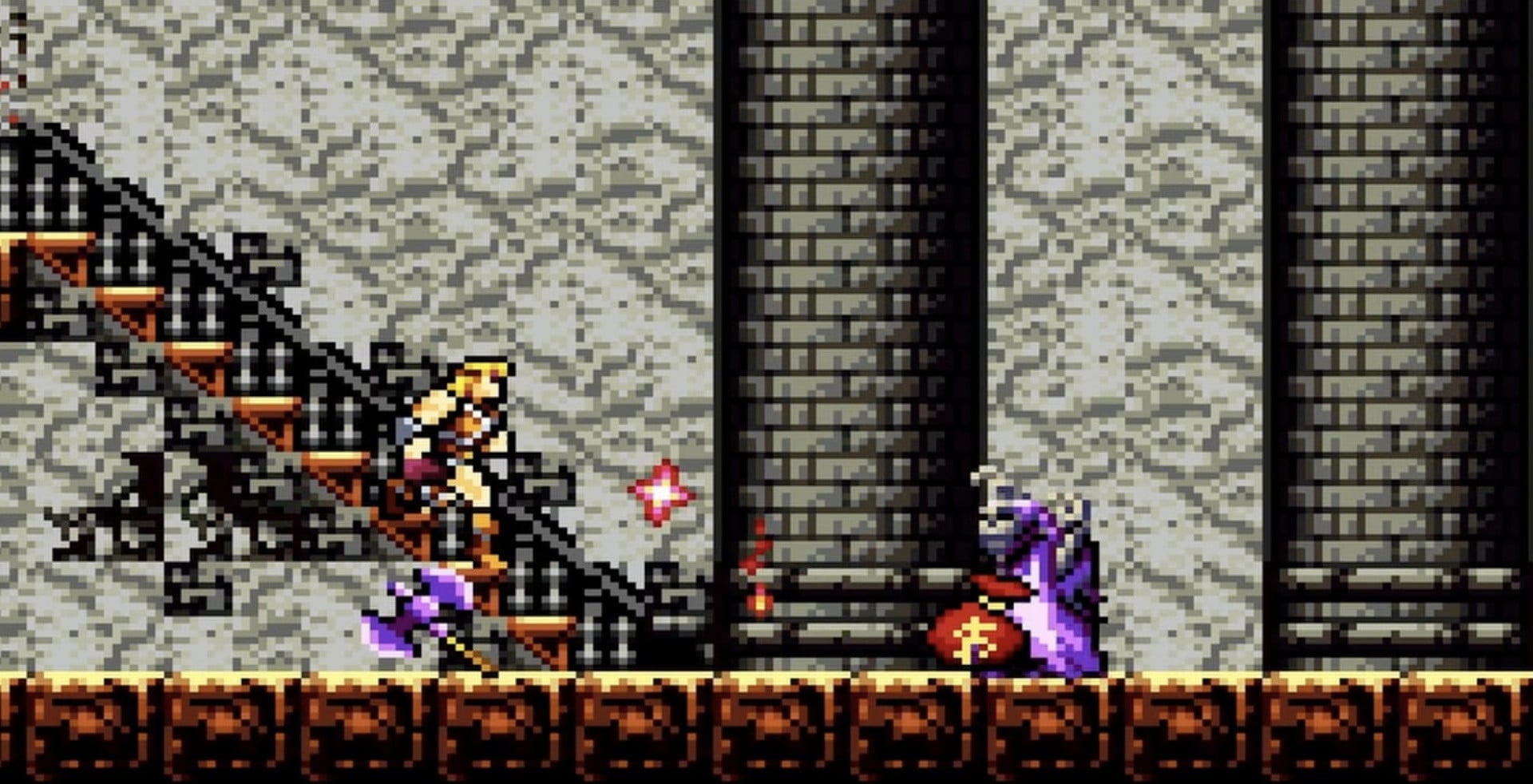
The most recent update, surfacing in mid-July 2026, marks a profound evolution for Rumbleminze’s Castlevania SNES port. Rather than concluding the project, the developer has dedicated the past year to quietly crafting an entirely new SNES build, centered around a toggleable 16-bit graphical makeover. This ambitious undertaking goes beyond simple aesthetic tweaks, representing a significant artistic and technical endeavor to reimagine the NES classic within the visual language of the Super Nintendo.
At the forefront of this visual transformation is the completely redesigned sprite for Simon Belmont. The original NES Simon was characterized by his brown hair, a recognizable but somewhat generic hero sprite of the 8-bit era. The new 16-bit sprite, however, depicts Simon as a blonde, a visual cue that aligns him more closely with his iconic depictions on the cover art of Castlevania II: Simon’s Quest and his appearance as a fighter in Super Smash Bros. Ultimate. This choice is significant, as it taps into a more established and widely recognized visual identity for the character, offering a more robust and detailed interpretation suitable for the SNES’s capabilities. The new sprite is not just a recoloring; it features increased pixel density, more frames of animation, and greater expressiveness, making Simon’s movements and actions feel more fluid and impactful.
Beyond Simon, the graphical overhaul extends to the entire game world. Backgrounds have been meticulously re-rendered with significantly more detail, adding layers of texture, depth, and atmospheric richness that were impossible on the NES. Stone walls now show individual bricks and crumbling mortar, gothic arches boast intricate carvings, and the oppressive gloom of Dracula’s castle feels more palpable with enhanced lighting and shadow effects. Similarly, the diverse roster of enemies, from the lowly zombies and mermen to the menacing bats and Medusa heads, have all received a graphical upgrade. These enhanced sprites feature more colors, greater detail, and smoother animations, making encounters more visually engaging and the adversaries more formidable in their presentation. The aim is to imbue the world of Castlevania with a heightened sense of atmosphere and immersion, allowing players to experience the familiar environments with a newfound visual fidelity.
Player Agency and Community Response
A critical aspect of this 16-bit makeover is its implementation as an optional extra. Rumbleminze has wisely integrated a toggle feature, allowing players to switch between the classic NES-inspired visuals and the new 16-bit aesthetic on the fly. This design choice is a testament to the developer’s understanding of the diverse preferences within the retro gaming community. The question of whether such a change in art style constitutes an "improvement" is often a source of passionate debate among fans of original classics. Purists often prefer the pixel-perfect authenticity of the original, while others welcome modern enhancements that breathe new life into beloved titles. By offering the option to switch instantly, Rumbleminze deftly navigates this potential divide, ensuring that both camps can enjoy the port on their own terms. This flexibility guarantees that the spirit of the original Castlevania remains accessible, while simultaneously offering an exciting, modernized alternative.
The initial reactions from the community have been overwhelmingly positive, particularly regarding the thoughtfulness of the toggle feature. Enthusiasts appreciate the effort to enhance the game without forcing a single artistic vision upon the player base. The blonde Simon sprite, in particular, has sparked discussion, drawing parallels to his later appearances and reinforcing a sense of canonical consistency for the character across the broader Castlevania universe.
For those eager to experience this groundbreaking update, a preview build is currently available for download. It can be accessed through the Discord server of ROM hacker Infidelity, specifically within the section dedicated to Rumbleminze’s latest releases. This method of distribution highlights the collaborative and community-driven nature of the ROM hacking scene, where developers and enthusiasts often share their works in progress and gather feedback directly from the player base.
The Broader Impact: Preservation, Innovation, and Fan-Driven Legacy
Rumbleminze’s Castlevania SNES port, especially with its new 16-bit graphical overhaul, exemplifies several significant trends within the video game landscape. Firstly, it underscores the profound dedication to video game preservation. While official re-releases and emulations exist, fan projects like this go further by not just preserving the original experience but actively enhancing it, adapting it to new hardware capabilities, and introducing features that were once only conceptual dreams. This ensures that classic titles remain relevant and accessible, often introducing them to new generations of players who might otherwise overlook them due to dated aesthetics.
Secondly, the project showcases the power of fan-driven innovation. Without the constraints of commercial deadlines, budget limitations, or corporate approvals, independent developers and ROM hackers often push the boundaries of what is possible with classic hardware. The integration of MSU-1 audio, support for modern rumble controllers, and now a comprehensive 16-bit graphical reimagining demonstrate a level of ambition and technical prowess that frequently surpasses official re-releases, which often prioritize direct ports over creative enhancements. This vibrant ecosystem of amateur development breathes new life into intellectual properties, extending their cultural lifespan far beyond their initial commercial window.
The project also highlights the complex relationship between fan creations and intellectual property. While unofficial, these ports are typically created out of immense respect and passion for the original games. They operate in a legal grey area, but their cultural impact is undeniable, contributing significantly to the ongoing legacy of titles like Castlevania. Konami, the original rights holder, has largely maintained a silent stance on such fan projects, allowing the community to thrive and continue its work, which in turn fosters goodwill and keeps their classic franchises in the public consciousness.
Looking ahead, the success and reception of Rumbleminze’s Castlevania port, particularly with its toggleable 16-bit makeover, may inspire further projects of this nature. It sets a new benchmark for what can be achieved when porting 8-bit classics to 16-bit hardware, prioritizing player choice and visual fidelity without compromising the original’s essence. As the retro gaming community continues to evolve, these fan-led efforts will undoubtedly remain a cornerstone of preservation, innovation, and the enduring celebration of video game history. The ability to revisit Simon Belmont’s inaugural battle against Dracula, now with the option to see it through a 16-bit lens, offers both a nostalgic trip and a fresh adventure for enthusiasts worldwide.