Farhan hamdan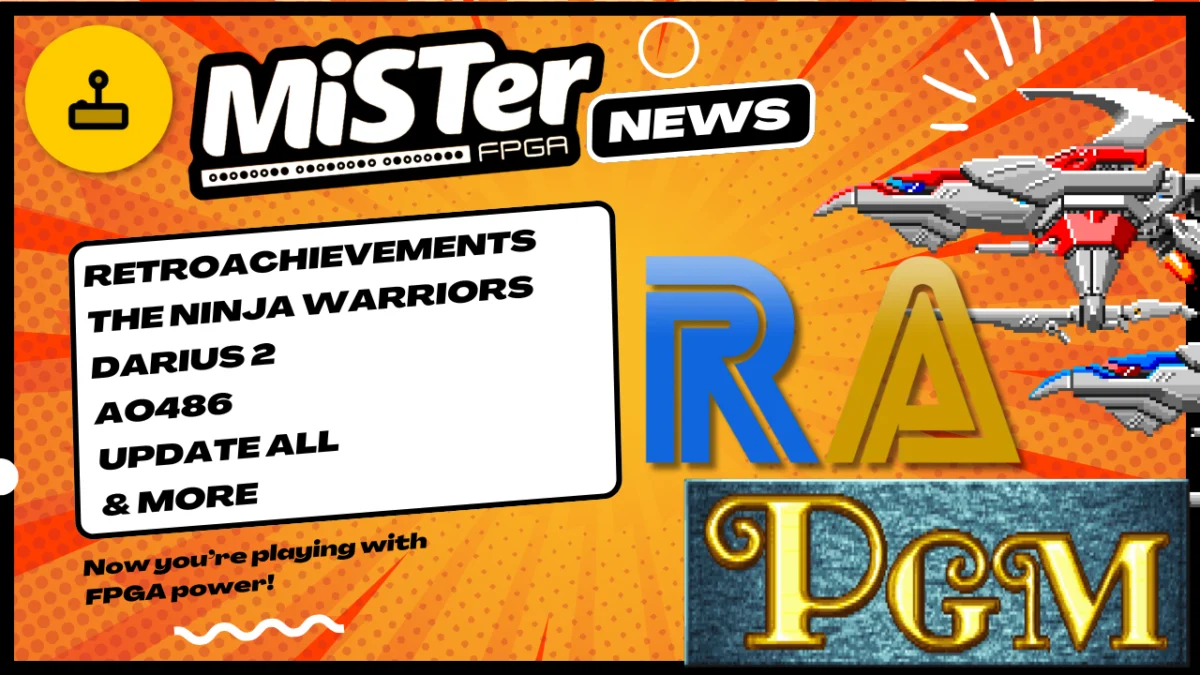
The dynamic world of retro gaming and hardware preservation continues to witness robust growth, particularly within the MiSTer FPGA ecosystem. Recent weeks have brought forth a flurry of updates, spanning from the meticulous development of new arcade and console cores to the enhancement of crucial user-centric tools and platform management utilities. These advancements underscore the MiSTer FPGA project’s commitment to delivering unparalleled accuracy, expandability, and user-friendliness for enthusiasts dedicated to reliving gaming history. The collective efforts of numerous independent developers are progressively solidifying MiSTer’s position as a premier platform for hardware-accurate emulation, pushing the boundaries of what is achievable in digital preservation.
Expanding the Arcade Pantheon: Darius 2, The Ninja Warriors, and IGS PolyGame Master
One of the most anticipated developments is the substantial progress on the Darius 2 core. A revered title in Taito’s iconic side-scrolling shooter series, Darius 2 is particularly notable for its unique triple-screen arcade cabinet configuration, offering an expansive visual experience that challenged the conventions of its era. This core, which also supports The Ninja Warriors – another Taito classic celebrated for its innovative triple-screen setup and compelling beat ’em up action – has seen critical breakthroughs. Developers have confirmed that sprite rendering is now functioning effectively, a significant milestone in replicating the game’s intricate visual presentation. While the core remains a work in progress, with audio implementation and further polish being the next priorities, alongside exhaustive hardware testing across all ROM variants, its imminent arrival in the official MiSTer repository is eagerly awaited by the community. The ongoing dedication to perfecting these cores highlights the rigorous pursuit of authenticity, ensuring that the unique aspects of these arcade behemoths are faithfully recreated. The source code’s availability on GitHub also fosters transparency and community collaboration, hallmarks of the MiSTer project. The successful implementation of these complex multi-screen titles is a testament to the FPGA’s capability to mimic bespoke arcade hardware, a feat often difficult for software-based emulators to achieve with comparable accuracy.
Further enriching MiSTer’s arcade library, Martin Donlon has provided a compelling video update showcasing significant headway on the IGS PolyGame Master (PGM) core. The IGS PGM, an arcade platform developed by International Games System (IGS) in the late 1990s, is celebrated for hosting a variety of popular titles, including the acclaimed Knights of Valour series and Oriental Legend. Donlon’s progress report indicates that several games are now running on the core, marking a crucial step towards full functionality. He expressed confidence in achieving high accuracy for games that do not heavily rely on the ARM processor for core logic, suggesting that a substantial portion of the PGM library could soon become playable on MiSTer. However, Donlon acknowledged that games heavily leveraging the ARM core present a more complex challenge, requiring additional dedicated development effort to ensure faithful replication. This distinction highlights the intricate nature of modern arcade hardware and the specialized expertise required to port such systems to FPGA. The potential addition of the PGM library would open up a new era of arcade gaming for MiSTer users, introducing a diverse collection of fighting games, beat ’em ups, and puzzle titles that have historically been less accessible for accurate home play. The community’s anticipation for this core underscores the platform’s role in preserving a broader spectrum of global arcade history.
Deepening the Console and Arcade Experience: CPS3 and Neo Geo Pocket
The pursuit of replicating sophisticated gaming hardware continues with updates on the CPS3 (Capcom Play System 3) core, spearheaded by the prolific developer Jotego. CPS3, renowned for powering iconic fighting games like Street Fighter III and JoJo’s Bizarre Adventure, represents one of Capcom’s most advanced arcade platforms, posing significant challenges for accurate emulation due to its custom hardware and intricate memory architecture. Jotego’s latest report confirmed that the core’s sound and video modules are now functional, a critical step towards bringing these graphically rich and sonically vibrant titles to MiSTer. Furthermore, the SDRAM memory architecture, a complex component essential for the CPS3’s performance, is also confirmed to be working correctly. At the time of the update, Jotego was on the cusp of achieving the initial boot-up of the CPS3 core, with expectations set for success over the May 1st weekend. This progress signifies a major leap in MiSTer’s capability to accurately emulate late-generation arcade hardware, offering a level of precision that many software emulators struggle to achieve. The implications for fighting game enthusiasts are profound, promising an authentic experience for some of the genre’s most beloved titles.
In parallel, Jotego also provided a brief but welcome update on the Neo Geo Pocket Core, confirming that game saving functionality is now working well. The Neo Geo Pocket, SNK’s venture into the handheld market, is celebrated for its unique joystick, crisp monochrome or color screen, and a library of charming and well-crafted games. The successful implementation of save states is crucial for handheld gaming, ensuring that players can seamlessly pick up and continue their progress in adventure games, RPGs, and other titles that require persistent data. This seemingly minor update significantly enhances the playability and overall user experience for the Neo Geo Pocket library on MiSTer, solidifying its place as a robust platform for portable retro gaming.
Revolutionizing Engagement: RetroAchievements Version 1.0 and OpenBOR
The MiSTer platform continues to evolve not only in terms of hardware emulation but also in enhancing player engagement and community interaction. A significant milestone has been reached with the release of RetroAchievements Version 1.0 for the alternative MiSTer Main build. RetroAchievements is a community-driven initiative that adds unlockable achievements to classic video games, much like modern console trophy systems. By integrating this feature, MiSTer users can now experience their favorite retro titles with an added layer of challenge and replayability, fostering a vibrant community around shared accomplishments. Reaching version 1.0 signifies a mature and stable implementation of this feature, offering a suite of new functionalities designed to enrich the gaming experience. While a separate build of MiSTer Main is required, detailed setup instructions are readily available on GitHub, ensuring accessibility for interested users. The support for RetroAchievements extends to a growing list of special core builds, allowing players to earn achievements across a wide array of arcade, console, and computer platforms. This integration not only breathes new life into classic games but also aligns MiSTer with modern gaming trends, appealing to a broader audience of retro enthusiasts who appreciate meta-gaming challenges.
Further expanding the gaming content available on MiSTer, MiSTer Organize has released a groundbreaking hybrid ARM+FPGA port of OpenBOR. OpenBOR (Open Beats of Rage) is a highly popular, open-source engine that allows creators to develop their own beat ’em up games, often featuring characters and settings from established franchises. This community-driven project has generated a vast library of approximately 300 unique games, known as PAK collections. The significance of this hybrid port lies in its ability to leverage both the ARM processor for complex logic and the FPGA for specific hardware accelerations, offering optimal performance and features. The port boasts several enhancements, including support for multi-monitor setups, various video filters to customize visual output, and the convenience of savestates, allowing players to pause and resume their progress at any point. This development brings an extensive and often overlooked library of fan-made games to the MiSTer platform, providing countless hours of unique retro-inspired entertainment. Installation instructions, like many other community projects, are available on the project’s GitHub page, facilitating easy access for users. The OpenBOR port exemplifies the versatility of the MiSTer architecture, showcasing how it can effectively combine the strengths of both ARM and FPGA to support diverse software ecosystems beyond traditional core emulation.
Streamlining the User Experience: AO486 Tools and Platform Management
Beyond core development, the MiSTer ecosystem continues to refine its tools for enhanced usability and streamlined management. The introduction of zip2vhd-gui, an AO486 Virtual Hard Disk Builder, addresses a specific need for DOS gaming enthusiasts. The AO486 core is MiSTer’s impressive implementation of a 486-era PC, enabling users to run classic DOS games and applications with remarkable accuracy. However, setting up DOS games often involves command-line interfaces and manual configurations, which can be daunting for some users. zip2vhd-gui simplifies this process by allowing users to "consolize" DOS games. This tool automatically creates bootable virtual hard disks (VHDs) with pre-configured settings for automatic game launch and per-game key bindings. The entire operation is performed directly on the MiSTer FPGA, eliminating the need for external tools or complex manual steps. This quality-of-life improvement significantly lowers the barrier to entry for DOS gaming on MiSTer, making it more accessible and enjoyable for a wider audience. Downloads and further information are available via the MiSTer FPGA forum thread and Archive.org, highlighting the community-driven nature of these practical innovations.
Maintaining and updating a complex system like MiSTer FPGA is made significantly easier through dedicated utilities. The release of Update All 2.8 marks another step forward in this crucial aspect of platform management. The "Update All" script is an essential tool for MiSTer users, providing a convenient method to download and install the latest firmware, cores, scripts, and other essential components with minimal effort. Version 2.8 introduces a suite of new features and improvements, further streamlining the update process and enhancing system stability. While specific details of every addition are typically outlined in the accompanying release notes, the general aim is always to improve efficiency, reliability, and user convenience. By simply running the Update All script on their MiSTer FPGA, users can ensure their system remains current with the latest developments, accessing new features and bug fixes as soon as they become available. This continuous refinement of maintenance tools is vital for the long-term health and growth of the MiSTer ecosystem, ensuring that users can easily keep their systems optimized without needing deep technical expertise.
Further enhancing user accessibility and system management, MiSTer Companion v3.7.0 has been released, bringing with it a fresh set of changes and improvements. MiSTer Companion is a lightweight, cross-platform graphical user interface (GUI) utility designed to manage and maintain a MiSTer FPGA system over SSH. It serves as a bridge for users who prefer a visual interface over the command line, simplifying common maintenance tasks such as updating cores, transferring files, or configuring system settings. The latest version, 3.7.0, introduces a series of enhancements aimed at improving stability, adding new functionalities, and refining the overall user experience. This utility is particularly valuable for users who may be less familiar with terminal commands or simply prefer the convenience of a graphical tool. Its cross-platform compatibility ensures that users on Windows, macOS, and Linux can all benefit from its features. The ongoing development of MiSTer Companion underscores a broader commitment within the MiSTer community to make the platform as approachable and user-friendly as possible, lowering the technical barrier for entry and allowing more individuals to enjoy the benefits of FPGA-based retro gaming.
Broader Implications and The Road Ahead for MiSTer FPGA
The recent wave of updates across core development, user experience enhancements, and system management tools collectively paints a vivid picture of a vibrant and rapidly evolving MiSTer FPGA ecosystem. The progress on challenging arcade cores like Darius 2, The Ninja Warriors, IGS PGM, and CPS3 demonstrates the platform’s unwavering dedication to historical accuracy and comprehensive game preservation. These developments are not merely about playing old games; they are about faithfully recreating the intricate hardware of yesteryear, ensuring that future generations can experience these titles as authentically as possible. The inherent advantage of FPGA in replicating original hardware logic, rather than merely simulating it, provides a level of fidelity that often surpasses software emulation.
The integration of features like RetroAchievements elevates the retro gaming experience beyond simple nostalgia, offering modern engagement mechanics that foster community and extend replay value. Similarly, innovative tools such as zip2vhd-gui and the OpenBOR port showcase the versatility of the MiSTer platform, proving it capable of supporting diverse gaming content, from historical PC applications to a vast library of community-created beat ’em ups. These additions broaden MiSTer’s appeal, catering to a wider spectrum of retro gaming interests.
Furthermore, the continuous refinement of platform management utilities like Update All and MiSTer Companion highlights a commitment to user accessibility. By simplifying system maintenance and providing intuitive graphical interfaces, developers are making the powerful capabilities of MiSTer FPGA more approachable for a broader audience, reducing the technical hurdles that might otherwise deter potential users. This focus on user experience is crucial for the platform’s continued growth and adoption.
In conclusion, the MiSTer FPGA project continues to stand as a beacon of innovation in the retro gaming and hardware preservation landscape. The relentless pursuit of accuracy by dedicated developers, coupled with a strong emphasis on user-centric tools and community engagement, ensures its trajectory as a leading platform. As new cores emerge, existing ones mature, and the supporting infrastructure becomes ever more robust, MiSTer FPGA is not just preserving the past; it is actively shaping the future of how we interact with and appreciate gaming history. The collective efforts signify a profound commitment to making an authentic retro gaming experience accessible to all, ensuring that the legacy of classic titles endures with unparalleled fidelity for generations to come.