Cecilia Chamidah Nur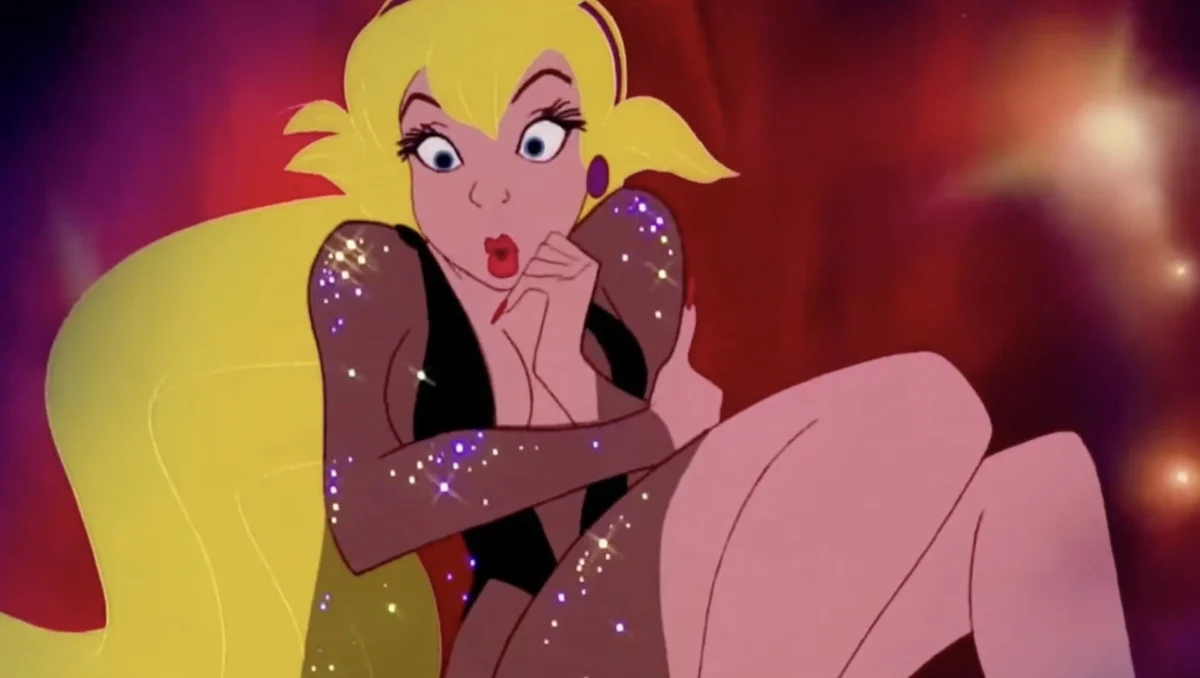
The iconic laserdisc arcade game Dragon’s Lair, a title renowned more for its groundbreaking animation than its interactive gameplay, has been successfully ported to the Sega Dreamcast, marking a significant achievement for the console’s enduring homebrew community. Developer Troy Davis, known in online circles as TroyGPF, has engineered a native Dreamcast port of the game, showcasing remarkable technical prowess and reigniting discussions around video game preservation and intellectual property rights in the retro gaming sphere.
The Genesis of a Classic: Dragon’s Lair’s Enduring Appeal
Released in 1983, Dragon’s Lair fundamentally altered perceptions of what video games could look like. At a time when arcade cabinets predominantly featured pixelated sprites and vector graphics, Dragon’s Lair presented players with fully animated sequences crafted by former Disney animator Don Bluth. This visual fidelity, akin to an interactive cartoon, was unprecedented. Players assumed the role of Dirk the Daring, a valiant knight tasked with rescuing Princess Daphne from the clutches of the dragon Singe, navigating a perilous castle filled with monsters and traps.
However, the game’s beauty came with a caveat: its gameplay was notoriously unforgiving. Dragon’s Lair was an early pioneer of Quick Time Events (QTEs), requiring players to react instantaneously to visual cues by pressing the correct directional input or sword button. Failure meant instant death and the insertion of another quarter. This high cost of play, combined with its steep learning curve, contributed to both its mystique and its polarizing reputation. Despite this, its sheer spectacle ensured its legendary status, drawing crowds in arcades worldwide and becoming a cultural touchstone.

Over the decades, Dragon’s Lair‘s popularity has shown remarkable resilience. It saw numerous ports to home computers in the 1980s, including versions for the Commodore 64, ZX Spectrum, and Amiga, each attempting to recreate the original’s visual splendor within the technical limitations of the era. The 1990s brought spin-off releases to consoles like the Super Nintendo and Sega CD, alongside an "impossible" Game Boy Color version that compressed its elaborate visuals onto a handheld cartridge. The turn of the millennium witnessed a revival with the advent of DVD players, which were perfectly suited for playing the game’s full-motion video (FMV) sequences, often bundled with special editions. More recently, its appearance in the popular Netflix series Stranger Things introduced Dragon’s Lair to an entirely new generation of enthusiasts, cementing its place in popular culture. This consistent re-emergence underscores its unique position in gaming history, not just as a game, but as a technological marvel that pushed boundaries.
The Dreamcast’s Unyielding Spirit: A Platform for Modern Innovation
The Sega Dreamcast, launched in Japan in late 1998 and globally in 1999, holds a special place in the hearts of many gamers. As Sega’s final console, it was a technological powerhouse for its time, featuring a Hitachi SH-4 CPU and a NEC PowerVR2 GPU capable of rendering stunning 3D graphics. It was also a pioneer in online gaming, offering a built-in modem for internet connectivity, paving the way for future console generations. Despite its innovative features and critical acclaim, the Dreamcast ultimately struggled in the market against the impending launch of the Sony PlayStation 2, leading to Sega’s exit from the hardware business in 2001.
However, the Dreamcast’s story did not end there. Its robust architecture, accessible development tools (like KallistiOS), and a dedicated fan base fostered a vibrant homebrew and independent development scene that continues to thrive to this day. Decades after its commercial discontinuation, enthusiasts are still pushing the console’s limits, developing new games, emulators, and ports that extend its functional lifespan. This enduring community spirit is a testament to the console’s latent potential and the passion of its adherents. The successful porting of Dragon’s Lair serves as another powerful demonstration of this phenomenon, showcasing the Dreamcast’s capabilities in handling complex multimedia and further solidifying its reputation as a beloved platform for technical exploration.
DCSinge: The Technical Triumph Behind the Port

The architect of this impressive feat is Troy Davis, whose project, dubbed DCSinge, represents a native Dreamcast port of Singe. Singe is an established open-source framework specifically designed for running FMV and Lua script-driven games, originally created to emulate the experience of laserdisc titles like Dragon’s Lair on modern desktop systems. Davis’s work adapts this framework directly to the Dreamcast’s unique hardware architecture.
The technical underpinnings of DCSinge are sophisticated. It operates on KallistiOS, an open-source development kit for the Dreamcast that provides the necessary libraries and tools for programming the console. For rendering, DCSinge leverages the Dreamcast’s PowerVR GPU, ensuring smooth and efficient display of the game’s animated sequences. Crucially, Davis developed a Dreamcast-optimized .dcmv movie path, replacing the desktop video playback stacks typically used by Singe. This custom container format is tailored to the console’s specifications, allowing for high-performance video playback that perfectly matches the original game’s visual fidelity.
The conversion process from original laserdisc assets to the Dreamcast-compatible .dcmv format is, as Davis himself describes, "a very manual process." It involves a series of intricate steps that highlight the challenges of retro game porting:
- Source Material: The process begins with the raw
m2v/oggmovie files and associated Lua scripts from the Hypseus Singe (a fork of Daphne, another laserdisc game emulator) GitHub repository. - Video Encoding: Davis utilizes
ffmpeg, a powerful multimedia framework, to encode the video. This step requires careful adjustment of parameters such as movie screen size, frames per second (fps), and audio quality. - Audio Conversion: Audio files are processed using
dcaconvfor ADPCM (Adaptive Differential Pulse Code Modulation) audio, a compression format suitable for the Dreamcast. - Compression: To manage file sizes, especially given the limitations of optical media,
lz4orzstdcompression algorithms are employed. This is particularly vital for larger laserdisc titles that might exceed the capacity of a standard CD-R. - Asset Conversion: The conversion extends beyond video and audio. Overlay images, often used for on-screen prompts or UI elements, are converted from PNG format to
.dtPVR textures, optimized for the Dreamcast’s PowerVR GPU. WAV sound effects are also converted to ADPCM. - Script and Font Integration: The Lua scripts that govern gameplay logic, along with TrueType Fonts (TTF) for text, are carefully integrated, ensuring that the interactive elements function as intended. An optional MP3 fixer script is also available for games that supported MP3 audio.
The result of this meticulous work is a Dragon’s Lair experience on the Dreamcast that is visually stunning and performs with remarkable fluidity, closely mirroring the arcade original. The footage released by Davis demonstrates a nearly flawless execution, a testament to his expertise and the Dreamcast’s often-underestimated capabilities.
The Copyright Conundrum: A Hurdle to Widespread Accessibility

Despite the technical triumph, a significant hurdle remains: the legal distribution of the game files. Troy Davis has been explicit about this challenge, stating on the Dreamcast Talk forum, "Unfortunately I can’t just release the copyright laserdisc games… if anyone has a good way to legally release this stuff let me know." This sentiment encapsulates the ongoing tension between technological advancement in game preservation and the complexities of intellectual property law.
The assets for Dragon’s Lair, including its distinctive animation, audio, and gameplay scripts, are protected by copyright held by various entities, primarily Digital Leisure and Don Bluth Entertainment. Releasing these copyrighted materials without explicit permission or licensing agreements would constitute infringement, exposing Davis and any platforms hosting the content to legal repercussions. This is a common predicament for homebrew developers who dedicate countless hours to porting or emulating classic titles; they possess the technical skill to breathe new life into old games, but lack the legal standing to distribute them freely.
This situation highlights a broader issue within video game preservation. Many classic games, especially those from the early arcade era or utilizing niche technologies like laserdiscs, are no longer commercially available in their original forms. While companies like Digital Leisure have released modern versions of Dragon’s Lair on various platforms, the underlying original assets remain proprietary. The homebrew community often steps in to fill this void, ensuring that these historical artifacts remain playable and accessible, but they constantly navigate a legal minefield.
For the Dreamcast community, this means that while the port technically exists and performs excellently, playing it requires users to source the copyrighted laserdisc game files themselves and then undertake the manual, technically involved conversion process described by Davis. This significantly limits the accessibility of the port to only the most dedicated and technically proficient users, rather than allowing for a simple "plug-and-play" experience. The prospect of an "official" release or a licensing agreement for such a project remains highly improbable, given the costs and complexities involved.
Broader Implications and Future Outlook

The Dragon’s Lair Dreamcast port is more than just a novelty; it carries several significant implications for retro gaming, preservation, and the homebrew community.
- Demonstrating Uncharted Potential: It reaffirms the Dreamcast’s robust hardware capabilities and its surprising longevity. Even a console from 1998 can competently handle the demanding FMV requirements of a 1983 laserdisc game, showcasing its versatile architecture and the ingenuity of modern developers who optimize for it. This might inspire further exploration into porting other multimedia-heavy titles or pushing the console’s graphical limits.
- Advancing Game Preservation: While legal distribution remains a challenge, the technical achievement itself contributes to the broader goal of video game preservation. By demonstrating a viable method for running Dragon’s Lair on alternative hardware, Davis’s work adds to the collective knowledge base of how to maintain the playability of historically significant titles. It underscores the importance of the homebrew scene in ensuring that cultural artifacts of gaming history are not lost to obsolescence.
- Fueling the Homebrew Ecosystem: Projects like DCSinge invigorate the homebrew community, encouraging other developers to tackle ambitious projects. The open-source nature of Singe and KallistiOS means that Davis’s work could serve as a foundation for future ports of other laserdisc games, such as Space Ace or Thayer’s Quest, expanding the Dreamcast’s retro-gaming repertoire even further.
- Sparking Dialogue on IP and Preservation: Davis’s direct plea for a "legal way to release this stuff" brings the ongoing debate about intellectual property rights versus preservation into sharp focus. As more classic games become inaccessible due to rights issues or defunct hardware, the discussion around "abandonware," fair use, and the responsibilities of rights holders in preserving digital heritage will only intensify. This port highlights the innovative solutions that arise from the community in the absence of official ones, while simultaneously exposing the legal roadblocks.
In conclusion, Troy Davis’s Dragon’s Lair port for the Sega Dreamcast stands as a monumental technical achievement. It is a testament to the enduring appeal of a pioneering arcade classic and the unwavering dedication of a passionate homebrew community. While the legal complexities surrounding its distribution present a significant barrier to widespread accessibility, the project serves as a powerful reminder of the Dreamcast’s untapped potential and the ongoing, crucial efforts to preserve the rich history of video games for future generations. For now, enthusiasts can marvel at the technical ingenuity that allows a 1998 console to perfectly play a 1983 laserdisc game, a true bridge across gaming eras.