Cecilia Chamidah Nur
The Sega Dreamcast, a console lauded for its innovative spirit and vibrant aesthetic during its brief but impactful lifespan, is now witnessing a remarkable resurrection of one of its most fitting, yet never-realized, potential titles: Super Monkey Ball. Thanks to the meticulous efforts of a fan developer known as @memorix101, a homebrew port of the beloved arcade and Nintendo GameCube platformer is currently in development for Sega’s final console, offering a tantalizing glimpse into what could have been a seminal addition to the Dreamcast’s celebrated library. This ambitious project not only reignites nostalgia for a bygone era of gaming but also underscores the enduring passion and technical prowess within the retro gaming community dedicated to preserving and expanding the legacy of classic hardware.
The Dreamcast’s Untapped Potential and Sega’s Creative Zenith
Launched in Japan on November 27, 1998, and famously in North America on September 9, 1999 (9/9/99), the Sega Dreamcast represented Sega’s ambitious last stand in the console wars. It was a console ahead of its time, pioneering built-in internet connectivity for online multiplayer experiences, introducing the innovative Visual Memory Unit (VMU) for second-screen gaming and portable mini-games, and boasting powerful hardware for its era. At its core, the Dreamcast was powered by a 200 MHz Hitachi SH-4 CPU and a 100 MHz NEC PowerVR2 GPU, capable of rendering highly detailed 3D graphics at competitive frame rates. This architecture was famously shared, in essence, with Sega’s NAOMI (New Arcade Operation Machine Idea) arcade hardware. The NAOMI board, first released in 1998, utilized nearly identical core components to the Dreamcast, making arcade-to-console ports remarkably efficient and faithful. This commonality allowed Sega to produce a steady stream of high-quality arcade conversions, a hallmark of the Dreamcast’s early library, including titles like Marvel vs. Capcom 2, Dead or Alive 2, and Crazy Taxi.
During this period, Sega’s internal development studios, often referred to as Sega AM divisions (e.g., AM2, Amusement Vision, Smilebit, United Game Artists), were at the peak of their creative freedom. The Dreamcast era is synonymous with a distinctive, bright, and colorful aesthetic, a departure from the grittier realism pursued by some competitors. Titles like Jet Set Radio (2000), with its cel-shaded graphics and urban graffiti art style, Crazy Taxi (1999), an adrenaline-fueled arcade racer, Space Channel 5 (1999), a quirky rhythm game, and the monumental Sonic Adventure (1998), redefined what was possible for the platform. These games showcased innovative gameplay mechanics, bold art directions, and a vibrant personality that resonated deeply with players, carving out a unique identity for the Dreamcast. The console’s library was also celebrated for its eclectic mix of genres, from the epic narrative of Shenmue to the experimental gameplay of Rez, cementing its reputation as a haven for creative expression.
Within this context, Monkey Ball seemed an almost perfect fit. The original arcade game, developed by Amusement Vision (a Sega studio led by industry veteran Toshihiro Nagoshi, later famous for the Yakuza series), first appeared in Japanese arcades in June 2001. Its premise was simple yet ingenious: guide a monkey encased in a transparent ball through intricate, tilting mazes by manipulating the entire level, rather than the character directly. The game’s bright, cheerful graphics, accessible yet challenging gameplay, and immediate appeal aligned perfectly with the whimsical and engaging experiences Sega was known for delivering on the Dreamcast. The game’s development on NAOMI hardware further solidified the theoretical ease of a Dreamcast port, making its absence on the platform a poignant historical "what if." It represented a missed opportunity for the Dreamcast to host another iconic, arcade-perfect title that would have fit seamlessly into its vibrant portfolio.
Sega’s Pivotal Transition: From Hardware Giant to Software Powerhouse
Despite its critical acclaim and innovative features, the Dreamcast struggled to gain significant market share against its formidable competitors, particularly the impending launch of Sony’s PlayStation 2. The PlayStation 2, released in March 2000 in Japan and October 2000 in North America, boasted DVD playback capabilities, a feature the GD-ROM-based Dreamcast lacked, which proved to be a significant selling point for consumers. The perception of DVD as a superior media format for both games and movies gave the PS2 a distinct advantage in the burgeoning home entertainment market. Furthermore, Sega faced intense competition from Nintendo 64 and a growing PC gaming market, coupled with a lack of third-party support from key publishers who were wary of Sega’s inconsistent hardware performance in previous generations. Financial pressures mounted as Sega accumulated significant losses from its hardware ventures over the years, stemming from the Sega CD, Sega 32X, and Saturn eras.
In a seismic shift that reverberated throughout the video game industry, Sega officially announced on January 31, 2001, its decision to discontinue the Dreamcast and exit the console manufacturing business entirely. This monumental strategic pivot saw Sega transition into a third-party software developer, a move that was met with both sadness from loyal fans and cautious optimism from industry observers. Many within the industry acknowledged the courage of the decision, recognizing it as a necessary step for Sega’s long-term survival. The discontinuation of Dreamcast hardware was slated for March 2001, effectively ending Sega’s 18-year history as a console producer and marking the conclusion of an era dominated by fierce hardware competition among a multitude of Japanese manufacturers.
This decision had immediate and profound implications for titles then in development or recently released on Sega’s NAOMI arcade hardware. Monkey Ball, having just launched in arcades, was among these. With the Dreamcast’s fate sealed, its highly anticipated console debut was rerouted. Instead of becoming another jewel in the Dreamcast’s crown, Super Monkey Ball (as it was retitled for consoles) was slated for release on Nintendo’s upcoming console, the GameCube. This move represented a significant shift in strategy for Sega, demonstrating their commitment to becoming a multi-platform publisher and working with former rivals.
The GameCube Era: Super Monkey Ball’s Acclaimed Debut
Super Monkey Ball made its console debut as a launch title for the Nintendo GameCube in Japan on September 14, 2001, and subsequently in North America on November 18, 2001. The game was an instant critical and commercial success, celebrated for its addictive gameplay, precise controls, and vibrant presentation. It quickly became one of the GameCube’s flagship titles, showcasing the console’s graphical capabilities and establishing the Monkey Ball series as a beloved franchise. The game was praised for its intuitive controls, particularly with the GameCube’s unique analog stick, which allowed for subtle and precise tilting of the game world. Its party game appeal, with competitive multiplayer modes, also resonated strongly with the GameCube’s target audience, who embraced its accessible yet challenging nature. Critics lauded its innovative mechanics and high replayability, securing its place as a standout title of the sixth generation of consoles.
The success of Super Monkey Ball on the GameCube cemented its place in gaming history, but it also left a lingering question for many Sega enthusiasts: what if? What if the Dreamcast had persevered? What if Monkey Ball had arrived on Sega’s final console, leveraging the shared NAOMI architecture it was designed for? For years, this remained a hypothetical, a wistful thought for a console that left an indelible mark despite its premature departure. The potential synergy between the game’s design and the Dreamcast’s unique features, particularly the VMU, remained unexplored.
The Resurgence of Homebrew: Fulfilling Unmet Potential
The discontinuation of a console often marks the beginning of a vibrant homebrew scene, as dedicated fans and developers step in to explore its unfulfilled potential. The Sega Dreamcast, with its accessible hardware, relatively well-documented architecture, and enthusiastic community, is a prime example. Decades after its official demise, developers, modders, and enthusiasts continue to explore its capabilities, porting classic games, creating entirely new ones, and even implementing modern functionalities like SD card readers and VGA output enhancements. This homebrew movement is driven by a combination of nostalgia, a desire for digital preservation, and the sheer challenge of pushing old hardware to its limits. It’s a testament to the console’s enduring appeal and the creativity of its fanbase, who refuse to let its legacy fade.
Projects like @memorix101’s Super Monkey Ball port are more than just technical feats; they are acts of historical revisionism, allowing players to experience gaming history through a new lens. These endeavors often involve extensive reverse-engineering, understanding proprietary hardware, and creatively adapting existing assets to new environments. The Dreamcast’s architecture, while well-documented for its time, still presents unique challenges for modern developers, including memory constraints and specific graphics API nuances, making each successful homebrew port a significant achievement. This collective effort ensures that the Dreamcast’s full potential is continually explored, long after its official support ceased.
@memorix101’s Super Monkey Ball Dreamcast Port: A Technical Deep Dive
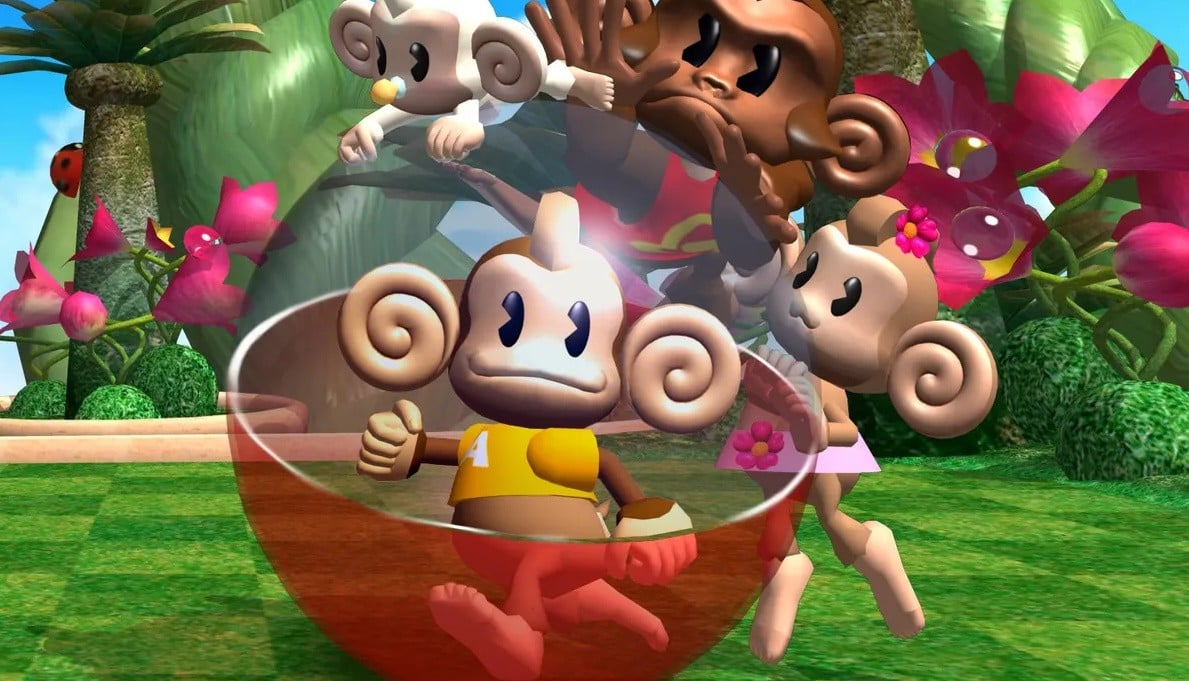
The development of the Super Monkey Ball port for the Dreamcast by @memorix101 first gained widespread attention through a recent video by YouTube channel ‘thesegaguru’. The project is described as a "reimplementation of Monkey Ball using GameCube assets from Super Monkey Ball." This means that instead of recreating the game from scratch, @memorix101 is leveraging existing game data – including level geometry, textures, and possibly character models – extracted from the GameCube version, and adapting it to run natively on the Dreamcast’s hardware. This approach significantly streamlines development, as the core visual and structural elements are already established, allowing the developer to focus on the technical challenges of compatibility and optimization for the Dreamcast’s specific hardware limitations and capabilities.
Currently, the port is in its early stages, functioning primarily as a "proof-of-concept." It features approximately the first 10 levels from the GameCube title, allowing for initial testing and demonstration of core gameplay mechanics. Even at this nascent stage, the visual fidelity and smooth gameplay showcased in preview footage are remarkably impressive, closely mirroring the experience players would expect from the GameCube original. This speaks volumes about the technical expertise of @memorix101 and the latent power of the Dreamcast, which, despite being less powerful than the GameCube (which featured a 485 MHz IBM PowerPC Gekko CPU and a 162 MHz ATI Flipper GPU), can still render complex 3D environments with fluidity.
One interesting aspect highlighted by thesegaguru is the inclusion of elements specific to the GameCube version that were not present in the original arcade Monkey Ball. For instance, when the player’s monkey ball collides with objects in the game world, small stars or particles appear on screen – an effect introduced in Super Monkey Ball for the GameCube. This detail underscores the project’s direct reliance on GameCube assets and its ambition to faithfully recreate that console experience on the Dreamcast, rather than strictly adhering to the arcade original. It also shows the meticulous attention to detail in replicating the console experience.
The Dreamcast’s unique Visual Memory Unit (VMU) also presents an intriguing possibility for the port. While currently acting as a basic data stamp (perhaps displaying save information or simple graphics), the VMU’s capabilities extend far beyond this. Historically, the VMU could display gameplay information, offer mini-games, and even act as a second screen, providing critical data or supplementary content without cluttering the main display. The potential for integrating bespoke VMU functionality, such as displaying the player’s current score, remaining lives, a miniature map, or even interactive mini-games that could affect the main gameplay, is an exciting prospect for future development, as suggested by thesegaguru and echoed by many Dreamcast enthusiasts. Such integration would truly make the port feel "at home" on the Dreamcast, leveraging one of its most distinctive features and enhancing the overall user experience.
This is not @memorix101’s first foray into ambitious Dreamcast homebrew. The developer previously garnered attention for a successful Dreamcast port of the original Prince of Persia, a project that showcased similar dedication and technical skill in bringing classic titles to Sega’s final console. This track record lends significant credibility to the Super Monkey Ball project and fuels optimism within the community for its eventual completion. The consistent quality of @memorix101’s work has established them as a key figure in the Dreamcast homebrew scene.
Implications and The Enduring Legacy
The development of a Super Monkey Ball port for the Sega Dreamcast carries significant implications beyond mere fan service. Firstly, it stands as a powerful testament to the enduring legacy of the Dreamcast and the deep affection it continues to command from a dedicated global fanbase. For many, the Dreamcast represents a period of unbridled creativity and innovation in gaming, and projects like this allow that spirit to continue thriving, showcasing what the console could have been under different historical circumstances.
Secondly, it contributes to the broader movement of video game preservation. As hardware ages and becomes obsolete, the ability to run classic software on original systems, or even through emulated environments, becomes crucial. Homebrew ports like this not only explore "what if" scenarios but also demonstrate the capabilities of historical hardware, ensuring that its potential is fully documented and understood for future generations of enthusiasts and historians. This proactive preservation effort ensures that cultural artifacts of gaming history remain accessible and playable.
Thirdly, the project highlights the vibrant and skilled homebrew development community. These independent developers, often working without commercial incentive, push the boundaries of what is thought possible with old hardware, often surpassing the technical constraints that limited official releases of the past. Their work enriches the gaming landscape and provides new experiences for players, fostering a sense of community and shared passion that transcends official corporate support. While Sega itself has generally adopted a hands-off approach to such fan projects, unless they directly infringe on intellectual property for commercial gain, the tacit acceptance allows this creative ecosystem to flourish.
While a public demo is not yet available, the progress demonstrated by @memorix101 is a beacon of hope for Dreamcast aficionados. The eventual release of a playable version would not only be a monumental achievement for the homebrew community but also provide a tangible answer to a long-held hypothetical question about the Dreamcast’s potential library. It would allow players to experience Super Monkey Ball through a lens that was almost realized over two decades ago, bridging a gap in gaming history and celebrating the console that dared to dream. The ongoing development of this port underscores that for the Sega Dreamcast, the game is far from over, and its story continues to be written by its most passionate advocates.