Vera Clarissa
The technology landscape is abuzz with a series of significant developments impacting Apple users and the broader tech community. From critical security vulnerabilities affecting millions of devices to the staggered rollout of new operating system features and the discontinuation of older hardware support, users are navigating a complex period of technological evolution. This comprehensive report delves into the key announcements, their implications, and the underlying technological shifts that are shaping the user experience.
Critical SecureROM Exploit Threatens A12 and A13 Chip Security
Researchers at Paradigm Shift have unveiled a significant security vulnerability, dubbed a "SecureROM exploit," which directly impacts devices powered by Apple’s A12 and A13 chips. This discovery, detailed in a recent publication by Paradigm Shift, highlights a deep-seated flaw within the chips’ foundational read-only memory, a component typically considered immutable. The exploit’s implications are far-reaching, potentially compromising the security of a vast number of iPhones, iPads, and other Apple devices released between 2018 and 2019.
The SecureROM, often referred to as the "boot ROM" or "trust ROM," is the first piece of code that executes when an Apple device powers on. It is designed to be unalterable, serving as the ultimate root of trust for the device’s security chain. A vulnerability within this layer suggests a fundamental weakness that could allow attackers to bypass critical security measures, potentially leading to unauthorized code execution, data extraction, or even persistent device compromise. The affected chips, A12 and A13, are found in popular models such as the iPhone XS, iPhone XR, iPhone 11 series, and various iPad generations from the same era. Additionally, the exploit may extend to devices utilizing the S4 and S5 chips, which are found in earlier Apple Watch models, further broadening the scope of potential impact.

While Paradigm Shift has detailed the technical nature of the exploit, the precise methods of exploitation and the full extent of potential damage are still under investigation. The unpatchable nature of SecureROM exploits presents a unique challenge for Apple and its users. Unlike software vulnerabilities that can be addressed through over-the-air updates, a SecureROM exploit requires hardware intervention, which is often impractical for deployed devices. This means that users of affected devices may remain vulnerable indefinitely unless Apple implements more drastic measures, such as device recalls or encouraging upgrades. The implications for data privacy and device integrity are substantial, raising concerns about the long-term security of devices that were once considered state-of-the-art. The discovery underscores the persistent cat-and-mouse game between security researchers and hardware manufacturers, where even the most fundamental layers of a device’s architecture can harbor unforeseen weaknesses.
watchOS 27 Signals the End of Support for a Generation of Apple Watches
In preparation for the upcoming fall software release, Apple has announced that watchOS 27 will discontinue support for several popular Apple Watch models. This decision marks a significant shift for owners of the Series 6, Series 7, Series 8, the second-generation Apple Watch SE, and the first-generation Apple Watch Ultra. These devices, many of which are still in active use by a considerable user base, will no longer receive the latest operating system updates, including new features and security patches.
Cait Dooley, a senior member of Apple’s watchOS team, explained the rationale behind this move in a recent interview with TechRadar. Dooley emphasized Apple’s commitment to delivering an optimal user experience, stating, "With every software release across every single one of our platforms, we always want to ensure that you have the best experience, so we make power and performance a priority." She further elaborated that the advanced capabilities introduced in watchOS 27, such as the new Siri AI assistant and the innovative tap gesture, are best optimized to run on the more powerful hardware found in the Apple Watch Series 9 and later, Apple Watch Ultra 2 and later, and the third-generation Apple Watch SE.
This decision highlights the accelerating pace of technological advancement and the increasing demands placed on modern hardware by sophisticated software. While older devices may still function for basic tasks, they will miss out on the cutting-edge features that define the latest iteration of watchOS. For users of the affected models, this means a potential need to consider an upgrade to continue accessing the full spectrum of Apple Watch functionalities. The move also signifies Apple’s strategy to focus its development resources on its most recent hardware, ensuring that its latest software innovations are experienced on devices capable of fully leveraging their potential. The discontinuation of support for these models, while a common practice in the tech industry, inevitably raises questions about device longevity and the environmental impact of hardware obsolescence.
Network Time Capsule Finds New Life in macOS 27 with Community-Driven Fix
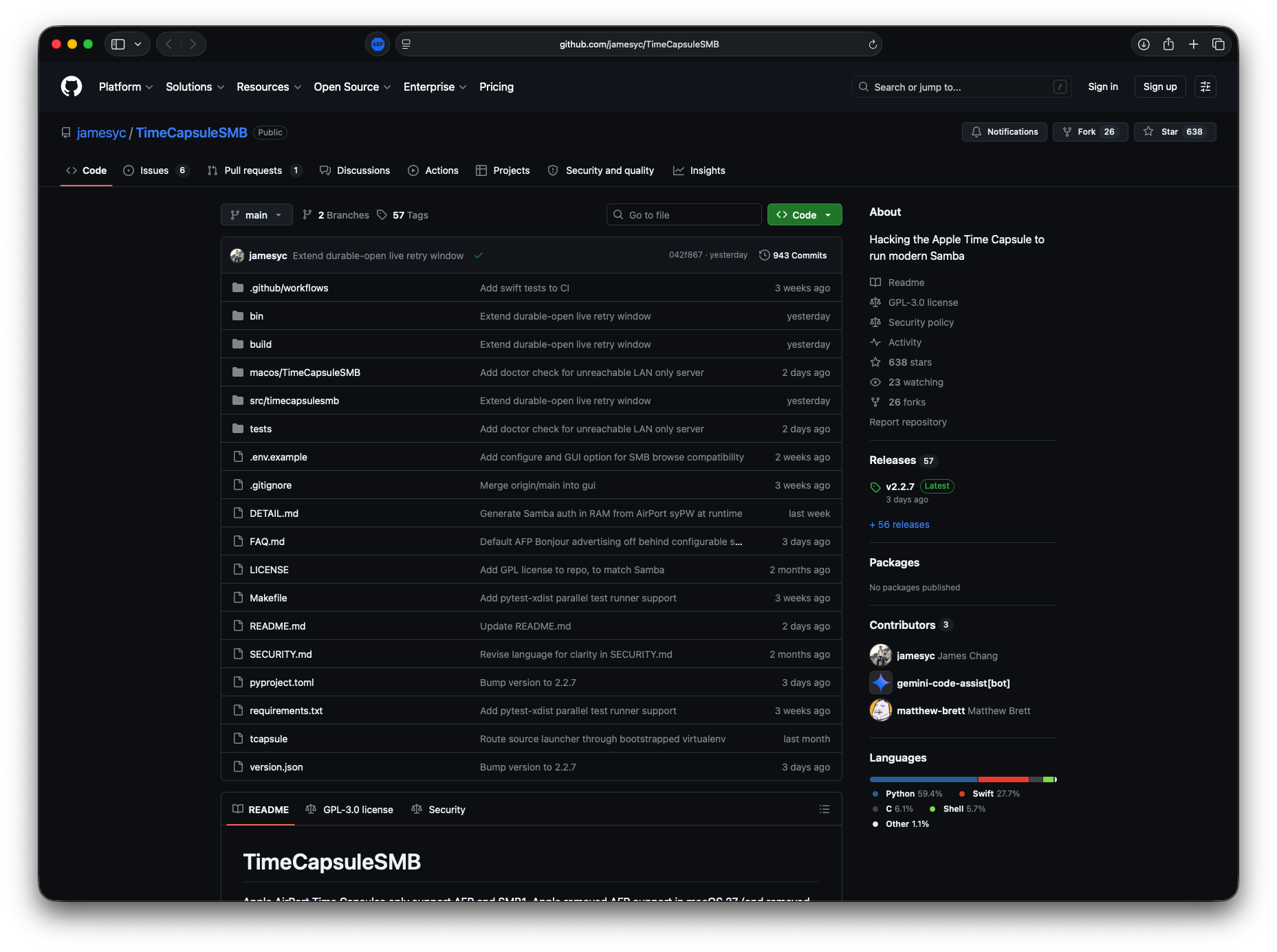
In a testament to the ingenuity of the developer community, a clever workaround has emerged to restore functionality to Apple’s discontinued Network Time Capsule in macOS 27. Apple’s latest operating system, macOS Golden Gate (version 27), has officially dropped support for the legacy Apple File Protocol (AFP), which was integral to the Time Capsule’s operation. This move left many users with existing Time Capsule devices unable to back up their Macs or access stored data seamlessly.
However, an engineer at Microsoft has developed a solution that breathes new life into these aging, yet still functional, network storage devices. The project, aptly named "TimeCapsuleSMB," transforms the Time Capsule into a Samba server running version 4.24.3. Samba is an open-source re-implementation of the SMB/CIFS networking protocol, which is still fully supported by macOS 27. By enabling SMB on the Time Capsule, the project allows macOS devices to discover and connect to the Time Capsule over the network using Bonjour, Apple’s zero-configuration networking protocol.
This community-driven initiative is a crucial development for users who rely on their Time Capsules for critical backups and data storage. It demonstrates the power of open-source collaboration in extending the lifespan of existing technology and overcoming intentional obsolescence. The fix effectively bridges the gap created by Apple’s deprecation of AFP, ensuring that users are not forced to immediately discard perfectly viable hardware. For those invested in the Time Capsule ecosystem, this "TimeCapsuleSMB" project represents a significant win, offering a path to continued use and data protection in the face of evolving operating system support. The project’s availability on GitHub allows technically inclined users to implement the solution themselves, highlighting a decentralized approach to problem-solving in the Apple ecosystem.
The Evolving AI Landscape: New Siri AI Rolls Out, Firmware Updates for Audio Devices
The advancement of artificial intelligence continues to be a central theme in Apple’s product development, with the highly anticipated new Siri AI slowly rolling out to users who joined the official waitlist. This gradual release suggests a phased deployment strategy, allowing Apple to monitor performance, gather feedback, and refine the AI’s capabilities before a wider public launch. The new Siri promises a more conversational, context-aware, and intelligent interaction, moving beyond simple command execution to a more nuanced understanding of user requests. Early reports indicate improvements in natural language processing and the ability to handle more complex queries.
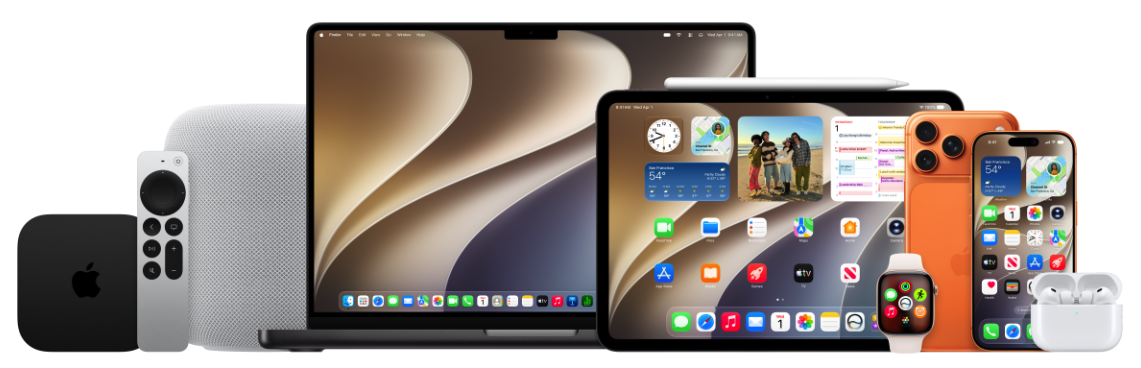
In parallel, Apple has also issued firmware updates for its popular audio accessories, including AirPods Pro (2nd and 3rd generation) and Beats Studio Buds. These updates, while often less publicized than major OS releases, are crucial for maintaining optimal performance and user experience. The focus of these firmware updates is primarily on enhancing under-the-hood stability, addressing minor bugs, and ensuring the devices function as intended. For users, these updates often translate to smoother connectivity, improved audio quality, and a more reliable overall experience with their wireless earbuds and headphones. The consistent delivery of these updates underscores Apple’s commitment to supporting its hardware ecosystem even after initial release.
Developer Betas for macOS, iOS, iPadOS, and More Signal Upcoming OS Generations
The annual Worldwide Developers Conference (WWDC) marked the official unveiling of the next generation of Apple’s operating systems, with developer betas now available for macOS, iOS, iPadOS, watchOS, tvOS, and visionOS. The developer preview of macOS Golden Gate (version 27), iOS and iPadOS 27, and watchOS 27 are now in the hands of developers, allowing them to test their applications and identify any compatibility issues before the public release. This beta testing phase is critical for ensuring a smooth transition for users when the final versions are made available.
The availability of these developer betas also provides an early glimpse into the future direction of Apple’s software. Features introduced in these builds, such as the enhanced Siri AI and new tap gestures on the Apple Watch, will eventually reach a broader audience. The developer community plays a vital role in this process, providing essential feedback that helps Apple refine its software and identify potential bugs or usability concerns. The staggered release of beta versions, from initial developer previews to later public betas, is a well-established practice that allows for rigorous testing and iterative improvement. For the broader user base, these developer betas serve as an indicator of what to expect in the coming months, building anticipation for the official public launch of these new operating system versions.
The Potential for a Dual-Camera iPhone Air and the Evolving Smartphone Market
Speculation is mounting regarding potential hardware enhancements for future iPhone models, particularly concerning the iPhone Air lineup. While details remain unconfirmed, there are indications that a second camera lens could be introduced in a future iteration of the iPhone Air. Such an addition would represent a significant upgrade for users seeking more versatile photography capabilities, potentially narrowing the gap between the Air and Pro models. The inclusion of a second camera, often a wide-angle or telephoto lens, has become a standard feature in the premium smartphone market, significantly enhancing photographic flexibility.
This potential development highlights the ongoing competition and innovation within the smartphone industry. Manufacturers are constantly striving to differentiate their offerings and meet the evolving demands of consumers, particularly in areas like camera performance. If a dual-camera system is indeed implemented in the iPhone Air, it could influence purchasing decisions and potentially extend the product’s appeal to a wider audience. The timing of such an introduction, however, remains uncertain, with possibilities of delays if development or testing encounters unforeseen challenges. The smartphone market is characterized by rapid iteration, and the addition of advanced camera technology remains a key driver of consumer interest and technological advancement.