Hartono Sudibyo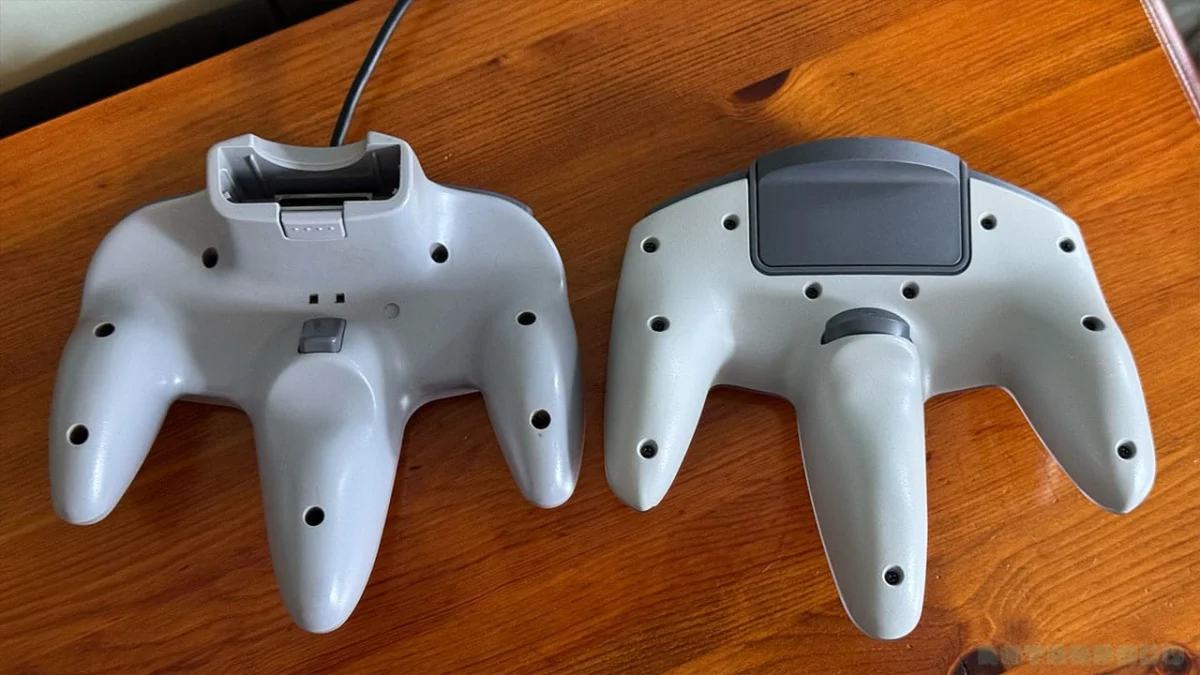
For a generation of gamers, the Nintendo 64 controller is more than just an input device; it’s a tactile gateway to cherished memories. From the precise maneuvers required to defeat Shadow Ganon in The Legend of Zelda: Ocarina of Time, to the intense aerial duels in Mario Tennis, and the chaotic races through Moo Moo Farm in Mario Kart 64, the unique trident-shaped controller was an extension of the player. This deeply ingrained familiarity, often referred to as muscle memory, allows fingers to instantly find their familiar positions without conscious thought. The recent release of the ModRetro M64 controller promises to tap into this profound nostalgia, offering an updated and enhanced experience that bridges the gap between past and present.
ModRetro’s approach to retro gaming hardware has consistently focused on perfecting beloved classics. Their previous product, the ModRetro Chromatic, was lauded as the "ultimate version of the Game Boy," meticulously recreating the iconic handheld with premium materials and modern enhancements. This philosophy of reverence coupled with innovation appears to have been directly applied to the M64 controller. The company’s commitment to preserving the core experience while elevating it is evident in the M64’s design, aiming to be the definitive controller for N64 enthusiasts.
This review will focus exclusively on the ModRetro M64 controller, examining its design, functionality, and performance, and comparing it to its predecessor and key competitors in the burgeoning retro gaming accessory market.
The Ultimate Evolution of Nintendo’s Iconic Controller
The N64 controller, with its distinctive three-pronged design, was a polarizing yet ultimately iconic piece of hardware. While revolutionary for its time, offering analog control and a built-in rumble pak, it also presented ergonomic challenges and durability concerns, particularly with its notoriously fragile joystick. ModRetro’s M64 controller seeks to address these historical shortcomings while meticulously preserving the nostalgic essence that fans hold dear.
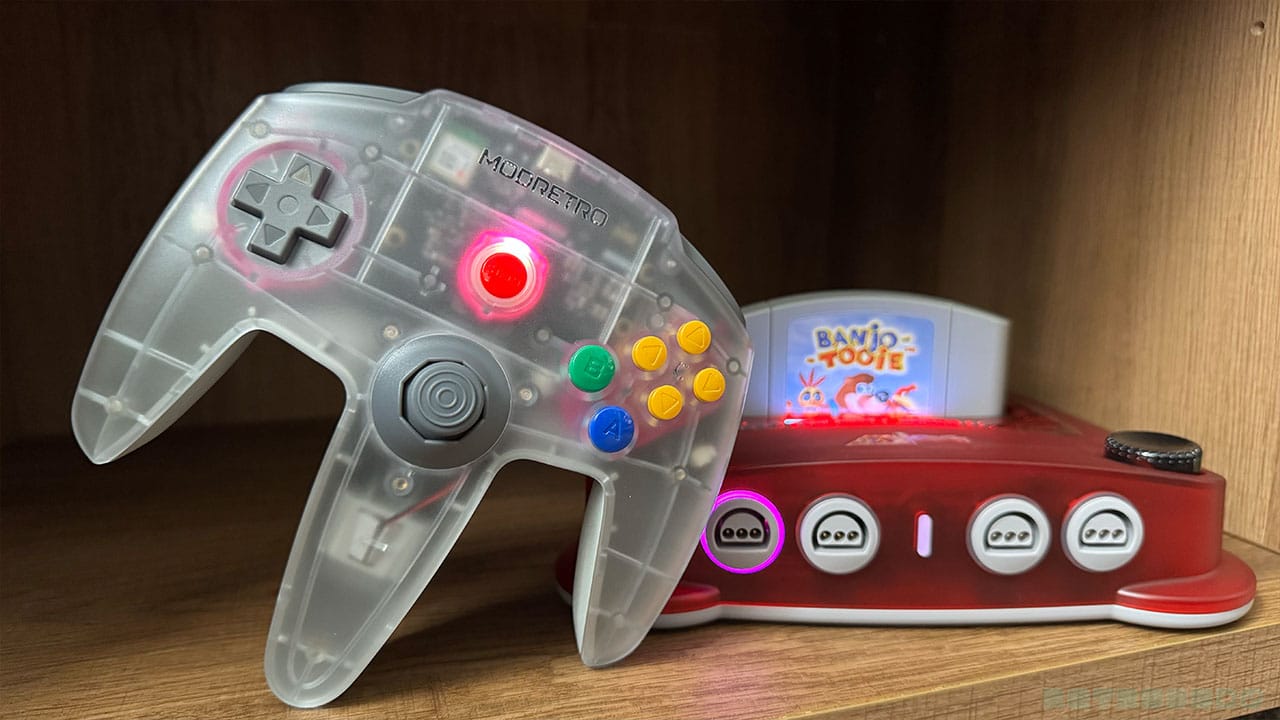
The company’s strategy with the M64 controller mirrors their success with the Chromatic: to create the perfect iteration of a beloved classic. By retaining the core trident shape and button layout, ModRetro ensures immediate familiarity for returning players. However, the inclusion of an aluminum backplate, enhanced triggers, and a new TMR thumbstick signifies a significant leap forward in terms of build quality, durability, and user experience. This is not merely a replica; it is a reimagining designed for the modern gamer who cherishes the N64 era.
Shape and Feel: A Familiar Embrace, Elevated
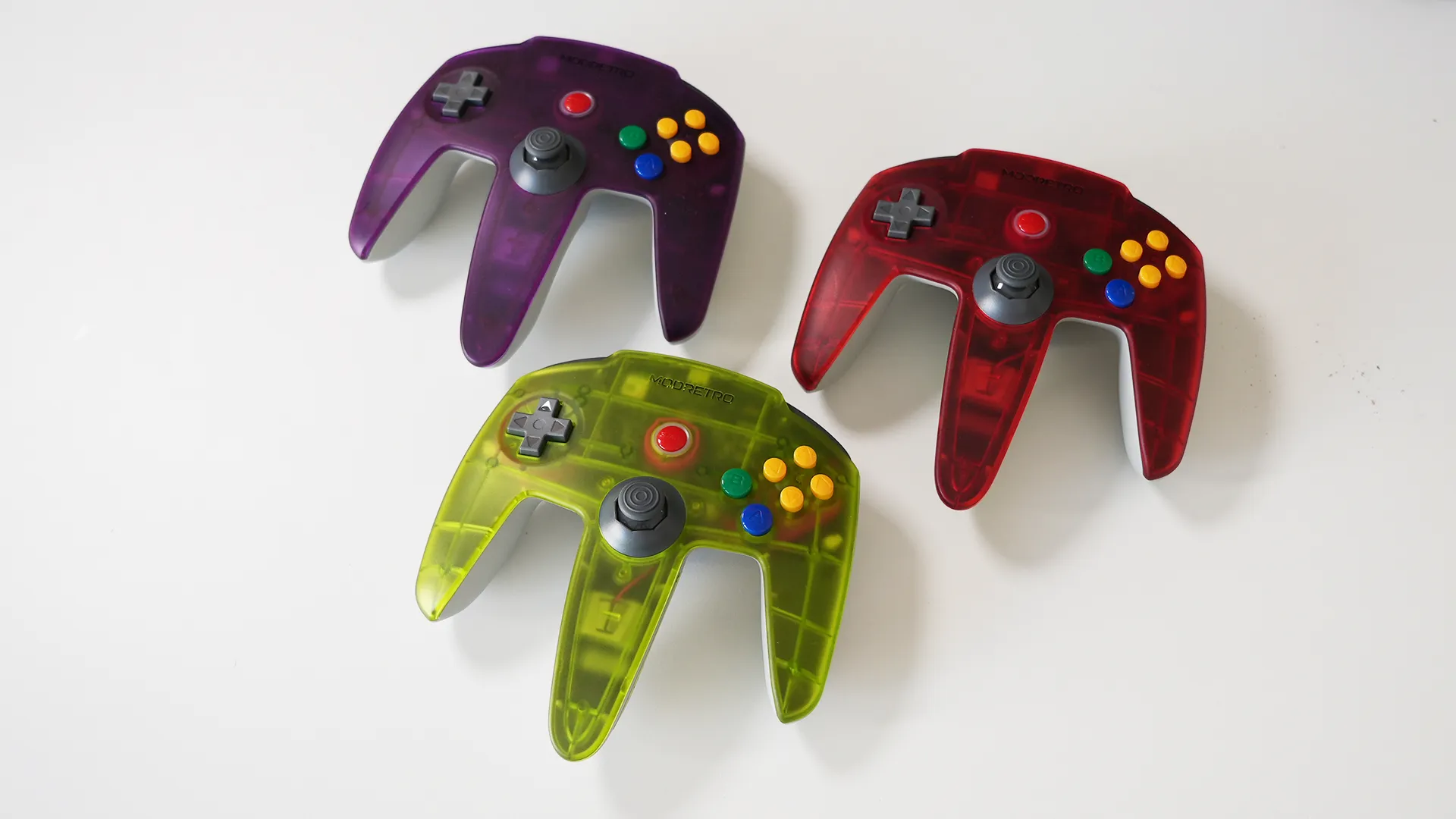
Upon first handling the ModRetro M64 controller, the immediate sensation is one of profound familiarity. The classic trident shape, which once drew comparisons to a bunch of bananas against the sleeker SNES controller, now feels remarkably ergonomic. This familiarity is crucial for ModRetro’s ethos; they are not aiming to reinvent the wheel but rather to perfect it.
In contrast to competitors like Retro Fighters and 8BitDo, which often lean towards a more modern, professional controller aesthetic, ModRetro’s primary focus is nostalgia. Their approach is to enhance and improve upon the original design, much like they did with the Game Boy. This dedication is palpable in the M64 controller, suggesting that its development was driven by a genuine passion for the N64 and its gaming library.
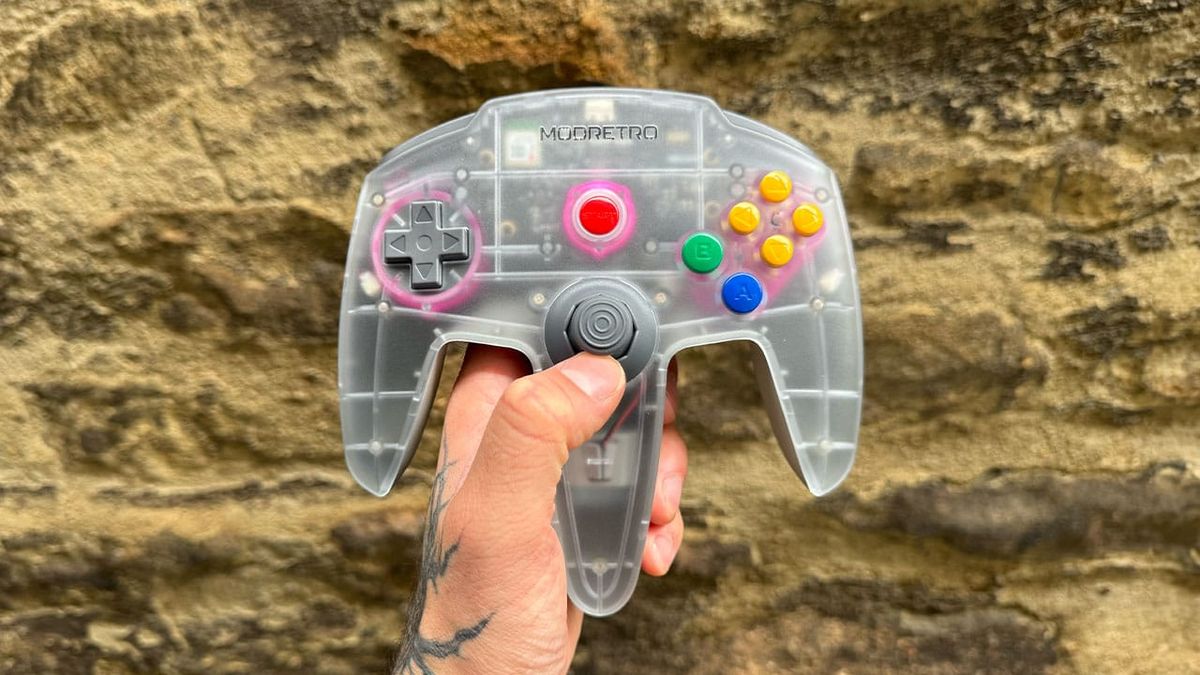
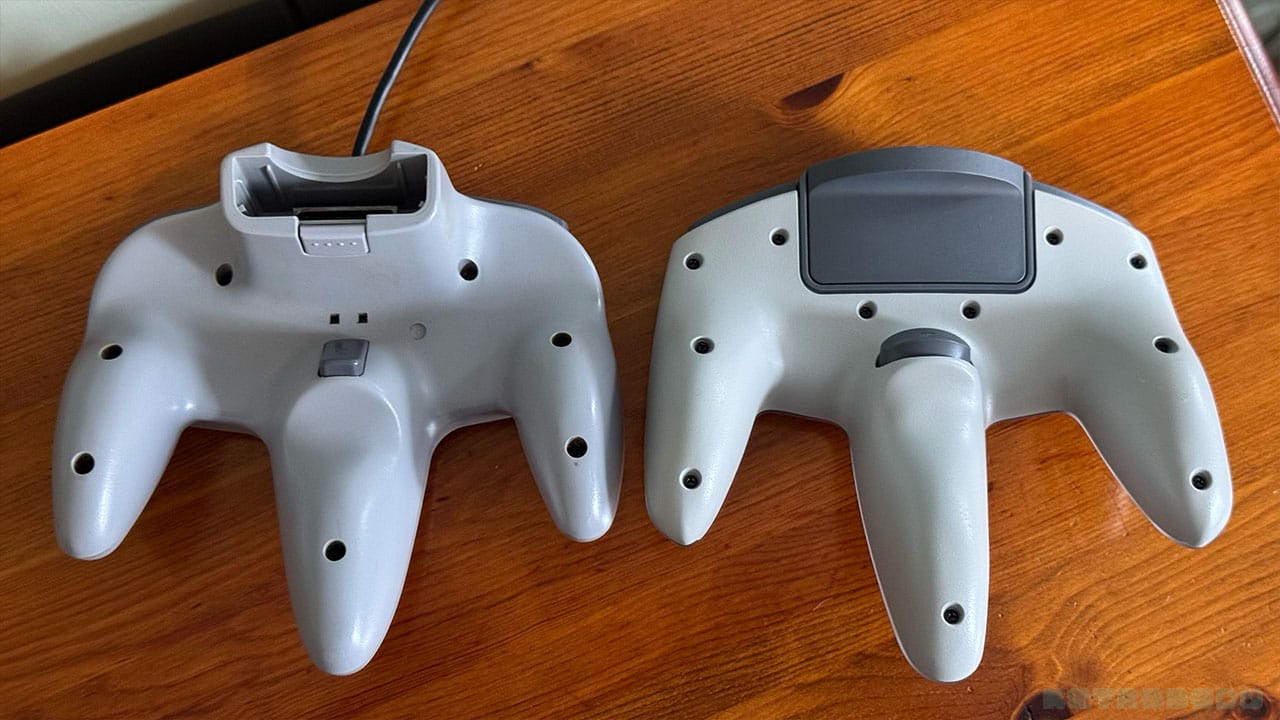
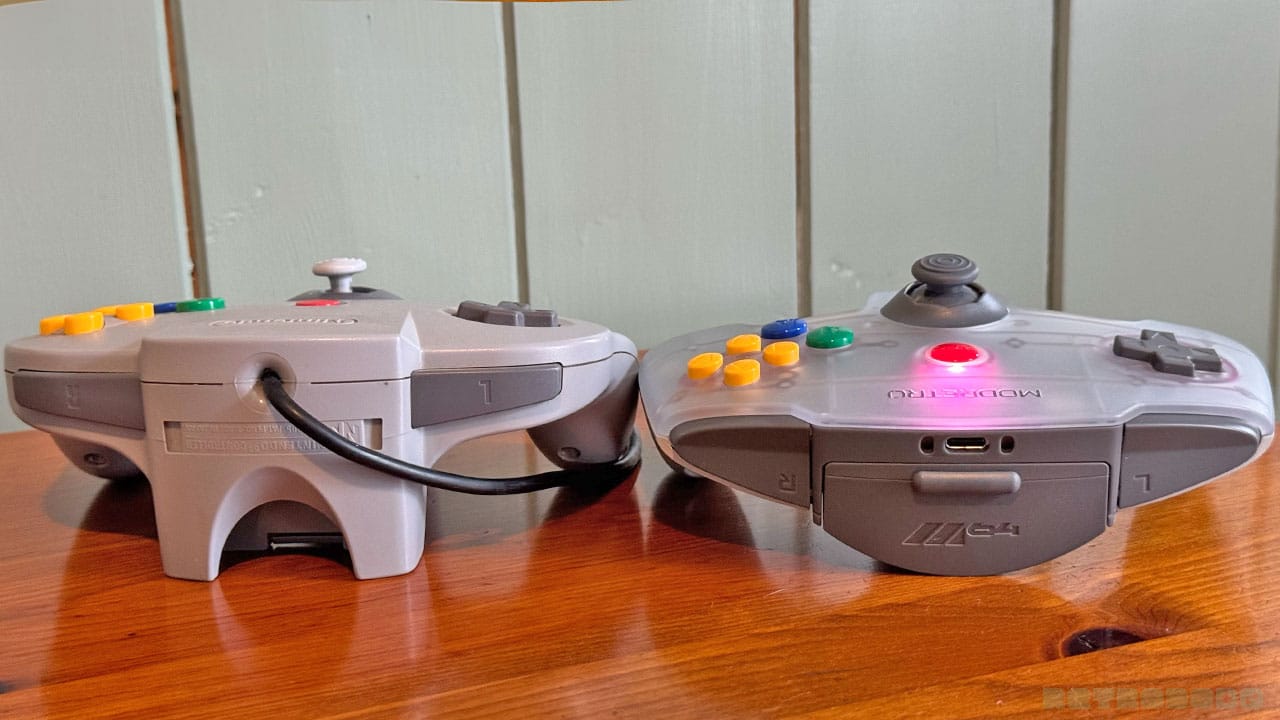
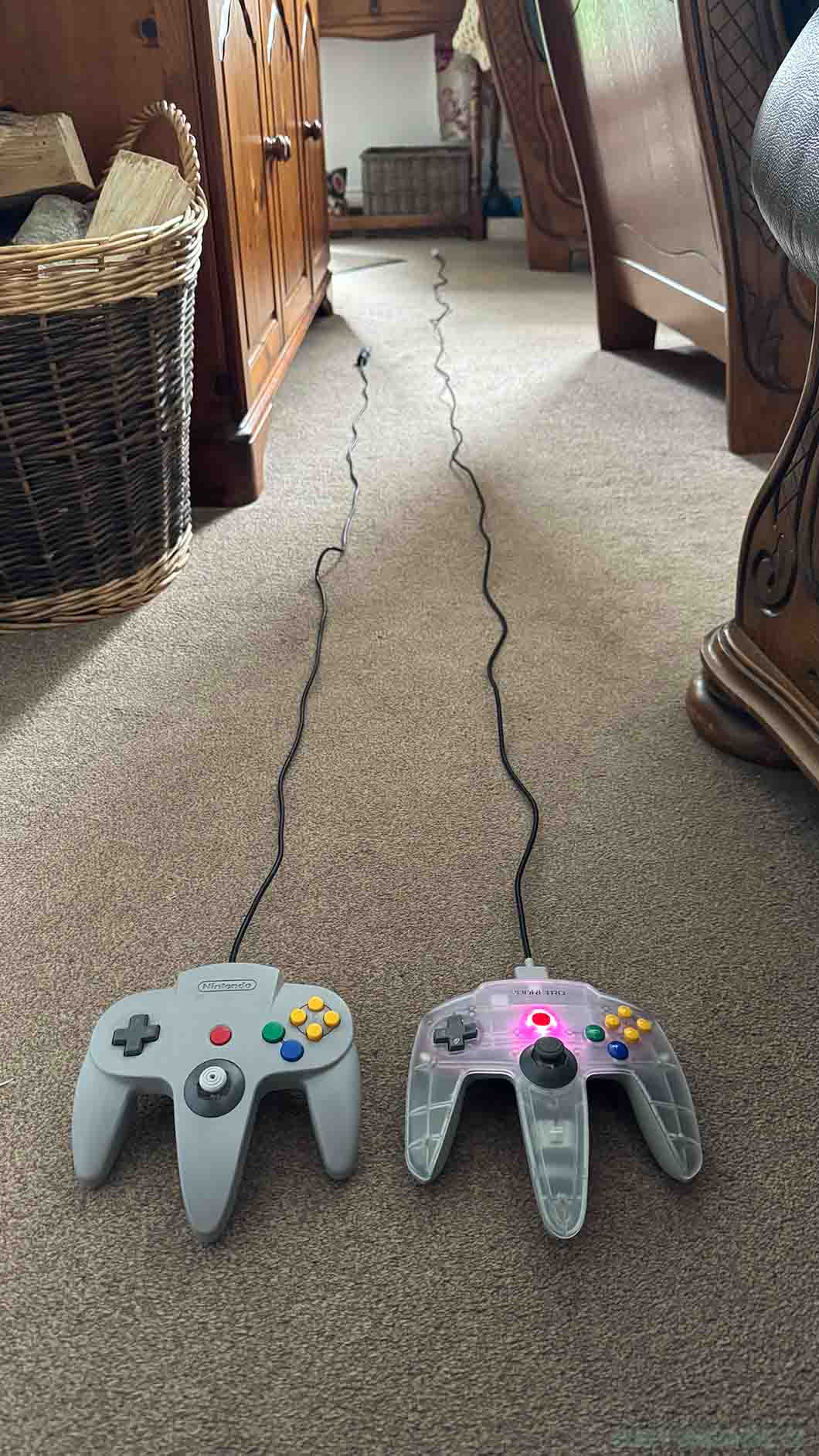
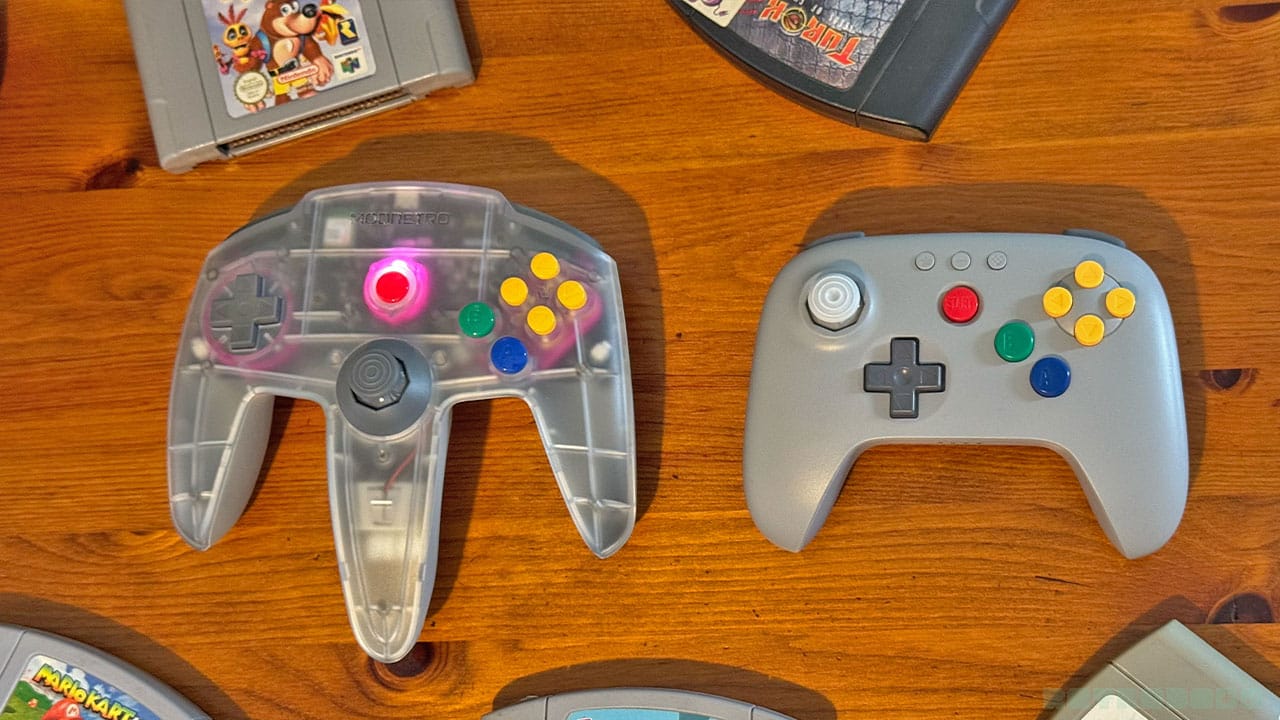
A side-by-side comparison with the original N64 controller reveals a meticulous attention to detail. The ModRetro logo occupies the same prominent position as the Nintendo logo on the original, reinforcing the homage. Both controllers share the iconic trident silhouette and the familiar button arrangement. While the action and C-buttons on the M64 are marginally smaller than their original counterparts, this minor adjustment has had no discernible negative impact on gameplay sessions.
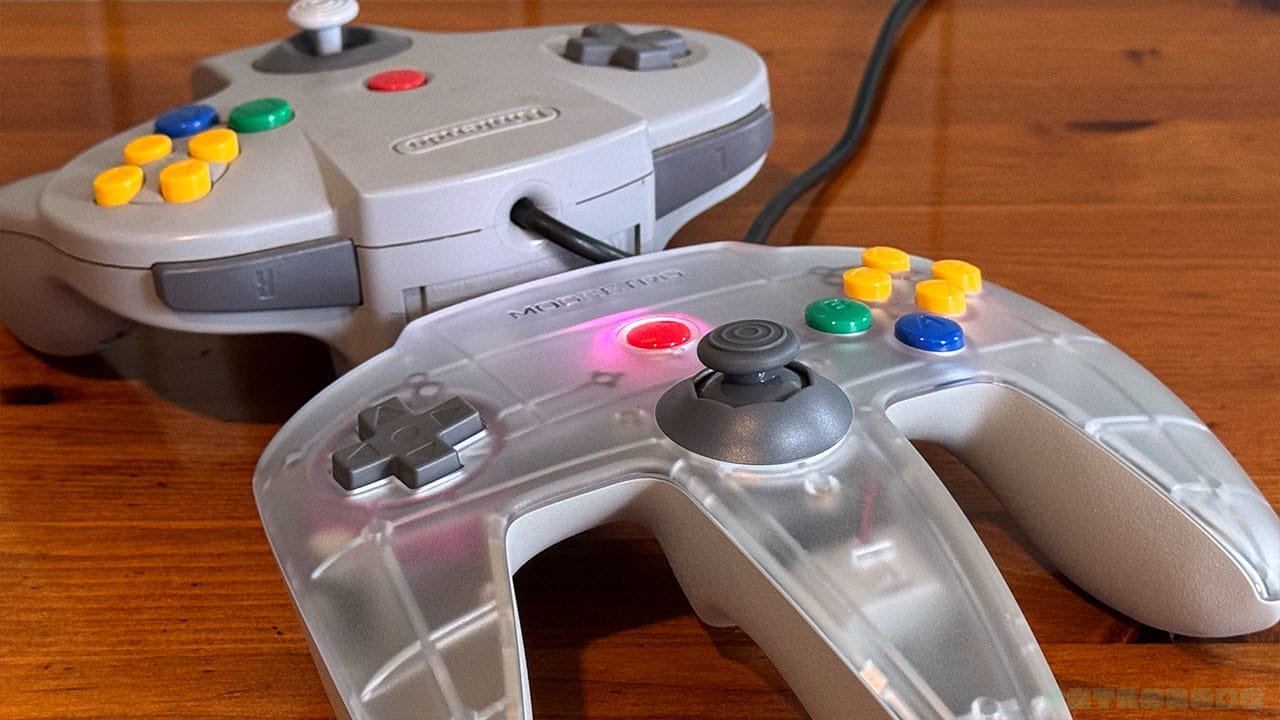
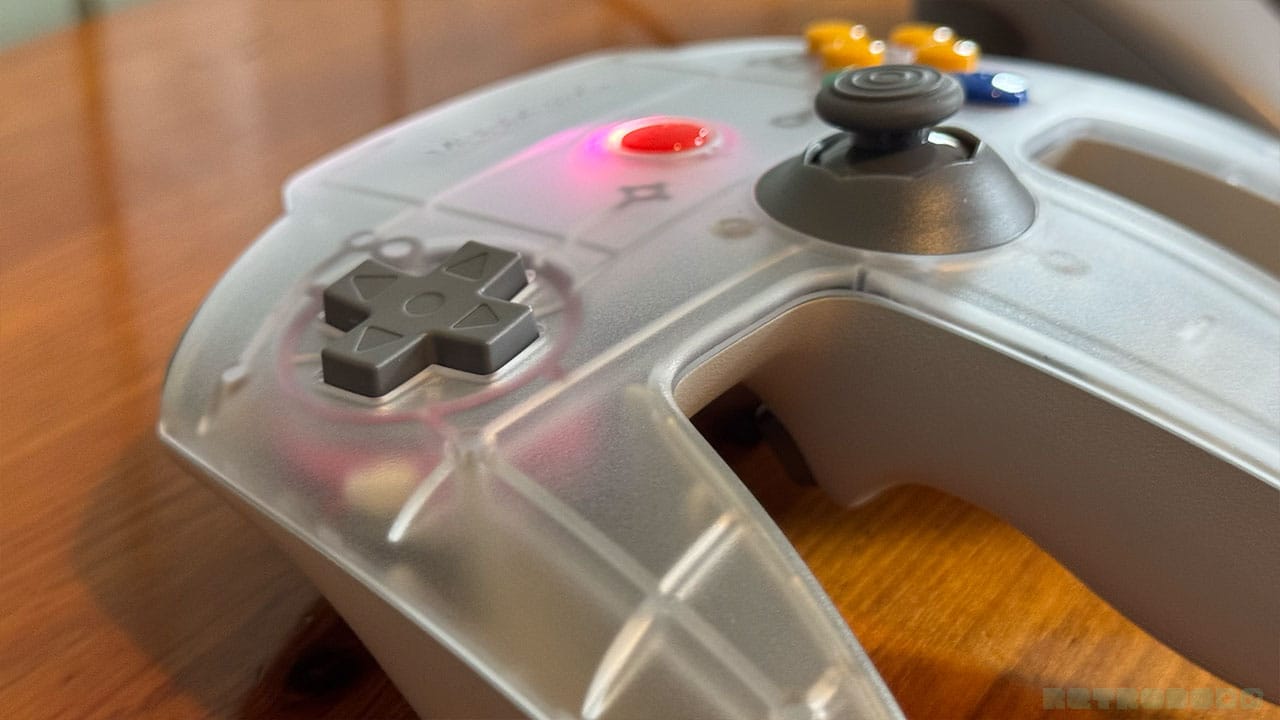
The most significant point of contention for many N64 players was the original joystick. Prone to collecting grime, becoming loose, and offering an inconsistent feel, it was a constant source of frustration. The M64 controller replaces this with a new TMR thumbstick, which appears more robust and substantial. Its smooth operation and durable construction suggest it can withstand extended multiplayer sessions and the rigors of modern gaming without succumbing to the wear and tear that plagued the original.
The Directional Pad (D-pad) on the M64 controller retains its slightly curved design, offering a tactile and responsive experience for menu navigation and games that utilize it. Although the D-pad sees less frequent use in many N64 titles compared to the analog stick, ModRetro’s inclusion and thoughtful refinement of this element underscore their commitment to a complete and faithful recreation.
A Metal-Backed Marvel
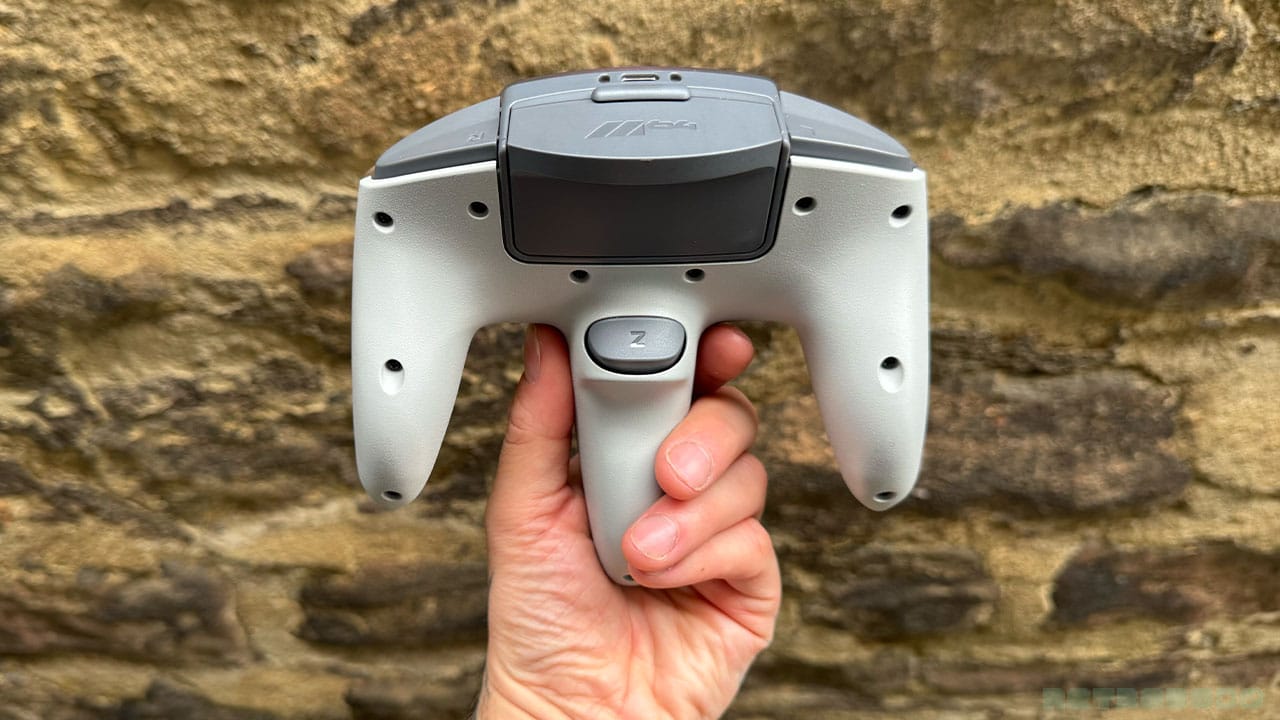
The premium feel of the ModRetro M64 controller is significantly enhanced by its aluminum backplate. This addition provides a satisfying heft, making the controller feel more substantial and balanced in the hands compared to the lighter original. ModRetro states that the aluminum was chosen for its superior grip, and the controller is reported to be only 30 grams heavier than an Xbox Pro Controller, a negligible difference that contributes to a more secure and comfortable hold during intense gameplay moments.
The design of the controller’s rear also offers insights into ModRetro’s approach to moddability and user customization. The screw holes, largely mirroring the original’s placement with a few strategic additions, hint at a design philosophy that allows for user modification. This modular approach is a welcome feature for enthusiasts who enjoy personalizing their gaming hardware, setting the M64 apart from many sealed, non-user-serviceable controllers.
Improved Z & Shoulder Buttons: Redefining Comfort and Control
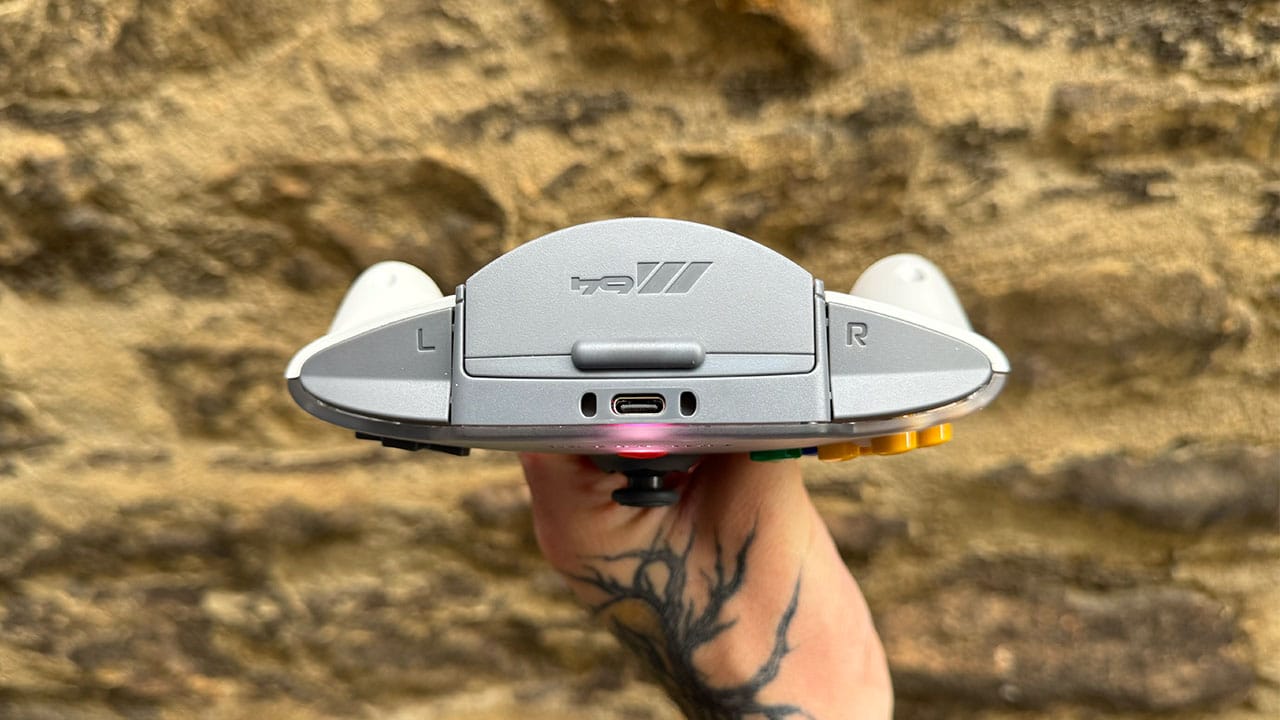
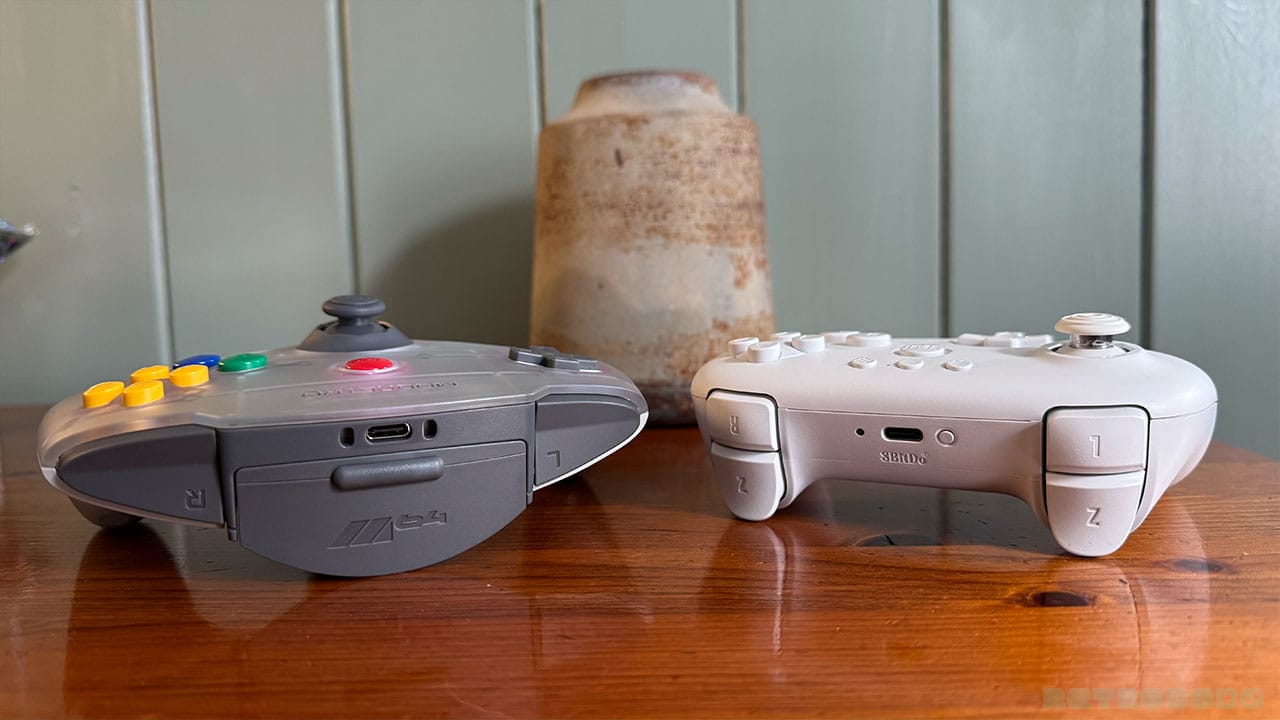
The ergonomics of the N64 controller were always a subject of discussion, and ModRetro has made significant improvements to key input areas. The Z button, originally a slender trigger, has been redesigned with a broader surface area. This wider Z button not only enhances comfort but also makes precision actions, such as Z-targeting in Ocarina of Time or executing character-specific moves in Banjo-Tooie, more intuitive and less fatiguing.
Similarly, the L and R shoulder buttons have undergone a substantial redesign. They now occupy the full available space at the top of the controller, creating a natural resting position for the player’s fingers. This wider, more accessible design ensures that these buttons register inputs with even the slightest touch, regardless of where they are pressed. The original N64 controller’s shoulder buttons often felt cramped and less responsive in comparison. ModRetro’s implementation feels like a natural and logical progression, asking the question of why Nintendo didn’t adopt a similar design decades ago.
Connectivity: Bridging Generations Seamlessly
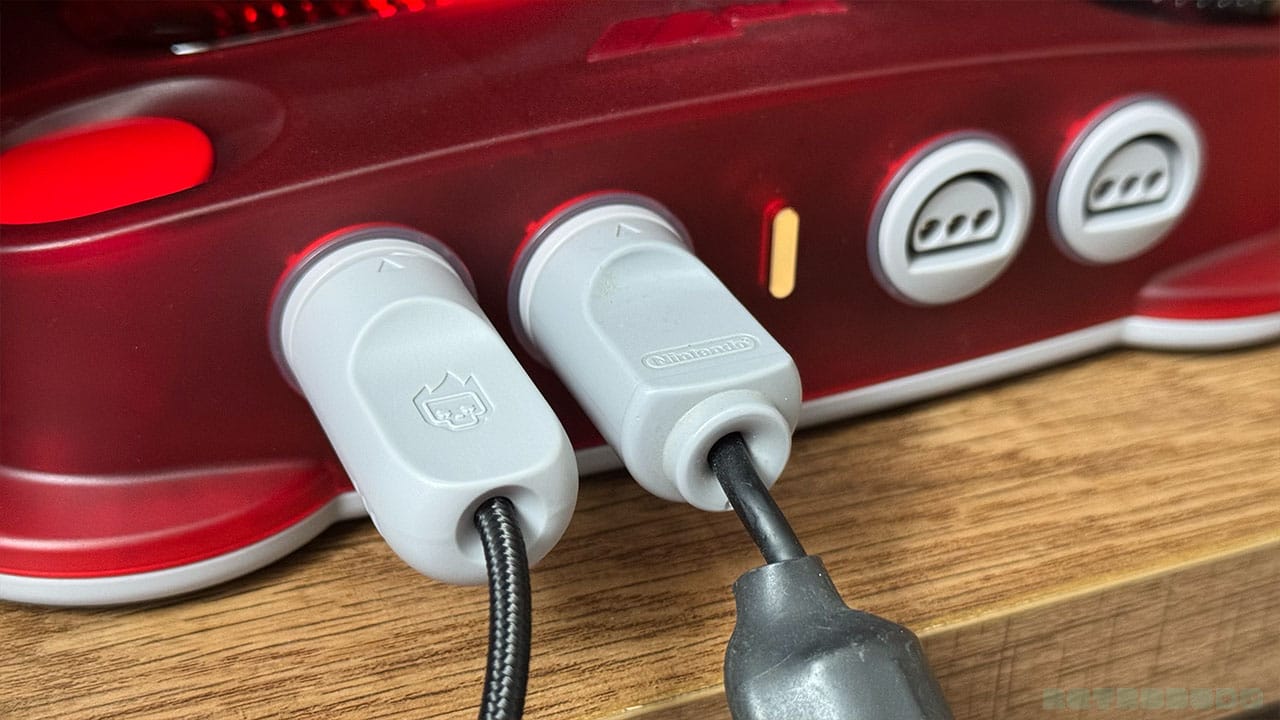
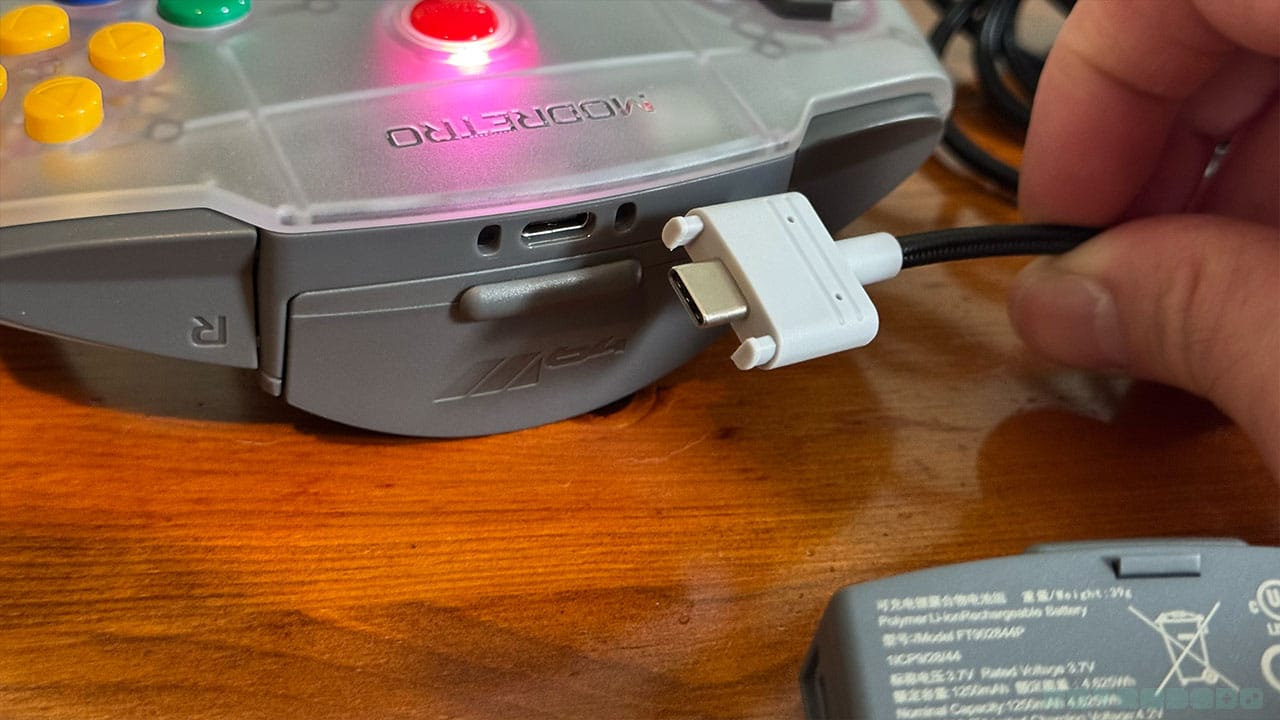
A significant advantage of the ModRetro M64 controller is its versatile connectivity options. It ships with a braided cable that plugs directly into the M64 controller port, offering a wired experience that is compatible with both the original N64 and the new M64 console. This eliminates the need for battery packs for wired play, providing a stable and reliable connection. The adapter is designed to be reminiscent of the original N64’s connection, further enhancing the nostalgic appeal.
However, a notable limitation currently exists regarding compatibility with the Analogue 3D. The M64 controller, in both wired and wireless modes, has been tested and found not to work with the Analogue 3D. ModRetro has stated that compatibility would require firmware updates from Analogue. This situation highlights the evolving landscape of retro gaming hardware and the potential for inter-product compatibility to become a significant factor for consumers. The future of this compatibility remains to be seen, with both companies potentially holding the key to a more unified retro gaming ecosystem.
The wired connection features two small plastic prongs that slot into the controller, ensuring a secure connection. This design choice is a practical improvement, reducing the likelihood of accidental disconnections caused by pets, children, or general movement. While reminiscent of modern magnetic charging solutions, its implementation here provides a stable, traditional wired feel that ModRetro seems to prioritize for this attachment.
The controller cable itself has seen a significant length upgrade. The original N64 controller cable measured approximately 1.8 meters (6 feet). The ModRetro M64 controller extends this to over 3 meters (10 feet), offering much greater flexibility for players who wish to maintain a comfortable distance from their console without being tethered too closely. This extended reach addresses a common limitation of original N64 setups, where players often found themselves sitting uncomfortably close to the television.
Wireless Connectivity & Battery Packs: Embracing Modern Convenience
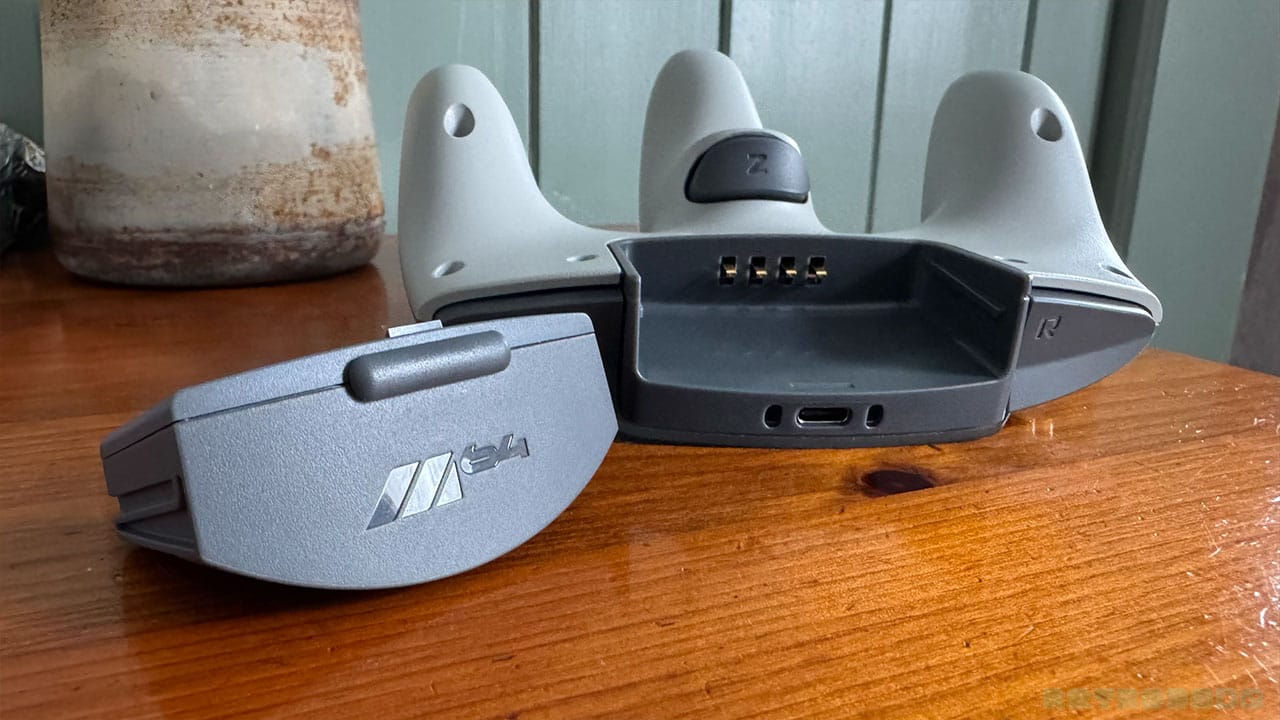
In 2026, wireless gaming is not just a luxury but an expectation. The M64 controller embraces this by offering seamless wireless play through either a rechargeable battery pack or a pack that utilizes AA batteries, catering to those who prefer the authentic feel of disposable batteries for extended nostalgic sessions. Both options are included in the box, providing users with immediate flexibility.
The battery pack is easily removable, revealing an updated port on the back of the controller. This port design hints at potential future accessory expansions from ModRetro, a prospect that will undoubtedly excite dedicated N64 enthusiasts eager for further customization and enhancement options for their beloved console.
Ease of Use: Plug, Play, and Relive
The ModRetro M64 controller is exceptionally user-friendly, particularly for those already familiar with the N64’s control scheme. The intuitive button placement, the refined analog stick, and the balanced weight contribute to an immediately comfortable and responsive gaming experience.
Powering on the controller is as simple as holding the Start button. Pairing it with the M64 console is a straightforward process, initiated via the console’s dial and confirmed within seconds, allowing players to jump into their favorite games without delay.
Navigating menus and accessing settings is equally intuitive. A combination of pressing Z and Start brings up the console’s menu, with the L and R buttons used for navigation and the C buttons for adjusting various display parameters. This user-friendly interface ensures that players can quickly tailor their experience without a steep learning curve.
Compared to the original N64 controller, the M64 controller offers a superior user experience due to its enhanced trigger buttons, built-in rumble, and wireless capabilities. While the core shape remains consistent, these modern additions significantly elevate its functionality and performance beyond its predecessor.
M64 vs. 8BitDo: A Tale of Two Philosophies
The landscape of N64 controllers has been significantly shaped by companies like 8BitDo, whose Analogue 3D controller offers a modern interpretation of the N64 experience. The contrast between the M64 and the 8BitDo controller is stark, representing two distinct philosophies in retro gaming hardware design.
While both controllers offer modern features and pay homage to the original, the M64 controller is positioned as the definitive choice for purists. Its design retains the original handholds and playing styles, including the "claw" grip, that N64 players became accustomed to. This commitment to authenticity is a key differentiator.
The choice between dual Z-buttons as triggers or a single Z button in the original location is a matter of personal preference. However, the M64 controller’s L and R buttons, described as chunky and satisfyingly clicky, offer a superior tactile experience. The ergonomic contouring of these buttons makes them comfortable to rest fingers on and easy to activate with precision.
From a build quality perspective, the M64 controller feels more robust and substantial, largely due to its aluminum backplate. Furthermore, its emphasis on swappable parts and shells makes it highly customizable for enthusiasts. While the 8BitDo controller also allows for shell customization, the process is reportedly less straightforward than with the M64.
Both controllers offer impressive rumble feedback, but the M64 controller’s rumble motor appears to be more powerful, delivering a more intense tactile sensation. This is a subjective but notable difference for players who value immersive feedback.
It is important to reiterate that the M64 controller is not compatible with the Analogue 3D, whereas the 8BitDo controller works seamlessly with the M64 console. This interoperability is a significant factor for consumers considering multi-system retro gaming setups.
Final Thoughts: A Premium Nostalgic Experience
The ModRetro M64 controller stands as a testament to the enduring appeal of the Nintendo 64. Even for those who own an original N64 and are content with its stock controller, the M64 controller is a compelling upgrade. It offers a premium, comfortable, and durable reimagining of an iconic peripheral, staying true to the beloved design of the 1990s while incorporating modern conveniences.
The potential for future compatibility with the Analogue 3D, should Analogue decide to implement it, would elevate the M64 controller to an even more versatile position, making it an exceptional choice for players across multiple retro platforms. As it stands, its flawless performance with both the M64 and original N64 consoles, coupled with the extended wired length, provides a significantly more comfortable and relaxed gaming experience.
At a price point of $89.99, the M64 controller positions itself in the premium segment of the market. When compared to Nintendo’s own Pro Controller ($79.99 MSRP) and 8BitDo’s standard Ultimate 2 controllers ($69.99), the M64’s features—the metallic backplate, dual battery pack options, braided cable, and upgraded TMR stick—justify its cost for those seeking a high-end, nostalgic experience. The design synergy with the M64 consoles further enhances its value proposition for dedicated fans.
Ultimately, the ModRetro M64 controller feels like a product born from genuine passion and deep understanding of the N64’s legacy. It is a controller crafted by enthusiasts, for enthusiasts, and it is poised to become an indispensable tool for reliving classic N64 titles and exploring the growing library of modern N64-inspired games for years to come.