Cecilia Chamidah Nur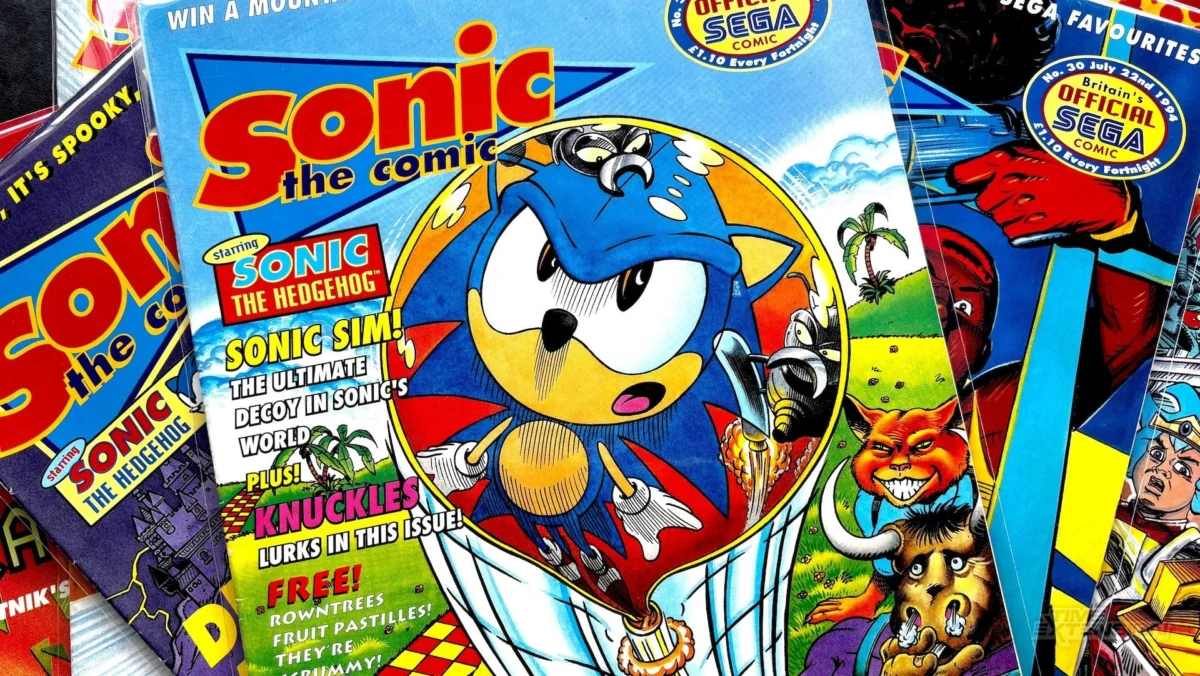
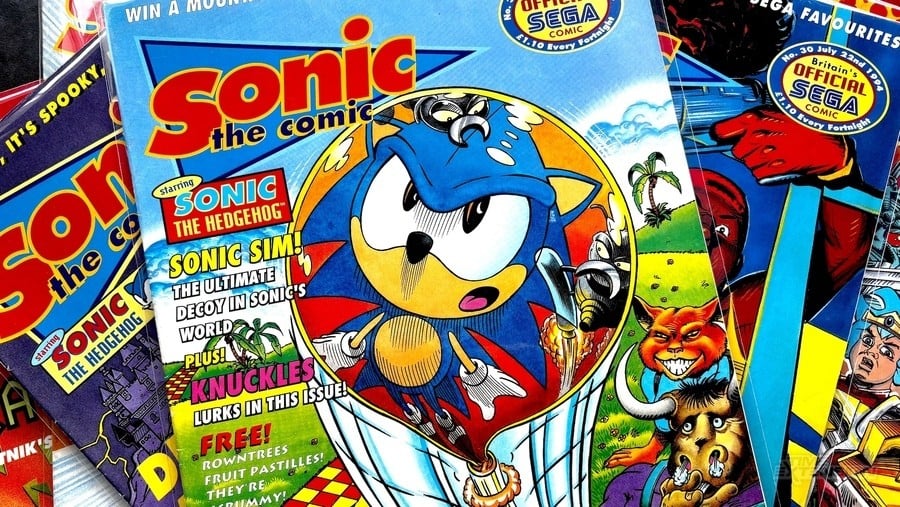
Fleetway’s Sonic the Comic (STC), a cornerstone of British children’s comic publishing for nearly a decade, holds a unique place in the cultural landscape of the 1990s and early 2000s. Launched in 1993 by Fleetway Editions, the comic offered a distinct, often edgier, interpretation of Sega’s iconic blue hedgehog, establishing itself as a beloved and essential purchase for a generation of fans across the United Kingdom. Its run, from 1993 to 2002, encompassed 223 issues, featuring original storylines, compelling character development, and supplemental content that cemented its status as a weekly ritual for its dedicated readership.
The Genesis of a Global Phenomenon and its UK Comic Incarnation
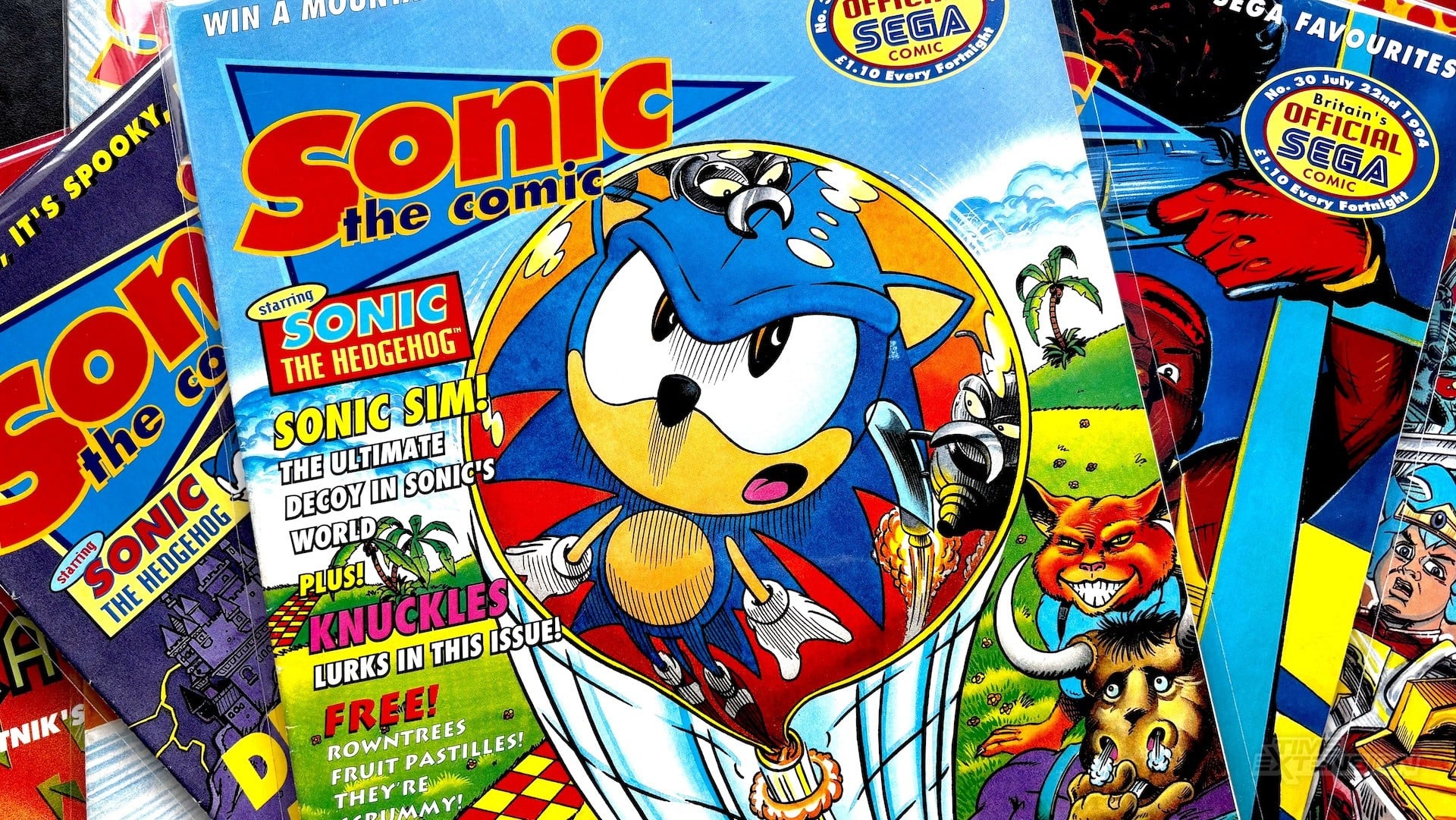
The early 1990s witnessed the meteoric rise of Sonic the Hedgehog as a global cultural icon, Sega’s audacious answer to Nintendo’s Super Mario. With its blistering speed, rebellious attitude, and vibrant aesthetic, Sonic quickly captured the imagination of children worldwide, particularly in the UK where the Sega Mega Drive enjoyed immense popularity. This widespread appeal created fertile ground for licensed merchandise, including animated series like Sonic the Hedgehog (SatAM) and The Adventures of Sonic the Hedgehog, and, crucially, comic book adaptations.
Fleetway Editions, a prominent player in the British comic industry, recognized the immense potential in a localized Sonic comic. Formed from the merger of IPC Magazines and London Editions, Fleetway boasted a rich heritage, including the highly influential 2000 AD. This background positioned them perfectly to launch a high-quality, engaging title that could resonate with the burgeoning UK fanbase. The decision to create Sonic the Comic was a strategic move to capitalize on one of the decade’s most recognizable video game brands.
A Swift Launch and the Architect of its Early Vision
The task of bringing Sonic the Comic to life under tight deadlines fell to Richard Burton, the comic’s original launch editor. Burton was a well-respected figure in the British comic scene, with a career spanning several decades. He co-founded the Comic Media brand in the 1970s, contributed to the establishment of the Eagle Awards—a prestigious series of British awards for comic book titles and creators—and held significant editorial roles, including an assistant editor position at Marvel UK and later editor of 2000 AD. His extensive network and experience made him the ideal choice to quickly assemble a talented creative team for the new venture.
Writer Nigel Kitching recounted the pressure of the initial production: "I think it’s important to understand that the first issue of Sonic the Comic had to be turned out in a hurry. Richard didn’t have much time to find people to work on the comic." Kitching’s prior work for London Editions, particularly on licensed characters for The Red Dwarf Smegazine and Tom and Jerry, made him a suitable candidate. Similarly, artist Richard Elson had experience on Fleetway’s UK Teenage Mutant Hero Turtles comic and had contributed to the first UK Sonic Annual. His existing professional relationship with Burton from their time at 2000 AD further streamlined his recruitment.
Interestingly, neither Kitching nor Elson were ardent Sonic fans at the outset. Kitching admitted to struggling with the Mega Drive game, setting it aside until the comic project required him to revisit it. Elson, a self-professed "Nintendo guy," preferred Mario, Zelda, and Metroid. However, their professional commitment was unwavering. Sega supported their immersion by providing Mega Drive consoles and copies of the games as they were released, ensuring the creative team could stay abreast of the evolving Sonic universe. This pragmatic approach allowed them to engage with the material from a fresh perspective, potentially contributing to the comic’s distinct voice.
Forging a Unique Identity: Creative Latitude and Character Reimagination
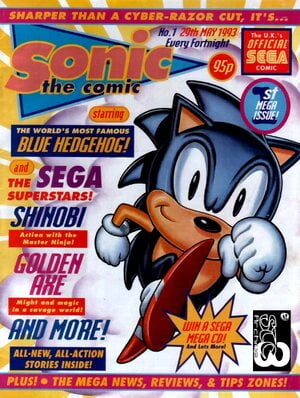
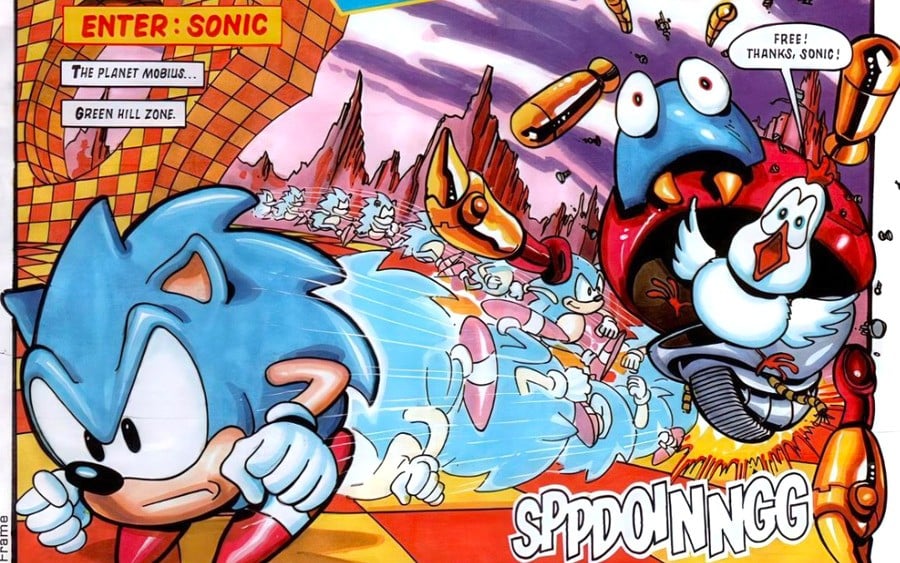
The inaugural issue of Sonic the Comic, released on May 29, 1993, featured the story "Enter: Sonic," penned by Alan McKenzie with art by Anthony Williams and lettering by Tom Frame. Kitching’s first Sonic story, "Day of the Badniks," appeared in Issue 4 in July 1993, introducing his interpretation of Sonic—a character described as "not very pleasant in some ways," known for his cocky, sarcastic demeanor and frequent teasing of Tails (whom he dubbed "Pixel Brain"), yet ultimately loyal to his friends. Elson made his debut in Issue 7.
A crucial factor in STC’s unique trajectory was the degree of creative freedom afforded to its creators. Initially, Sega’s licensing in the UK was managed by Copyright Promotions, which meticulously monitored content to protect the brand image. This led to some early friction. Elson recalled, "Copyright Promotions had a lot to say about early episodes of Sonic the Comic." A pivotal meeting involving Copyright Promotions, Sega, and the comic’s contributors ultimately shifted the dynamic, with Sega reportedly siding with the creators’ vision for a more compelling narrative. This intervention proved instrumental, granting writers and artists significantly more latitude.
Kitching highlighted the serendipitous lack of an "official bible" from Sega. "I was really lucky that there wasn’t really much in the way of an official bible, so I was soon making up my own Sonic Universe," he stated. This void allowed creators to develop intricate backstories and expand the world of Mobius far beyond the games. For instance, Kitching created an origin story for Knuckles when Copyright Promotions confirmed no official version existed, illustrating the extensive creative space available.
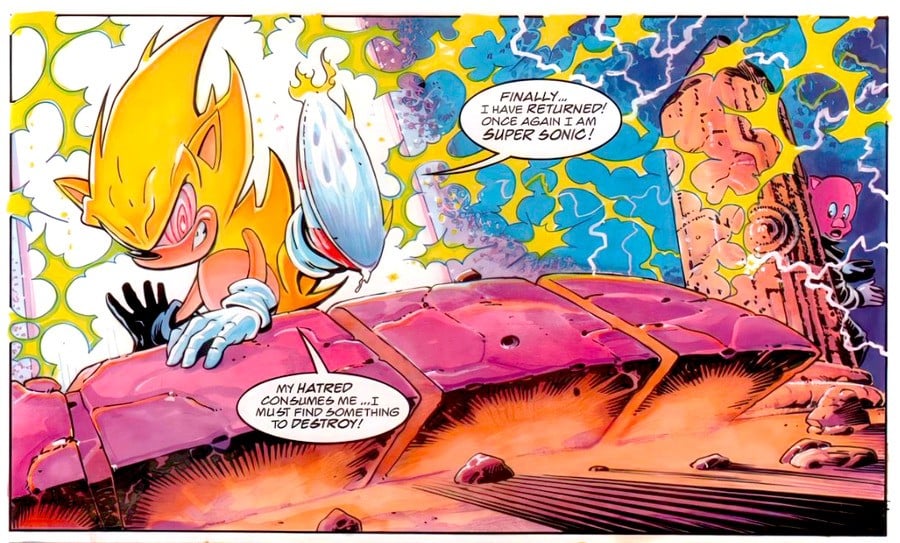
This freedom led to the introduction of a host of original characters that became integral to the STC lore, including the Freedom Fighters Johnny Lightfoot and Porker Lewis, and villains such as the skypirate Captain Plunder, the mutant scientist Megatox, and the crime lord Lord Sidewinder. Perhaps the most celebrated and defining example of STC’s creative reimagining was its portrayal of Super Sonic. In the games, Super Sonic was a powered-up form of Sonic. However, in STC, he was an evil split personality, a destructive, nihilistic entity unleashed under extreme stress. First appearing in Elson’s debut issue story, "Super Sonic," this darker version, characterized by Elson’s "swirling eyes" inspired by political cartoonist Ralph Steadman, became a terrifying antagonist, eventually separating from Sonic into his own distinct being during the "Running Wild" arc. Kitching likened him to "the Hulk," emphasizing his desire for Super Sonic to be "terrifying" and capable of killing "just for the fun of it."
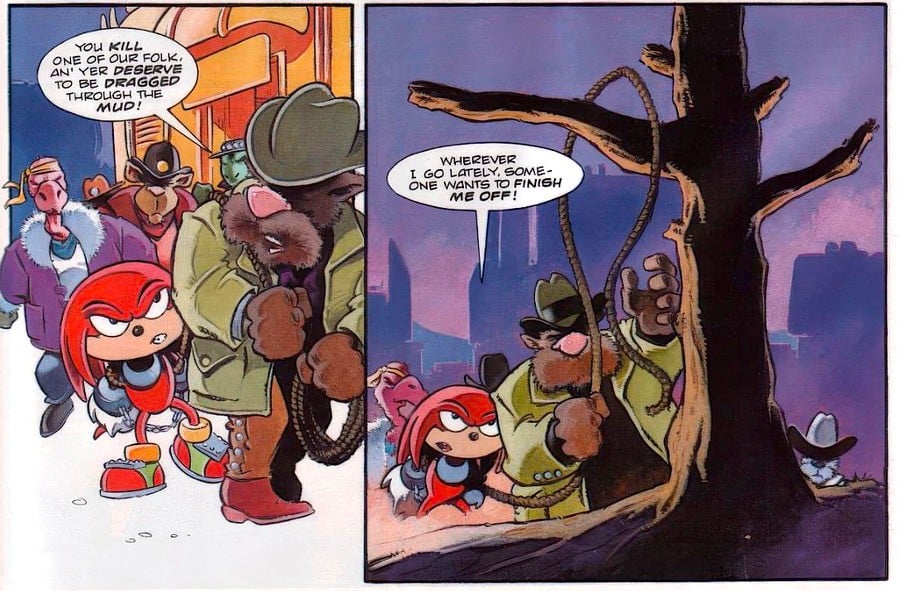
While creative freedom was largely granted, boundaries were occasionally tested. Kitching recounted a Knuckles story set in a Wild West environment that featured Knuckles in a saloon and, more controversially, a lynching scene. While the saloon depiction caused minor upset, the lynching scene required intervention, with the rope being moved from Knuckles’ neck to his waist in the artwork. Kitching later admitted, "looking back, I think I made a mistake by including a lynching scene in a kids’ comic." These instances underscore the balance between creative ambition and the sensibilities of a children’s publication.
Peak Popularity and the Inevitable Decline
As the 1990s progressed, Sonic the Comic continued to thrive, even amidst editorial transitions, with Richard Burton passing the baton to assistant editor Deborah Tate. This period saw the development of numerous memorable arcs, including loose adaptations of popular Sega titles like Sonic CD and Sonic 3 & Knuckles, alongside a plethora of original narratives.
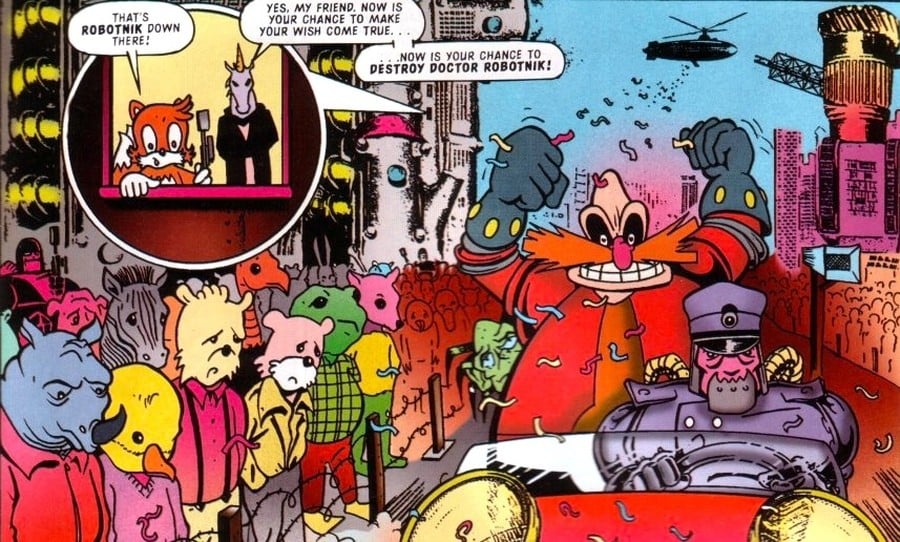
Noteworthy storylines from this era include Lew Stringer’s "Project Brutus" arc (Issues 63-65), which saw Robotnik’s assistant create a sentient, treacherous clone of the villain. Kitching and Nigel Dobbyn contributed compelling Knuckles-centric side stories, introducing Doctor Zachary, another Echidna with enigmatic knowledge of the Floating Island. Stringer and artist Carl Flint also produced the remarkably audacious "Easy Target" (Issue 87), a Tails-led narrative where the young fox is encouraged to assassinate Robotnik with a sniper rifle (though ultimately revealed to be an illusion). These narratives showcased the comic’s willingness to explore complex themes and push the boundaries of conventional children’s storytelling.
Despite its creative vitality and strong readership, behind-the-scenes financial pressures began to mount. Budget cuts led to a gradual erosion of the comic’s content. The popular news, game review, and game tips sections were eventually removed, page counts were reduced, and an increasing number of reprints began to appear alongside new material. This trend signaled the beginning of the end for the comic’s original content.
The Climactic Finale and a Brutal Farewell
Before transitioning entirely to reprints, Sonic the Comic delivered one of its most acclaimed and impactful arcs, loosely inspired by the events of the Sonic Adventure video game. This 10-issue saga, kicking off with "The Coming of Chaos" in Issue 175, depicted Grimer (Robotnik’s assistant) unleashing the formidable entity Chaos after Robotnik abandoned his pursuit of Sonic. Chaos’s destructive rampage through Metropolis City provided a dramatic and emotionally charged climax to the comic’s narrative history.
This arc is particularly remembered for the shocking death of Johnny Lightfoot, an original character who had been a regular presence since Issue 8. Kitching, then working with editor Andy Diggle (whose background at 2000 AD perhaps encouraged more mature themes), successfully pitched the character’s demise. "It actually was an easy pitch," Kitching stated. "Andy Diggle… was quite happy for me to have Johnny die in the story. Again, Sega had nothing to say about it."
Johnny’s death was notable for its brutal realism within a children’s comic. Rather than a drawn-out sacrifice, his end was sudden and unceremonious—he was simply hit, fell, and did not get up again. This unexpected and stark portrayal resonated deeply with readers, creating a lasting emotional impact. Elson reflected on this period: "Sonic the Comic was probably the most enjoyable job I ever had, and that last Chaos story was probably the most enjoyable thing I did while on Sonic the Comic." He highlighted the collaborative spirit and the narrative momentum, adding, "The death of Johnny has been mentioned a lot since; it was probably the emotional high mark of the series." The creative team leveraged the knowledge that the comic was nearing its original content end, allowing them the freedom to craft a truly definitive send-off.
The End of an Era and Enduring Legacy
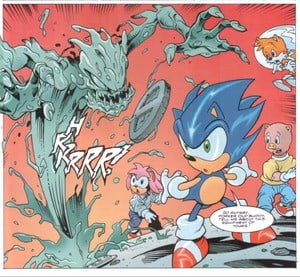
The last official issue of Sonic the Comic featuring new content was Issue 223, released in December 2002. It included a reprint of "The Evil Empire" alongside a heartfelt open letter to fans from Nigel Kitching, acknowledging the comic’s transition. From Issue 185 onwards, the comic had become reprint-only, a decision that ultimately contributed to its decline.
Creators expressed frustration with the management decisions that led to the comic’s eventual cessation of new material. Elson opined, "They assumed that the original audience had outgrown the comic so that the reprints would seem fresh to new readers, but the audience had grown with the comic and had little interest in rereading previous adventures. Once the reprints began, the decline in sales was inevitable." He remained convinced that "many more years of interesting and exciting new stories" could have been produced. Kitching shared this sentiment, believing that "if Fleetway had managed things differently, the comic could have continued for longer."
Despite the disappointment surrounding its conclusion, the creators look back on their time with Sonic the Comic with profound fondness. Both Elson and Kitching consistently express gratitude for the enduring affection fans hold for their work. Elson noted, "I am constantly thrilled that people still feel affection for the work we did on that comic." He further celebrated the fact that "so many ex-Sonic the Comic readers have become talented creatives and are producing great comics for new generations of readers," underscoring its significant influence on future generations of artists and writers. Kitching remembered the "fun I had when the comic was doing well" and praised the collaborative environment, working with artists like Elson, Nigel Dobbyn, and Mick McMahon, and writers such as Lew Stringer, under supportive editors like Richard Burton and Deborah Tate. "It felt like I was basically working with friends," he concluded.
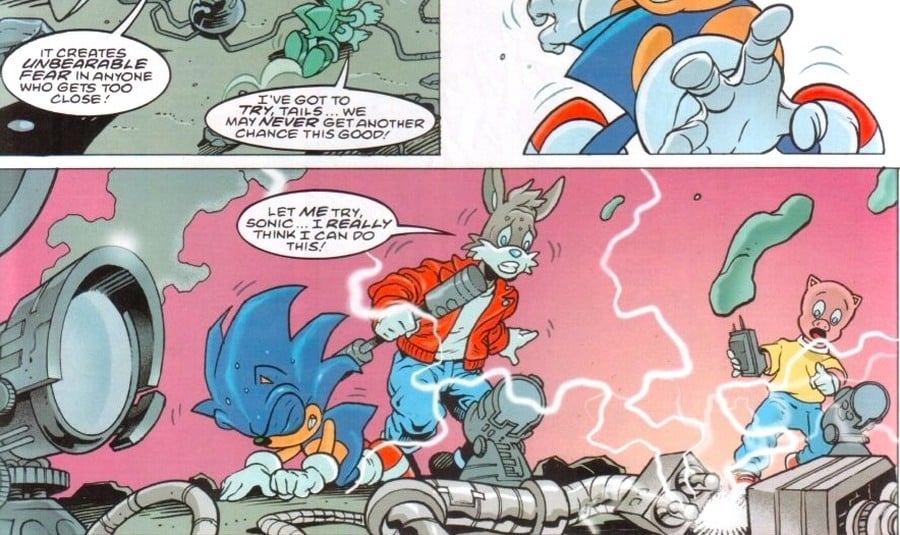
Fleetway’s Sonic the Comic stands as a testament to the power of creative freedom within licensed properties. It carved out a distinct and beloved niche, offering a darker, more nuanced interpretation of Sonic that resonated deeply with its UK audience. Its legacy endures not just in the memories of those who devoured its pages, but also in the continued inspiration it provides to a new generation of creators, solidifying its place as a truly unique and impactful chapter in comic book history.