Cecilia Chamidah Nur
The digital archives of gaming history have recently yielded a significant discovery: a playable prototype of "Ironclad," a cancelled third-person, mech-based adventure game that was in development for the Xbox 360 in 2008. Inspired by H.G. Wells’ seminal science fiction novel, The War of the Worlds, this unreleased title from The Workshop Entertainment Inc. offers a fascinating glimpse into a creative vision that never saw commercial release, now preserved for posterity thanks to dedicated efforts in game archiving.
The Unearthing of a Lost Project
The existence of "Ironclad" has largely remained an industry secret for over a decade. Its recent emergence onto the public stage began earlier this week when a prototype build, dated December 16, 2008, surfaced on Hidden Palace, a prominent digital library dedicated to the preservation of unreleased and prototype video game builds. The crucial contribution came from an individual identified as Aubrey, known in the preservation community as Nostalgic Aubrey. Following its upload, the discovery quickly gained traction through a social media post by Prototopia (formerly Obscure Gamers), a collective dedicated to exploring and documenting unreleased game content. Prototopia further amplified the news by publishing a comprehensive video analysis of the build, offering the first public deep dive into "Ironclad"’s mechanics and narrative potential.
This discovery underscores the critical role of organizations like Hidden Palace and the passion of individual preservationists. In an industry where countless projects are started but never completed, the efforts to archive these "lost" games provide invaluable insights into the development process, technological ambitions of their era, and the creative pathways that ultimately remained unexplored. Without such initiatives, titles like "Ironclad" would be permanently confined to the digital dustbin of history.
"Ironclad": A Martian Invasion Reimagined
H.G. Wells’ The War of the Worlds, published in 1898, has cast a long shadow over popular culture, inspiring countless adaptations across various media. From Orson Welles’ infamous 1938 radio drama that famously sparked widespread panic, to various film adaptations, television series, and musical interpretations like Jeff Wayne’s iconic 1978 rock opera, the narrative of a devastating Martian invasion has resonated for generations. In the realm of video games, this influence has manifested in diverse ways, ranging from direct adaptations of Wayne’s musical for platforms like the ZX Spectrum, Windows PCs, and PlayStation, to more subtle homages. Titles such as Valve’s Half-Life 2 famously drew inspiration from Wells’ Tripods for its menacing Strider machines, demonstrating the enduring power of the Martian war machine imagery.
"Ironclad" aimed to carve its own niche within this rich legacy, proposing a third-person, mech-based adventure. The prototype reveals a game deeply steeped in the atmosphere of panic and destruction synonymous with Wells’ narrative. The primary "Ironclad demo" appears to represent an early segment of the game, thrusting the player character into the immediate aftermath of the Martian landing. The demo depicts a scene of chaos: the protagonist is shown fleeing from a towering Martian Tripod, the iconic three-legged war machine, alongside hordes of insect-like alien creatures. Surrounding them, a panicked crowd of civilians scatters in terror, painting a vivid picture of humanity’s desperate struggle for survival.
An intriguing, albeit potentially placeholder, detail discovered by Prototopia within this demo is the ability for players to shoot these fleeing civilians. While it remains unclear whether this was an intended feature for the final game—perhaps a moral choice mechanic, an early unrefined element, or simply a byproduct of an unpolished prototype—it highlights the raw, visceral nature of the early build. The demo culminates with the player character’s discovery of the "Ironclad" itself, presumably the player’s primary means of combating the alien threat.
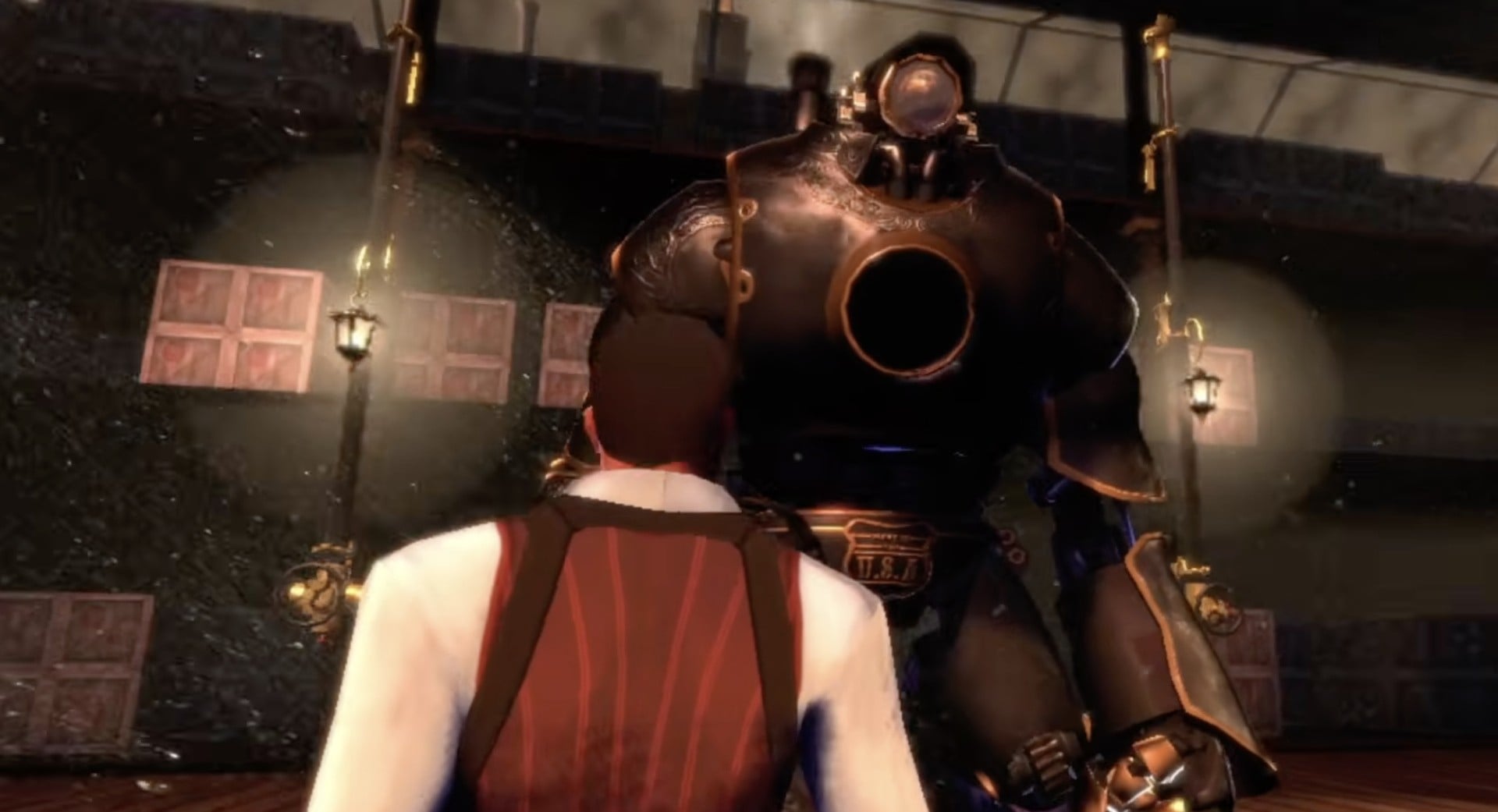
Further exploration of the prototype reveals another distinct segment, the "Cul De Sac demo." This section shifts focus, allowing players to directly experience piloting the titular mech. Set within a seemingly quiet residential street, this demo showcases the game’s promising destruction-based mechanics. Players could engage with the environment, notably by using everyday objects like street lamps as improvised weapons, demonstrating a creative approach to combat and interaction. The ability to break virtually everything in sight underscored the game’s ambition for dynamic environmental destruction, a hallmark of many action games during the Xbox 360 era. The combination of frantic on-foot sequences and powerful mech combat suggested a varied gameplay experience designed to immerse players in the harrowing fight against the Martian invaders.
The Workshop Entertainment Inc.: A Developer’s Trajectory
"Ironclad" was being developed by The Workshop Entertainment Inc., a California-based studio founded by industry veterans. Peter Akemann, a key figure in the studio’s establishment, brought with him significant experience, having co-founded Treyarch Invention alongside Chris Busse and Charles Tolman. Treyarch, of course, is a renowned studio best known for its contributions to the Call of Duty franchise. Akemann’s move to form The Workshop Entertainment Inc. signaled an ambition to explore new creative avenues and develop original intellectual properties.
While "Ironclad" ultimately remained unreleased, The Workshop Entertainment Inc. went on to establish a reputation within the industry. Their most notable released title was Sorcery, a PlayStation Move-exclusive action-adventure game launched in 2012 for the PlayStation 3. Sorcery was a significant project for Sony, designed to showcase the capabilities of their motion-sensing controller, and it received generally positive reviews for its imaginative world and engaging gameplay.
Beyond Sorcery, The Workshop Entertainment Inc. also provided crucial behind-the-scenes support for several high-profile titles. This often involves co-development, porting, quality assurance, or asset creation, a common practice in the modern game industry where specialized teams assist larger studios. Their contributions included work on Tango Gameworks’ survival horror title The Evil Within (2014) and Firaxis Games’ acclaimed strategy game XCOM 2 (2016). These support roles demonstrate the studio’s technical prowess and adaptability across different genres and development pipelines.
In 2016, The Workshop Entertainment Inc. was acquired by Skydance Media, a prominent diversified media company. Following the acquisition, the studio was rebranded as Skydance Interactive, shifting its focus towards virtual reality (VR) game development. This transition marked a new chapter for the team, with subsequent projects including Archangel and The Walking Dead: Saints & Sinners, solidifying their presence in the emerging VR market. The "Ironclad" prototype, dated December 16, 2008, strongly suggests it was one of the very first projects undertaken by The Workshop Entertainment Inc., a testament to the studio’s ambitious beginnings before its eventual evolution and acquisition.
The Xbox 360 Era: Innovation, Ambition, and Unseen Projects
The development of "Ironclad" took place during a vibrant and transformative period in the video game industry: the Xbox 360 and PlayStation 3 generation (roughly 2005-2013). This era was characterized by a significant leap in graphical fidelity, processing power, and the increasing sophistication of game engines. Developers were pushing boundaries with physics simulations, large-scale environmental destruction, and more complex AI, aiming for increasingly immersive and realistic experiences.
The capabilities showcased in the "Ironclad" prototype—particularly its robust destruction mechanics and the detailed alien designs—were indicative of the technological aspirations of the time. Developers were keen to leverage the new hardware to create grander, more cinematic gameplay moments. However, this era was also marked by escalating development costs, which often meant that projects, especially new intellectual properties, faced intense scrutiny from publishers. Funding challenges, shifting market trends, creative differences, or simply a publisher’s decision to reallocate resources frequently led to the cancellation of promising titles.

"Ironclad" likely fell victim to one or more of these common industry pitfalls. While the exact reasons for its cancellation remain officially undisclosed, it is a familiar narrative for many studios and publishers during that competitive period. The high stakes involved in AAA game development meant that even projects with impressive prototypes could be shelved if they didn’t align perfectly with a publisher’s long-term strategy or if they faced insurmountable technical or financial hurdles. The fact that The Workshop Entertainment Inc. subsequently shifted its focus to Sorcery and then to support roles suggests a pragmatic redirection of resources and talent to more viable projects.
A Chronology of Development and Discovery
The timeline of "Ironclad" spans over a decade, from its conceptualization to its eventual public revelation:
- Circa 2007-2008: The Workshop Entertainment Inc. is founded by Peter Akemann and begins development on "Ironclad" as one of its inaugural projects. The studio likely aimed to secure a publishing deal during this period.
- December 16, 2008: The date stamped on the recently surfaced prototype build. This indicates an active development phase, likely an alpha or a technical demo showcasing core gameplay mechanics and artistic vision to potential publishers.
- Post-2008 – Pre-2012: The project is officially cancelled. The precise date and reasons are not publicly known, but the studio’s subsequent release of Sorcery in 2012 suggests a shift in focus and resources away from "Ironclad."
- 2016: The Workshop Entertainment Inc. is acquired by Skydance Media and rebrands as Skydance Interactive, pivoting towards VR development.
- Early 2024: The prototype build of "Ironclad" is uploaded to Hidden Palace by Aubrey, marking its first public appearance and preservation.
- Shortly thereafter: Prototopia (formerly Obscure Gamers) highlights the discovery via social media and releases a detailed video analysis, bringing "Ironclad" to the attention of the wider gaming community.
Broader Implications: Game Preservation and the Legacy of Unreleased Titles
The discovery of "Ironclad" is more than just a historical curiosity; it holds significant implications for the broader field of video game preservation and our understanding of the industry’s evolution. Efforts by groups like Hidden Palace are akin to archaeological digs in the digital realm. They unearth fragments of creative endeavors that, without intervention, would be lost forever due to data degradation, proprietary hardware obsolescence, or simple neglect. Each preserved prototype offers a unique window into the past, illuminating the creative processes, technological challenges, and strategic decisions that shaped the games we eventually played, and those we didn’t.
For game historians and enthusiasts, these prototypes provide invaluable context. They allow for a deeper appreciation of the ambition developers harbored, even if those ambitions were ultimately curtailed. "Ironclad" demonstrates The Workshop Entertainment’s early vision and technical capabilities, offering a fuller picture of the studio’s journey before its later, more well-known projects. It also enriches the canon of War of the Worlds adaptations, showcasing another interpretation that almost made it to market.
Furthermore, these discoveries often resonate deeply with the original developers. While the cancellation of a project can be disheartening, seeing their work finally unearthed and appreciated, even years later, can be a moment of bittersweet validation. It ensures that the effort, creativity, and passion poured into these "lost" games are not entirely forgotten. The "what if" factor also looms large: how might "Ironclad" have contributed to the Xbox 360’s library, or influenced the mech-game genre, had it been completed? These questions fuel ongoing discussions and contribute to a richer understanding of gaming history.
In conclusion, the surfacing of "Ironclad" serves as a powerful reminder of the ephemeral nature of game development and the crucial importance of digital preservation. What was once a forgotten piece of code on a developer’s hard drive has now become a publicly accessible artifact, offering a rare and compelling look at an ambitious War of the Worlds adaptation that almost was. As technology continues to evolve and the industry produces ever more content, the dedicated work of preservationists ensures that the full tapestry of gaming history, including its unfulfilled visions, continues to be woven and remembered.