Vera Clarissa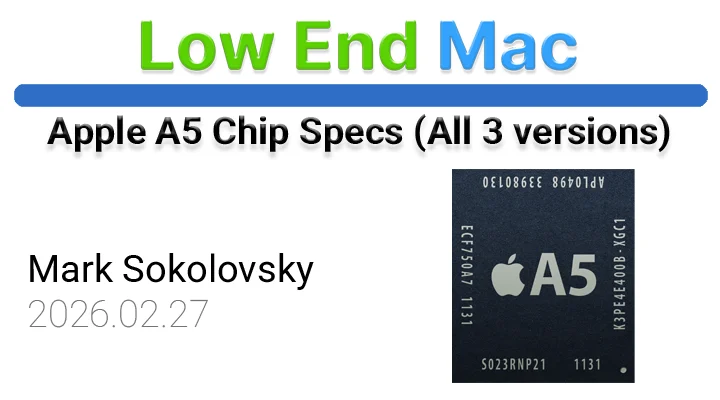
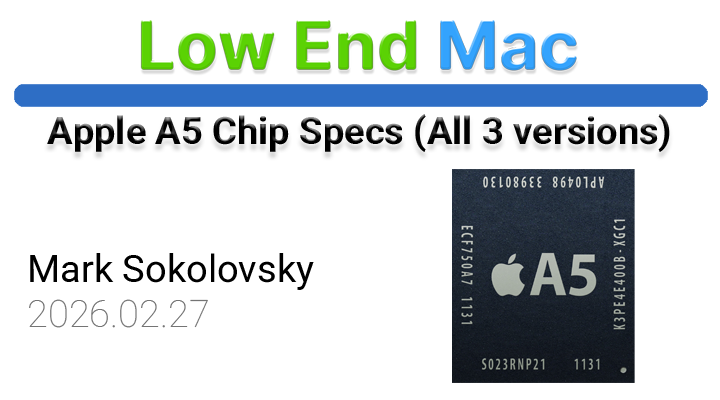
The Apple A5 chip, a significant component in Apple’s technological evolution, represents a crucial step in the company’s journey toward integrated system-on-a-chip (SoC) design. First introduced on March 11th, 2011, this dual-core processor, manufactured by Samsung, powered a generation of groundbreaking Apple devices, setting new benchmarks for performance and efficiency in the mobile computing landscape. This article provides a comprehensive hardware profile of the Apple A5 series, exploring its architecture, capabilities, and the technological context in which it emerged.
Architectural Foundation and Key Specifications
The Apple A5 chip, identified by the codename APL0498 and part number S5L8940, was a testament to Apple’s growing prowess in semiconductor design. It was fabricated using a 45-nanometer process, later transitioning to a more advanced 32nm High-K dielectric metal gate process, a common manufacturing node for high-performance chips of that era. This advancement in fabrication technology allowed for increased transistor density and improved power efficiency, crucial for battery-powered mobile devices.
At its core, the A5 featured a dual-core CPU architecture based on the ARMv7 instruction set, operating in 32-bit mode. This dual-core configuration was a significant upgrade from its predecessor, the A4, enabling parallel processing capabilities that dramatically enhanced multitasking and the execution of complex applications. The clock speeds of these performance cores ranged from 800 MHz to 1 GHz, providing substantial processing power for the demands of the time.
While the A5 was designed with a focus on performance cores, it’s important to note that later iterations or specific implementations, such as in the Apple TV Gen 3, saw a reduction to a single CPU core. This adaptation highlights Apple’s strategy of tailoring SoCs to the specific requirements and power envelopes of different product lines.
Memory and Cache Architecture
The memory subsystem of the A5 was equally critical to its performance. It employed a 64-bit memory bus with two 32-bit channels, facilitating efficient data transfer. The chip supported LPDDR2-800 memory, operating at 400 MHz, and offered a theoretical memory bandwidth of approximately 6.4 GB/s. This bandwidth was essential for feeding the dual-core CPU and the integrated graphics processor with data at a sufficient rate.
In terms of cache, the A5 featured a layered structure designed to minimize latency and improve data access speeds. Each performance core was equipped with 32 KB of L1 instruction cache (P-L1i) and 32 KB of L1 data cache (P-L1d), totaling 64 KB of L1 cache per core. The aggregate L1 cache across both cores was therefore 128 KB. Additionally, a unified 1 MB L2 cache served both CPU cores, providing a larger pool of frequently accessed data. For the single-core variant found in the Apple TV Gen 3, the L1 cache was halved to 32 KB per core, and the L2 cache remained at 1 MB, indicating a scaling of resources based on the device’s needs. The absence of dedicated efficiency cores or a system-level cache in the A5’s architecture differentiated it from later Apple Silicon designs, which would evolve to include heterogeneous core configurations and more complex cache hierarchies for enhanced power management and performance.
Integrated Graphics Prowess
Beyond its CPU capabilities, the Apple A5 chip also boasted an integrated graphics processing unit (GPU). This GPU was designed to handle the graphical demands of mobile applications, games, and video playback. It featured two GPU cores, each equipped with 4 SIMD (Single Instruction, Multiple Data) units and 32 FP32 (32-bit Floating Point) Arithmetic Logic Units (ALUs). Operating at a clock speed of 200 MHz, the GPU was capable of delivering approximately 12.8 GFLOPS (Giga Floating-point Operations Per Second) of processing power. This was a significant leap forward, enabling more visually rich and interactive user experiences on Apple’s devices. The graphics capabilities of the A5 were instrumental in driving the success of devices like the iPad 2 and iPhone 4S, allowing for smoother animations, more detailed graphics in games, and enhanced video playback.
Context and Evolution of Apple Silicon
The introduction of the A5 chip was part of a broader strategy by Apple to exert greater control over its hardware and software ecosystem. By designing its own processors, Apple could optimize silicon for its specific operating systems and applications, leading to unparalleled performance and efficiency. The A5 built upon the foundation laid by the A4, which debuted in the original iPad and iPhone 4. The A4 was Apple’s first custom ARM-based SoC, marking a significant departure from its reliance on third-party processors like those from Samsung and Qualcomm in earlier iPhones.

The development and release of the A5 can be contextualized within the rapidly evolving mobile technology landscape of the early 2010s. This was a period of intense competition, with companies like Samsung, Qualcomm, and Nvidia all vying for dominance in the smartphone and tablet processor market. Apple’s ability to consistently deliver powerful and efficient SoCs like the A5 gave it a distinct competitive advantage, allowing its devices to stand out in terms of performance and user experience.
The A5 chip was notably featured in several key Apple products:
- iPad (2nd generation): Launched in March 2011, the iPad 2 was one of the first devices to prominently showcase the A5’s capabilities, offering a significant performance boost over its predecessor and contributing to its widespread commercial success.
- iPhone 4S: Released in October 2011, the iPhone 4S also utilized the A5 chip, providing a substantial leap in processing power and graphics performance, enabling features like the enhanced camera capabilities and the introduction of Siri.
- iPod Touch (4th generation): This iteration of the popular music player also benefited from the A5’s processing power, enhancing its gaming and multimedia capabilities.
- Apple TV (2nd and 3rd generation): While the 2nd generation Apple TV used a variant of the A4, the 3rd generation Apple TV, released in March 2012, featured a single-core version of the A5 chip (codenamed APL2498), demonstrating Apple’s ability to adapt the architecture for specific device needs and cost targets.
The A5’s success paved the way for subsequent generations of Apple Silicon, including the A6, A7 (which notably introduced a 64-bit architecture), and beyond. Each iteration brought further advancements in performance, power efficiency, and integration of new technologies, solidifying Apple’s position as a leader in mobile processor design.

Manufacturing and Supply Chain Considerations
The manufacturing of the A5 chip was primarily handled by Samsung Electronics, a critical partner in Apple’s supply chain. This partnership, though sometimes complex due to the competitive nature of the two companies, was essential for Apple to meet the massive demand for its products. The use of Samsung’s advanced fabrication facilities allowed Apple to produce its custom-designed chips at scale. The transition from a 45nm to a 32nm process for the A5 also underscored the importance of semiconductor manufacturing technology in enabling the performance gains seen in successive generations of Apple devices.
Analysis of Implications and Legacy
The Apple A5 chip was more than just a component; it was a statement of Apple’s strategic vision. Its dual-core architecture and improved graphics capabilities directly contributed to the enhanced user experiences offered by the iPad 2 and iPhone 4S. These devices were not merely incremental updates; they redefined what was possible in mobile computing, setting new standards for responsiveness, multitasking, and graphical fidelity.
The A5’s success validated Apple’s in-house chip design strategy, which has since become a cornerstone of its product development. By controlling the core silicon, Apple gained significant advantages in terms of performance optimization, power management, and the ability to integrate specialized hardware features. This control has allowed Apple to maintain a performance lead over many competitors for extended periods and to create a tightly integrated hardware-software experience that is difficult for others to replicate.

The chip’s architecture, particularly its dual-core design and the supporting memory subsystem, represented a balanced approach to performance and power consumption, critical for the battery life expectations of mobile users. While later chips would introduce more sophisticated power management techniques and heterogeneous core designs (like performance and efficiency cores), the A5 laid essential groundwork for these advancements.
The presence of the A5 in products like the iPad 2 and iPhone 4S also contributed to their longevity and continued relevance in the used market for years after their initial release. The robust performance provided by the A5 meant that these devices could still handle a respectable range of applications and tasks, a testament to the thoughtful design and engineering that went into the chip.
In conclusion, the Apple A5 chip stands as a pivotal artifact in the history of mobile technology. Its introduction marked a significant leap in processing power and graphical capabilities for Apple’s flagship devices, cementing the company’s reputation for delivering cutting-edge hardware. The A5’s architectural innovations, coupled with Apple’s strategic vision for in-house silicon design, not only powered a generation of iconic products but also laid the foundation for the continued evolution of Apple Silicon, which remains a defining characteristic of Apple’s technological prowess today. The detailed specifications of the A5, from its dual-core ARMv7 CPU and integrated GPU to its LPDDR2 memory interface, provide a clear picture of a chip that was instrumental in shaping the modern mobile computing experience.