Vera Clarissa
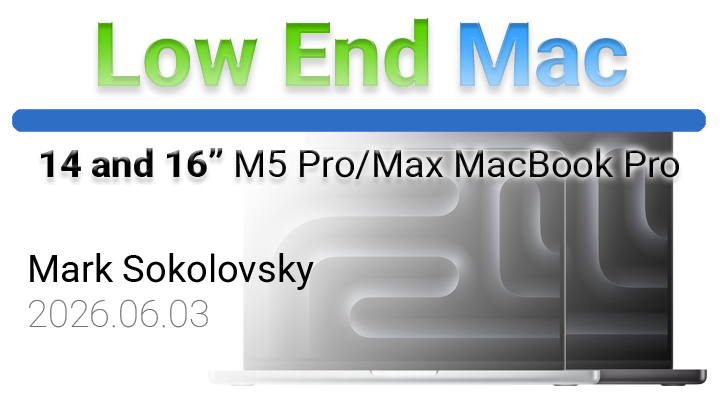
The long-awaited M5 Pro and M5 Max MacBook Pros have finally arrived, taking Apple Silicon’s performance to an entirely new echelon. Building upon the success of their predecessors, these new models integrate enhanced processing power, increased core counts, and a significant nomenclature shift for their CPU cores, all housed within the refined aluminum unibody design that has become synonymous with Apple’s premium laptops. This release marks a pivotal moment in Apple’s silicon roadmap, signaling advancements that will likely redefine user expectations for portable computing.
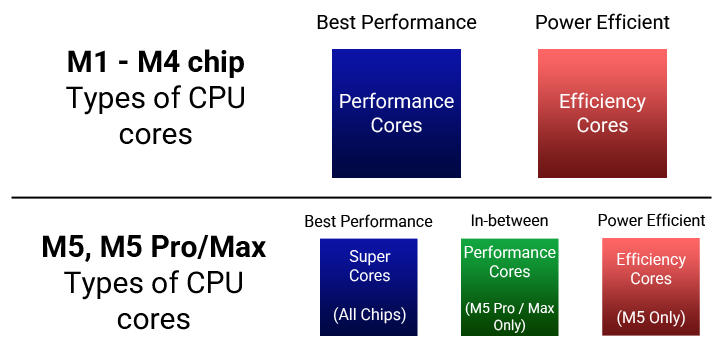
The most notable change in the M5 Pro and M5 Max chips is the renaming of their performance cores to "Super Cores." This adjustment, which retroactively applies to the M5 non-pro chip as well, simplifies the understanding of the chip’s architecture by distinguishing between high-performance and efficiency cores. In previous generations, Apple consistently used the "Performance + Efficiency cores" designation. The new naming convention, "Super Cores + Efficiency Cores," aims to convey a more pronounced emphasis on the enhanced speed and capability of the primary processing units. This strategic renaming reflects Apple’s ongoing commitment to pushing the boundaries of silicon design and its implications for both professional and everyday computing tasks.
In a move that mirrors the technological leap seen with the iPhone 16e earlier this year, the M5 Pro and M5 Max MacBook Pros are now equipped with Apple’s proprietary N1 wireless networking chip. This integration introduces a suite of cutting-edge connectivity features to the Mac lineup, including support for Wi-Fi 7 (802.11be), Bluetooth 6, and Thread networking technology. Wi-Fi 7 promises significantly faster speeds, lower latency, and improved reliability compared to previous Wi-Fi standards, crucial for demanding tasks such as high-resolution video streaming, large file transfers, and cloud-based workflows. The inclusion of Bluetooth 6 further enhances the seamless integration with a wider array of wireless peripherals, while Thread networking lays the groundwork for a more robust and interconnected smart home ecosystem, aligning with Apple’s broader vision for device interoperability.
Storage configurations have also seen a substantial upgrade, with capacities effectively doubled from the previous generation. Both the 14-inch and 16-inch M5 Pro and M5 Max MacBook Pro models now begin with a generous 1 TB of solid-state storage. This increased baseline storage addresses a common user need, particularly for professionals working with large media files, complex projects, or extensive software libraries. While other features largely remain consistent with prior iterations, such as the option for the nano-texture display, this doubling of storage is a significant enhancement that directly benefits users seeking ample space for their digital lives and creative endeavors.
The Evolution of Apple Silicon: From M1 to M5
The introduction of the M5 Pro and M5 Max chips continues Apple’s ambitious journey with its custom silicon. The M1 chip, launched in late 2020, marked a paradigm shift, integrating CPU, GPU, I/O, and more into a single system on a chip (SoC). This not only boosted performance and power efficiency but also allowed for tighter integration between hardware and software. Subsequent generations, the M2 and M3 families, iteratively improved upon these foundations, increasing core counts, enhancing graphics capabilities, and refining the neural engine. The M4, introduced in the latest iPad Pro, showcased advancements in AI processing, and now the M5 series brings these innovations to the MacBook Pro, alongside the new naming convention and enhanced connectivity.

The timeline of Apple Silicon in MacBooks can be traced back to November 2020 with the M1 chip. This was followed by the M1 Pro and M1 Max in late 2021, offering more powerful configurations for professional users. The M2 generation arrived in early 2022, with M2 Pro and M2 Max following later that year. The M3 family, including the M3, M3 Pro, and M3 Max, debuted in late 2023, introducing hardware-accelerated ray tracing and improved efficiency. The M5 series, therefore, represents the next significant evolutionary step, building on years of architectural refinement and performance gains.
Apple Intelligence Integration and System Requirements
A key feature highlighted with the new M5 MacBook Pros is their robust support for "Apple Intelligence," Apple’s suite of AI-powered features. macOS now fully leverages Apple Intelligence on any Mac equipped with Apple Silicon. This extends to most iPads featuring an M-chip and iOS devices running iOS 18 and later, provided they are equipped with an A17 Pro chip or a more advanced processor, such as the iPhone 15 Pro/Pro Max or all iPhone 16 models and beyond. This widespread integration signifies Apple’s commitment to embedding AI capabilities across its ecosystem, enabling more personalized and intelligent user experiences, from enhanced Siri interactions to advanced writing and image generation tools. The M5 chips, with their enhanced neural engines, are particularly well-suited to handle the demanding computational tasks associated with these AI features, ensuring a fluid and responsive user experience.
The CPU Core Name Changes: A Deeper Dive
The renaming of performance cores to "Super Cores" is more than just a semantic shift. It underscores Apple’s continued innovation in microarchitecture, aiming to deliver unparalleled performance for the most demanding tasks. While the fundamental architecture of performance and efficiency cores remains, the "Super Core" designation emphasizes the enhanced capabilities of these cores in the M5 Pro and M5 Max. This distinction is crucial for understanding how these chips are optimized for tasks ranging from complex video editing and 3D rendering to scientific simulations and software development. The efficiency cores, meanwhile, continue to handle less intensive tasks, ensuring optimal power consumption and extended battery life for everyday usage.

The previous generations of Apple Silicon chips adhered to a straightforward "Performance + Efficiency cores" format. The M5 Pro and M5 Max introduce the "Super Cores" nomenclature for their performance cores, a change that also retroactively applies to the M5 non-pro chip. This reclassification aims to provide a clearer distinction between the chip’s most potent processing units and its power-efficient cores, reflecting ongoing architectural improvements and performance enhancements.
Key Specifications and Features of the M5 Pro and M5 Max MacBook Pros
The M5 Pro and M5 Max MacBook Pros are designed to cater to the most discerning users, offering a compelling blend of raw power, advanced features, and extended battery life.
Closed Lid Mode and External Display Support:
A notable feature that continues to be supported and refined is the "closed lid" or "clamshell" mode. This functionality allows users to operate their MacBook Pro with the lid closed, dedicating all available video RAM to an external display or multiple external displays. To engage this mode, the MacBook Pro must be connected to AC power, an external display, and a USB or Bluetooth mouse and keyboard. Upon powering up and seeing the desktop appear on the external monitor, closing the lid activates sleep mode. Waking the device can be achieved by interacting with the external mouse or keyboard. This feature is particularly beneficial for users who prefer a desktop-like setup while still having the portability of a MacBook Pro. To revert to using the internal display, users simply disconnect the external display, put the computer to sleep, and then open the lid.
Battery Life:
Apple continues to emphasize the exceptional battery life of its MacBook Pro lineup. The M5 Pro and M5 Max models are rated to deliver an impressive 16 to 17 hours of wireless web browsing and up to 24 hours of video streaming. These figures are indicative of the power efficiency achieved through Apple’s custom silicon and optimized macOS operating system, allowing professionals to work for extended periods without being tethered to a power outlet.
Storage:
As previously mentioned, storage has been significantly enhanced. Both the 14-inch and 16-inch models now start with a base storage of 1 TB. This ample storage capacity is crucial for professionals handling large datasets, high-resolution media, and extensive software installations, eliminating the need for immediate external storage solutions for many users.
Display:
The renowned Liquid Retina XDR display, with its exceptional brightness, contrast, and color accuracy, remains a cornerstone of the MacBook Pro experience. The option for nano-texture glass, which reduces glare in bright environments, continues to be available for users who require it for specific professional workflows, particularly in photography, videography, and design.
Connectivity:
Beyond the new Wi-Fi 7 and Bluetooth 6 capabilities, the M5 MacBook Pros likely retain a robust selection of ports, including Thunderbolt 4 (USB-C) ports, an HDMI port, and an SDXC card slot, providing versatile connectivity for a wide range of peripherals and external devices.
Implications and Analysis
The introduction of the M5 Pro and M5 Max MacBook Pros, with their enhanced performance, advanced connectivity, and refined architecture, signifies Apple’s continued dominance in the high-performance laptop market. The "Super Core" nomenclature, while a stylistic change, reflects a genuine leap in processing power, enabling users to tackle increasingly complex and demanding tasks with greater ease and efficiency. The integration of Wi-Fi 7 and Bluetooth 6 positions these machines at the forefront of wireless technology, ensuring future-proofing and seamless integration with the evolving landscape of connected devices.
The doubling of base storage is a practical and welcome upgrade that directly addresses user feedback and the growing demands of modern workflows. For creative professionals, developers, and researchers, having 1 TB of fast SSD storage readily available can significantly streamline their work processes and reduce reliance on external drives.

Furthermore, the deep integration of Apple Intelligence across macOS and other Apple devices underscores Apple’s strategic vision to create a more cohesive and intelligent ecosystem. The M5 chips, with their enhanced Neural Engines, are crucial enablers of these AI features, promising a future where computing is more intuitive, personalized, and proactive.
The sustained focus on power efficiency, evidenced by the impressive battery life figures, remains a critical differentiator for Apple’s laptops. This allows professionals to maintain productivity on the go without compromising on performance, a key consideration for those who travel frequently or work in environments without readily available power sources.
In conclusion, the M5 Pro and M5 Max MacBook Pros represent a significant evolution in Apple’s laptop offerings. They not only push the boundaries of performance and connectivity but also deepen the integration of intelligent features across the Apple ecosystem, solidifying their position as premium devices for professionals and power users alike. The strategic renaming of CPU cores, while subtle, serves to highlight the advancements made in their architecture, promising an even more potent and capable computing experience.