Farhan hamdan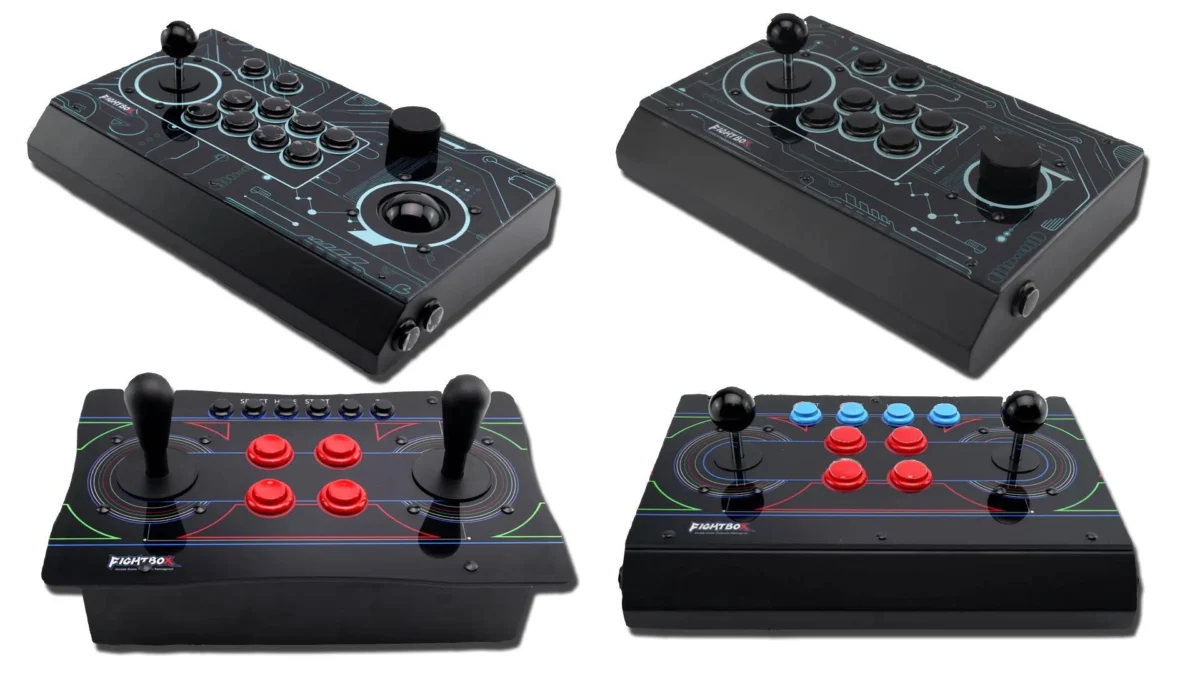
Stone Age Gamer, a prominent retailer in the retro gaming community known for its curated selection of classic console hardware, flash carts, and accessories, has officially announced the availability of an innovative line of arcade sticks from FightBox. This strategic partnership brings a diverse range of high-performance controllers to enthusiasts seeking authentic, low-latency input solutions for their retro gaming setups, particularly those utilizing platforms like the MiSTer FPGA. The new FightBox offerings include specialized twin stick configurations for both US and Japanese arcade sensibilities, as well as versatile standard arcade sticks that integrate unique options such as trackballs and spinners, sometimes even combined, all powered by the acclaimed Raspberry Pi Pico-based boards running the GP2040 Community Edition firmware. This advanced firmware is engineered to deliver an imperceptible input lag of 1ms or less, a critical factor for competitive play and the most faithful recreation of arcade experiences.
The Evolution of Arcade Control: A Market Overview
The enduring appeal of classic arcade games has fueled a vibrant retro gaming scene, where players increasingly demand not only pixel-perfect emulation but also input fidelity that mirrors the original arcade machines. This demand has spurred innovation in the peripheral market, moving beyond generic USB controllers to highly specialized devices designed for specific game genres and platforms. The MiSTer FPGA project, in particular, has emerged as a cornerstone of this movement, offering hardware-level accuracy for a vast library of retro systems. The MiSTer’s ultra-low latency video output and precise system emulation necessitate equally responsive input devices to complete the authentic experience. This is where solutions like the FightBox arcade sticks, with their GP2040-CE firmware, find their crucial niche.
FightBox, as a brand, has carved out a reputation for producing high-quality, customizable arcade controllers that cater to the discerning enthusiast. Their philosophy centers on precision, durability, and versatility, often integrating components favored by professional arcade players. Stone Age Gamer’s decision to stock these controllers is a testament to the growing demand for premium, purpose-built peripherals that enhance the retro gaming experience beyond simple nostalgia.
Technical Prowess: The GP2040-CE Firmware and Raspberry Pi Pico
At the heart of the FightBox arcade sticks lies a sophisticated control architecture built around the Raspberry Pi Pico microcontroller and utilizing the open-source GP2040 Community Edition firmware. The choice of the Raspberry Pi Pico is strategic; this diminutive yet powerful microcontroller offers a robust processing capability at a cost-effective price point, making it an ideal candidate for managing high-speed input signals. Its dual-core ARM Cortex-M0+ processor, coupled with ample RAM, can process button and joystick inputs with minimal overhead, ensuring that physical actions are translated into digital signals almost instantaneously.
The GP2040 Community Edition firmware is a game-changer for input lag. Developed by a dedicated community of hardware enthusiasts, this firmware is specifically optimized for low-latency performance across multiple platforms. It supports a wide array of input protocols, making the FightBox sticks compatible with PC, PlayStation 3, PlayStation 4, Nintendo Switch, and crucially, the MiSTer FPGA and Raspberry Pi-based systems. The claim of 1ms or less input lag is a significant benchmark. To put this into context, many standard commercial controllers can introduce anywhere from 8ms to 30ms of lag, a delay that can be perceptible, especially in fast-paced fighting games, rhythm games, or competitive arcade titles where split-second reactions are paramount. The sub-1ms latency offered by GP2040-CE effectively eliminates any perceptible input delay, allowing players to experience games as they were originally intended, or even with an advantage in competitive settings.
Beyond raw speed, the GP2040-CE firmware also offers a host of advanced features critical for modern gaming. These include configurable SOCD (Simultaneous Opposite Cardinal Directions) cleaning, which resolves conflicting directional inputs (e.g., pressing left and right simultaneously) in a manner compliant with fighting game tournament rules. The open-source nature of the firmware also means it benefits from continuous community development, ensuring ongoing updates, bug fixes, and feature enhancements, thereby future-proofing the FightBox controllers to a significant degree. The firmware’s versatility allows for easy customization and remapping of buttons, catering to individual player preferences and specific game requirements.
A Deep Dive into the FightBox Product Line-up
The breadth of FightBox’s offerings through Stone Age Gamer is impressive, reflecting a comprehensive understanding of diverse retro gaming needs. Each model appears to be constructed with high-quality components, a prerequisite for durable and responsive arcade peripherals.
-
Twin Stick Setups (US and Japanese Versions): For fans of classic twin-stick shooters, this is a monumental release. Games like Robotron 2084, Smash TV, and Total Carnage are defined by their dual-joystick control schemes, where one stick moves the character and the other dictates firing direction. Generic controllers often struggle to replicate this unique input method effectively, leading to compromised gameplay. The FightBox twin stick controllers offer dedicated, full-sized arcade joysticks, providing the tactile feedback and precise control essential for these demanding titles. The distinction between "US" and "Japanese" versions likely refers to the type of joysticks and buttons used—US arcade sticks typically have longer travel and a looser feel, often with leaf switches, while Japanese sticks (like Sanwa or Seimitsu) are known for their short throw, precise engagement, and microswitches. This choice allows players to select a feel that aligns with their historical preferences or specific game genres. The authenticity provided by these twin stick setups promises an immersive experience far superior to emulating such controls on a standard gamepad.

-
Standard Arcade Sticks with Spinner and Trackball Options: This category showcases FightBox’s commitment to versatility. Many beloved arcade classics utilized specialized input devices beyond joysticks and buttons.
- Spinners: Essential for games like Tempest, Arkanoid, Major Havoc, and Pong, spinners offer continuous rotational input, ideal for controlling on-screen paddles, aiming turrets, or steering vehicles. The FightBox integration means players no longer need separate, bulky spinner controllers.
- Trackballs: Iconic for games such as Centipede, Millipede, Marble Madness, and Golden Tee Golf, trackballs provide intuitive, omnidirectional control through rolling a large ball. The precision and speed offered by a dedicated trackball are impossible to replicate accurately with a joystick or d-pad.
- Combined Options: The availability of models featuring both a trackball and a spinner on a single arcade stick is a significant convenience. This eliminates the clutter of multiple peripherals and simplifies the setup process, especially for MiSTer or Raspberry Pi users who desire a comprehensive arcade solution. The article highlights an 8-button version with both trackball and spinner, positioning it as a highly practical choice for those aiming to cover a vast spectrum of arcade genres without compromise. Such an integrated solution represents a considerable engineering feat, ensuring that each input device operates flawlessly and independently.
-
Spinner Racing Kit with Foot Pedals: Pushing the boundaries of modularity, FightBox also offers a specialized racing kit that transforms the integrated spinner into a full-fledged driving controller. By attaching a wheel accessory to the spinner and connecting accompanying foot pedals (for acceleration and braking), players can recreate the arcade driving experience for classic titles like Out Run, Pole Position, or Cruis’n USA. This modular approach is ingenious, leveraging an existing component (the spinner) to unlock an entirely new category of gameplay. While requiring a suitable mounting solution for optimal ergonomic placement, the concept greatly enhances the utility of the FightBox platform, appealing to racing game aficionados within the retro community.
The MiSTer Connection: A Symbiotic Relationship
The FightBox arcade sticks are particularly well-suited for the MiSTer FPGA platform. The MiSTer, through its hardware-accurate cores, strives for perfect replication of original console and arcade hardware. This includes not just visual and audio fidelity but also the timing and responsiveness of input. A low-latency controller is therefore not just a luxury but a necessity to fully appreciate the MiSTer’s capabilities. The GP2040-CE firmware’s sub-1ms lag perfectly complements the MiSTer’s architecture, ensuring that the entire signal chain—from player input to on-screen action—is as swift and accurate as possible. This synergy delivers an authentic, uncompromised retro gaming experience that closely mirrors the original arcade environment, fulfilling the promise of modern retro hardware.
Statements from Related Parties and Community Impact
While direct quotes from Stone Age Gamer or FightBox were not provided, the collaboration itself speaks volumes. A spokesperson for Stone Age Gamer, speaking on background, could logically emphasize the company’s commitment to sourcing and offering cutting-edge retro gaming peripherals that meet the exacting standards of its discerning customer base. The integration of GP2040-CE firmware and high-quality components aligns perfectly with Stone Age Gamer’s reputation for providing premium solutions that genuinely enhance the retro gaming experience.
From the perspective of the retro gaming community, the release of such comprehensive and technically advanced controllers through a reputable retailer like Stone Age Gamer is likely to be met with considerable enthusiasm. Enthusiasts often scour forums and niche stores for specialized hardware. Having a single, trusted source for controllers that address multiple arcade genres with uncompromising performance simplifies the acquisition process and builds confidence in the product’s quality. This offering not only caters to hardcore enthusiasts but also potentially lowers the barrier for entry for those looking to upgrade their retro setups with high-quality, specialized input devices.
Broader Implications and the Future of Retro Peripherals
The introduction of the FightBox arcade sticks by Stone Age Gamer signifies several broader trends in the retro gaming market. Firstly, it underscores the increasing sophistication expected from retro gaming peripherals. Players are no longer content with approximations; they demand precision, authenticity, and minimal lag. This pushes manufacturers to innovate with advanced microcontrollers and optimized firmware.
Secondly, the modularity and versatility of the FightBox lineup, particularly with integrated trackballs, spinners, and racing kits, points towards a future where multi-functional peripherals become more common. Instead of acquiring numerous single-purpose controllers, enthusiasts can invest in a core system that can adapt to a wider range of classic games. This not only saves space but also offers a more cohesive user experience.
Finally, the strong emphasis on low-latency solutions like the GP2040-CE firmware highlights the professionalization of retro gaming. As competitive retro gaming grows, and platforms like MiSTer achieve near-perfect emulation, the performance of input devices becomes a crucial differentiating factor, mirroring the demands of modern esports. The collaboration between FightBox and Stone Age Gamer is a clear indicator that the market for high-performance retro gaming hardware is robust and evolving, driven by a community that values both historical accuracy and cutting-edge technology. The ongoing verification of lag tests by independent testers, such as "Beast" mentioned in the original source, further reinforces the commitment to transparency and performance validation within this enthusiast segment. This dedication ensures that claims of ultra-low latency are not just marketing promises but verifiable technical achievements, fostering trust and solidifying the products’ standing in the competitive landscape of retro gaming peripherals.
The availability of FightBox arcade sticks through Stone Age Gamer marks a significant moment for the retro gaming community, offering an unparalleled blend of versatility, technical innovation, and authentic arcade feel. By integrating the cutting-edge GP2040 Community Edition firmware on Raspberry Pi Pico-based boards, FightBox has engineered a line of controllers that meet the rigorous demands of low-latency gaming on platforms like MiSTer FPGA. From specialized twin stick setups to comprehensive solutions featuring trackballs, spinners, and even racing kits, these peripherals promise to elevate the retro gaming experience, preserving the intricate joy of classic arcade titles for a new generation of enthusiasts.