Cecilia Chamidah Nur
A significant development in the realm of retro gaming hardware emulation has emerged, with a developer known as obrien654j successfully demonstrating a Sega CD FPGA core running on the Analogue Pocket. This achievement marks a notable expansion of the portable device’s capabilities, bringing a historically challenging platform to a modern, high-fidelity handheld. The developer has indicated that while some work remains, a public release of the core is anticipated "soon," igniting considerable excitement within the retro gaming community.
The demonstration, initially shared via a video posted on Reddit, showcased the Sega CD core in operation on the Analogue Pocket. According to obrien654j, the core currently exhibits "good audio timing," a crucial element for an authentic retro experience. However, the developer candidly acknowledged that "boot reliability issues" are still being addressed, and "FMVs stutter here and there." These are common hurdles in the complex process of FPGA development, particularly when replicating intricate systems like the Sega CD, which relied heavily on streaming data from optical media. Despite these remaining challenges, the confidence expressed by the developer in overcoming them, evidenced by the "soon" release tease, suggests that these are considered solvable optimization tasks rather than fundamental roadblocks.
The Technical Triumph: Unpacking the Sega CD on Analogue Pocket
To fully appreciate obrien654j’s accomplishment, it is essential to understand the technical intricacies involved. An FPGA (Field-Programmable Gate Array) core is not merely software emulation; it involves configuring a programmable logic chip to mimic the original hardware’s circuitry at a fundamental level. This allows for a level of accuracy often referred to as "hardware accurate" or "cycle accurate," far surpassing traditional software emulators in its fidelity to the original system’s behavior. The Analogue Pocket, a premium portable device, leverages this FPGA technology to deliver precise recreations of classic console experiences.
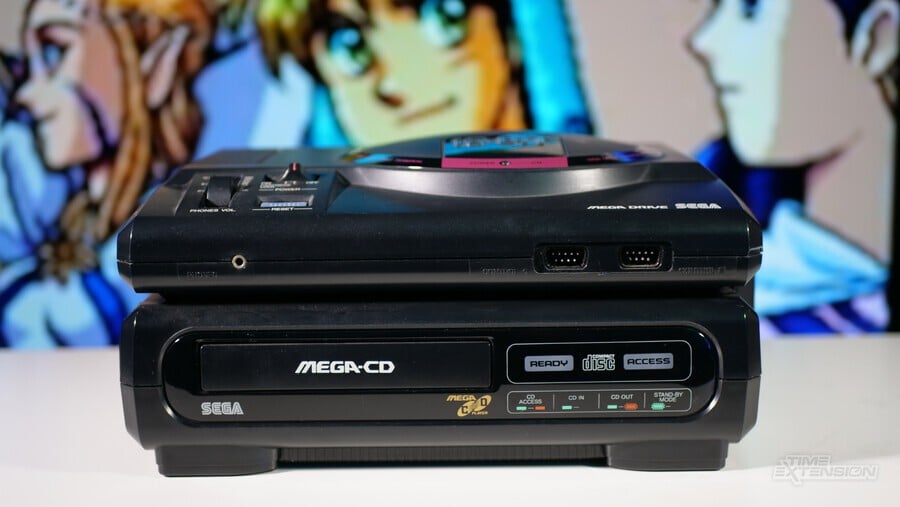
The Sega CD, released in Japan on December 12th, 1991 (as the Mega CD), was an ambitious add-on for the Sega Genesis/Mega Drive. It introduced several layers of complexity that make FPGA replication a daunting task. Beyond the core Genesis hardware, the Sega CD itself featured a faster Motorola 68000 CPU (at 12.5 MHz, compared to the Genesis’s 7.6 MHz main CPU), a dedicated custom graphics chip (the Sega CD ASIC), and significantly, a CD-ROM drive and its associated control mechanisms, buffer RAM, and audio processing units. Replicating the synchronous and asynchronous interactions between these distinct components, the CD-ROM’s data streaming, and the custom chips’ functionalities, all within the finite resources of a portable FPGA, presents a formidable engineering challenge.
The issues highlighted by obrien654j – boot reliability and FMV stuttering – are indicative of these complexities. Boot reliability often pertains to the precise timing and initialization sequence of various hardware components, which must be perfectly mimicked for games to load consistently. FMV (Full Motion Video) stuttering, on the other hand, points to challenges in efficiently streaming and decompressing video data from the simulated CD-ROM at the correct speed and synchronizing it with audio and gameplay. The Sega CD’s limited video capabilities for FMV meant that developers often used highly compressed, low-resolution video, and replicating its quirks accurately while ensuring smooth playback is a demanding optimization task.
The Analogue Pocket Ecosystem: OpenFPGA and Community Innovation
The Analogue Pocket itself is a testament to modern retro gaming, designed as a high-end portable device capable of playing original game cartridges from Game Boy, Game Boy Color, Game Boy Advance, and, with adapters, other systems like Game Gear, Neo Geo Pocket Color, and Lynx. Its defining feature, however, is the "OpenFPGA" platform. This initiative allows third-party developers to create and distribute their own FPGA cores, effectively transforming the Pocket into a universal retro gaming machine, limited only by the hardware capabilities of its FPGA chip and the ingenuity of the development community.
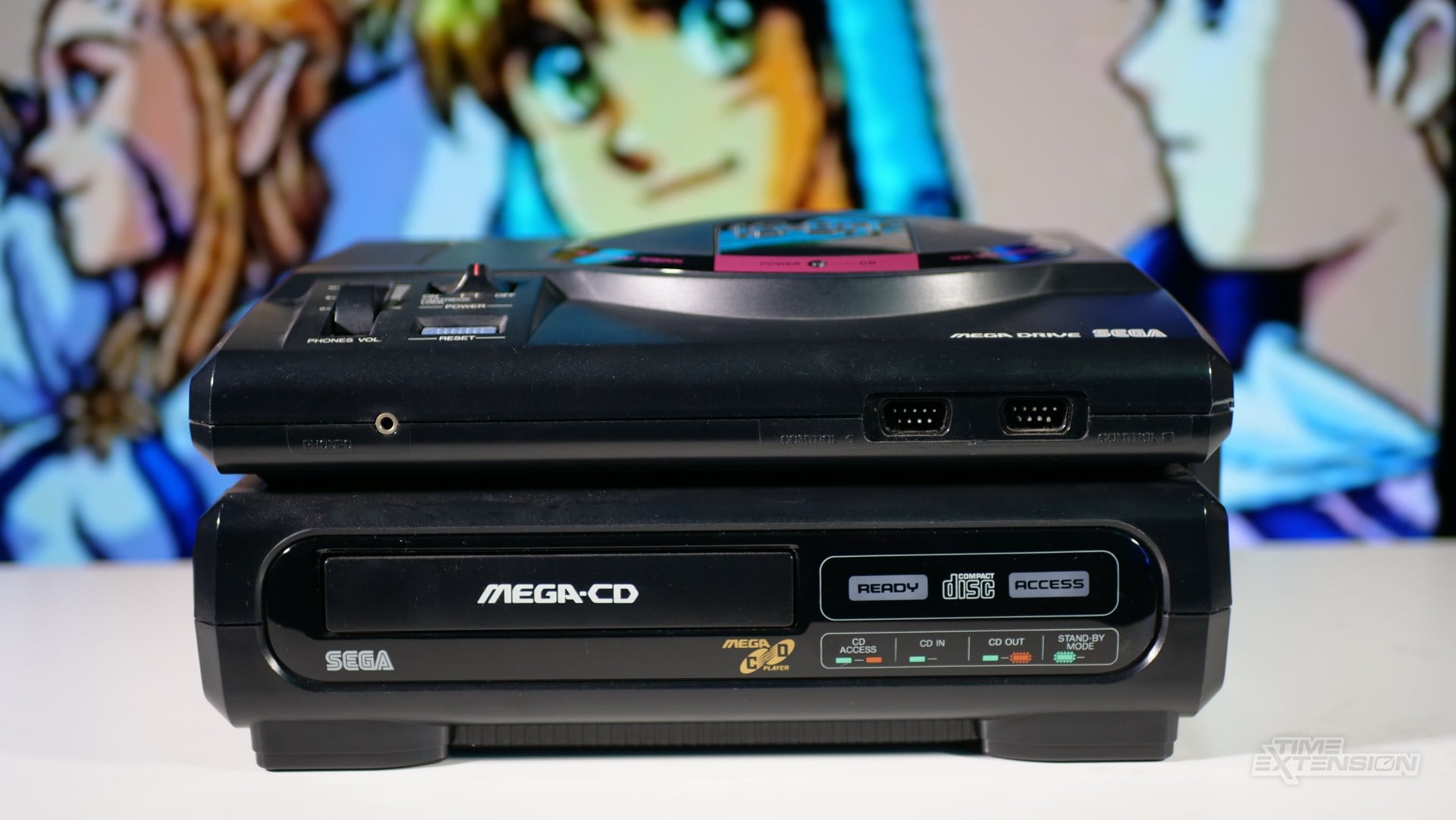
Prior to the OpenFPGA initiative, Analogue devices typically only supported official cores developed by Analogue themselves. The shift to an open platform has unleashed a wave of innovation, with developers porting or creating cores for numerous consoles and arcade systems, ranging from the NES and SNES to various arcade classics. The introduction of a robust Sega CD core significantly expands the Analogue Pocket’s library, adding a console known for its unique, if sometimes divisive, collection of games and multimedia experiences. This move further solidifies the Analogue Pocket’s position as a premier retro gaming handheld, offering hardware-level accuracy in a portable form factor.
A Look Back: The Sega CD’s Tumultuous History
The Sega CD holds a peculiar place in video game history, often remembered as both a technological marvel and a commercial misstep. Launched during the intense 16-bit console wars between Sega’s Genesis (Mega Drive) and Nintendo’s Super Nintendo Entertainment System (SNES), it represented Sega’s ambitious, albeit ultimately flawed, strategy to gain a technological edge. The add-on was designed to bring the next generation of gaming experiences to the existing Genesis install base, primarily through the capabilities of Compact Discs.
At its core, the Sega CD was an attempt to future-proof the Genesis. CDs offered vastly superior storage capacity compared to ROM cartridges (up to 650MB vs. typically 4-16MB for cartridges), enabling larger games, CD-quality audio tracks, and the nascent technology of Full Motion Video cutscenes. The addition of a faster CPU and a dedicated graphics chip also provided a boost in processing power, allowing for enhanced sprite scaling, rotation, and other visual effects that pushed beyond the Genesis’s native capabilities. Games like Sonic CD utilized these enhancements for impressive scaling effects and a groundbreaking soundtrack, while Lunar: The Silver Star showcased the potential for expansive RPGs with voice acting and anime cutscenes. Titles such as Snatcher demonstrated the platform’s capacity for deep, narrative-driven experiences, and Night Trap became infamous for its use of live-action FMV, inadvertently sparking congressional hearings on video game violence.
Despite these technological advancements and a handful of critically acclaimed titles, the Sega CD struggled commercially. With approximately 2.24 million units sold worldwide before its discontinuation in 1996, it fell far short of Sega’s expectations. Several factors contributed to its lukewarm reception:
- High Price Point: The Sega CD launched at a prohibitive price, often costing more than the Genesis console itself, making it an expensive upgrade for many consumers.
- Confusing Marketing: Sega’s strategy of releasing multiple add-ons (Sega CD, 32X) in quick succession led to market fragmentation and consumer confusion about which hardware to invest in.
- Lack of "Killer Apps": While some games were excellent, many early Sega CD titles were criticized for being glorified Genesis ports with CD-quality music, or for relying too heavily on low-quality, grainy FMV, failing to fully leverage the add-on’s unique capabilities.
- Long Load Times: The CD-ROM technology, while offering greater storage, came with the drawback of significantly longer load times compared to cartridge-based games, which often disrupted gameplay flow.
- Imminent Next-Generation Consoles: The Sega CD’s lifespan coincided with the impending arrival of true next-generation consoles like the Sony PlayStation and Sega Saturn, which offered vastly superior 3D graphics and processing power, making the Sega CD’s enhancements feel incremental and quickly outdated.
The MiSTer FPGA Precedent and the "Impossible" Feat
For years, the gold standard for FPGA-based retro gaming has been the MiSTer FPGA project. The MiSTer platform, an open-source initiative, has successfully developed highly accurate cores for a vast array of classic systems, including the Sega CD. The existence of a robust Sega CD core on MiSTer proved the feasibility of replicating the system’s complex hardware via FPGA.
However, many in the FPGA development community believed that porting the Sega CD core, or developing a new one, for the Analogue Pocket would be significantly more challenging, if not impossible. This perception stemmed from several factors:
- Resource Constraints: The Analogue Pocket’s FPGA chip, while powerful for a portable device, was believed to have fewer available logic elements and memory compared to the larger FPGAs typically used in MiSTer setups. This meant developers would need to be incredibly efficient in their hardware description language (HDL) coding to fit the entire Sega CD architecture.
- Portability Specifics: Adapting a core designed for a desktop-oriented FPGA platform to a handheld device involves unique considerations, such as power consumption, thermal management, and integration with the Pocket’s specific display and input mechanisms.
- Proprietary Nature (Historically): Before the OpenFPGA initiative fully matured, there was less clarity on how much access third-party developers would have to the Pocket’s underlying hardware and firmware, leading to skepticism about complex core development.
Obrien654j’s success in overcoming these perceived limitations underscores a recurring theme in FPGA development: what is deemed "impossible" often becomes possible through the dedication, skill, and sheer perseverance of talented developers. This breakthrough highlights the continuous evolution of the OpenFPGA ecosystem and the growing sophistication of the community building upon it.
Implications for Retro Gaming and Preservation
The successful implementation of a Sega CD core on the Analogue Pocket carries significant implications for the retro gaming community and the broader field of digital preservation.
Firstly, it provides a highly accurate, portable means of experiencing a unique and historically important console. While software emulators exist, FPGA-based solutions offer unparalleled fidelity, minimizing input lag and faithfully replicating hardware quirks that are often missed by software approximations. For enthusiasts who value authenticity, having the Sega CD on a premium handheld like the Pocket is a dream come true.
Secondly, this achievement further validates the OpenFPGA platform and the community-driven model of retro hardware preservation. By enabling developers like obrien654j to extend the functionality of their devices, Analogue has fostered an environment where historical systems can be accurately resurrected for future generations, ensuring their playability long after original hardware fails. This collaborative effort is vital in a world where physical media degrades and original consoles become increasingly rare and expensive.
Thirdly, it opens the door for other complex systems to potentially be ported to the Analogue Pocket. If the Sega CD, with its multi-CPU architecture and CD-ROM interface, can be successfully implemented, it suggests that other challenging platforms might also be within reach, further expanding the device’s versatility and appeal. This ongoing innovation contributes to a vibrant ecosystem where the boundaries of portable retro gaming are continually pushed.
Community Reaction and Future Prospects
The retro gaming community has reacted to obrien654j’s demonstration with significant enthusiasm and anticipation. Social media platforms, forums, and dedicated retro gaming communities are abuzz with discussions about the implications of this core, with many eagerly awaiting the "soon" release. The developer’s transparency about the remaining issues, particularly FMV stuttering, has also fostered a sense of realistic expectation, with the community understanding that these are complex problems that require careful refinement.
Looking ahead, once the core is publicly released, the focus will likely shift to further optimization and bug fixing. Community feedback will be invaluable in identifying specific game compatibility issues and performance anomalies. The open nature of OpenFPGA often means that cores continue to evolve post-release, with iterative updates improving stability, performance, and feature sets. The potential for future enhancements, such as improved FMV playback, reduced boot times, and even additional features, will keep the core relevant and engaging for years to come.
In conclusion, the successful demonstration of a Sega CD FPGA core on the Analogue Pocket is a landmark achievement. It not only expands the capabilities of a highly regarded portable console but also underscores the power of community-driven development in preserving gaming history with unparalleled accuracy. As the release date approaches, retro gaming enthusiasts worldwide eagerly anticipate the opportunity to revisit the unique and often misunderstood world of the Sega CD, now in a pristine, portable form.