Hartono Sudibyo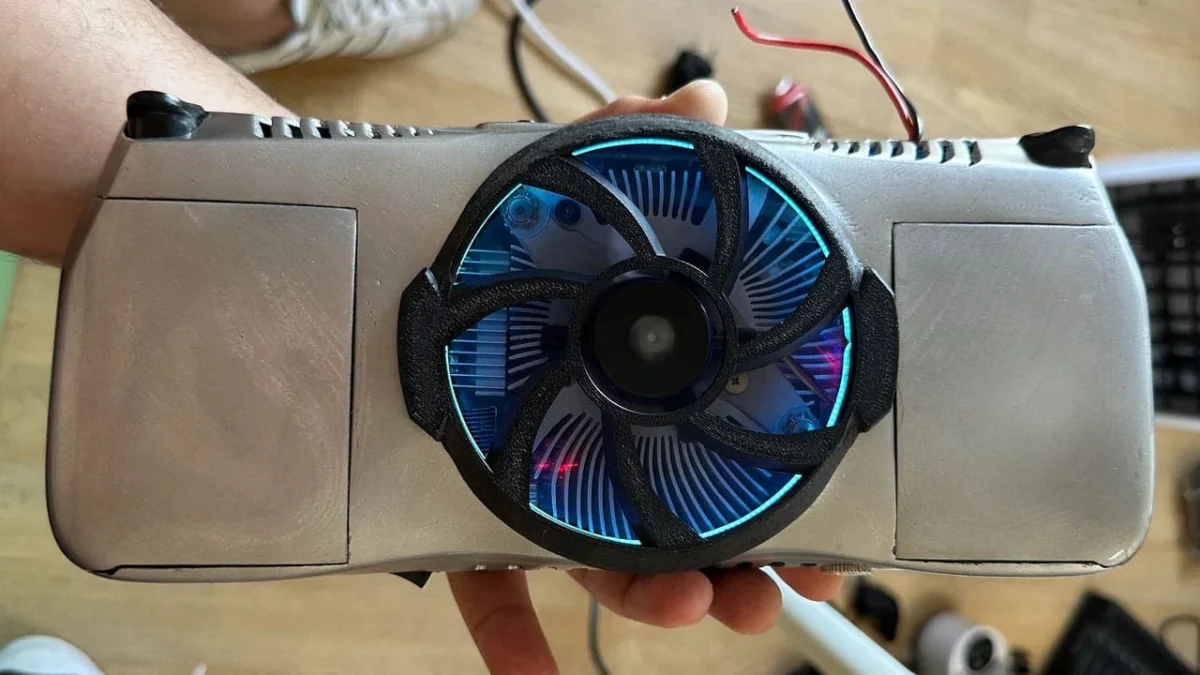
The quest to bring the power of home consoles into the palm of one’s hand has long been a dream for many gamers. While commercial ventures like the PlayStation Portal have explored this territory, the true spirit of innovation often resides in the dedicated efforts of independent creators. One such creation, the PS4 Portable, affectionately known as the "PS4P," stands as a testament to this ingenuity. This article delves into the evolution, technical intricacies, and potential implications of this remarkable DIY console, which has seen a significant upgrade in its second iteration.
Genesis of the PS4 Portable
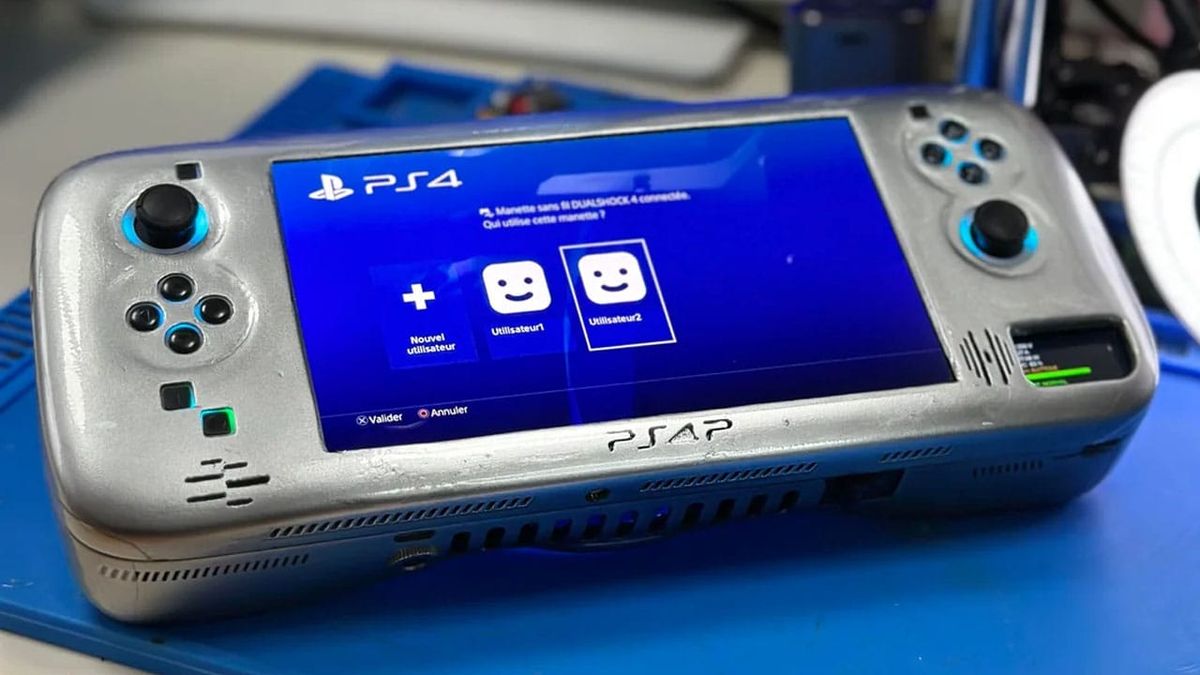
The initial concept of a handheld PlayStation 4 originated from the creator known online as "wewillmakeitnow." The first iteration, showcased on platforms like Reddit, garnered attention for its ambitious goal: to run PS4 games natively on a portable device. This was a significant departure from typical emulation projects, which usually focus on older, less demanding hardware like the Nintendo 64 or PlayStation 1. The early PS4P prototype presented a vision of what Sony itself might have considered, offering a compact form factor for a console experience.
The challenges inherent in such a project are substantial. Emulating or directly running games designed for a powerful, stationary console on a handheld device requires overcoming significant hurdles in processing power, heat management, and power consumption. Early attempts at portable gaming often resulted in devices that struggled to maintain playable frame rates, overheated to uncomfortable temperatures, or had severely limited battery life. The PS4P, even in its nascent stages, aimed to address these fundamental issues.
The Evolution: A New Shell and Enhanced Cooling
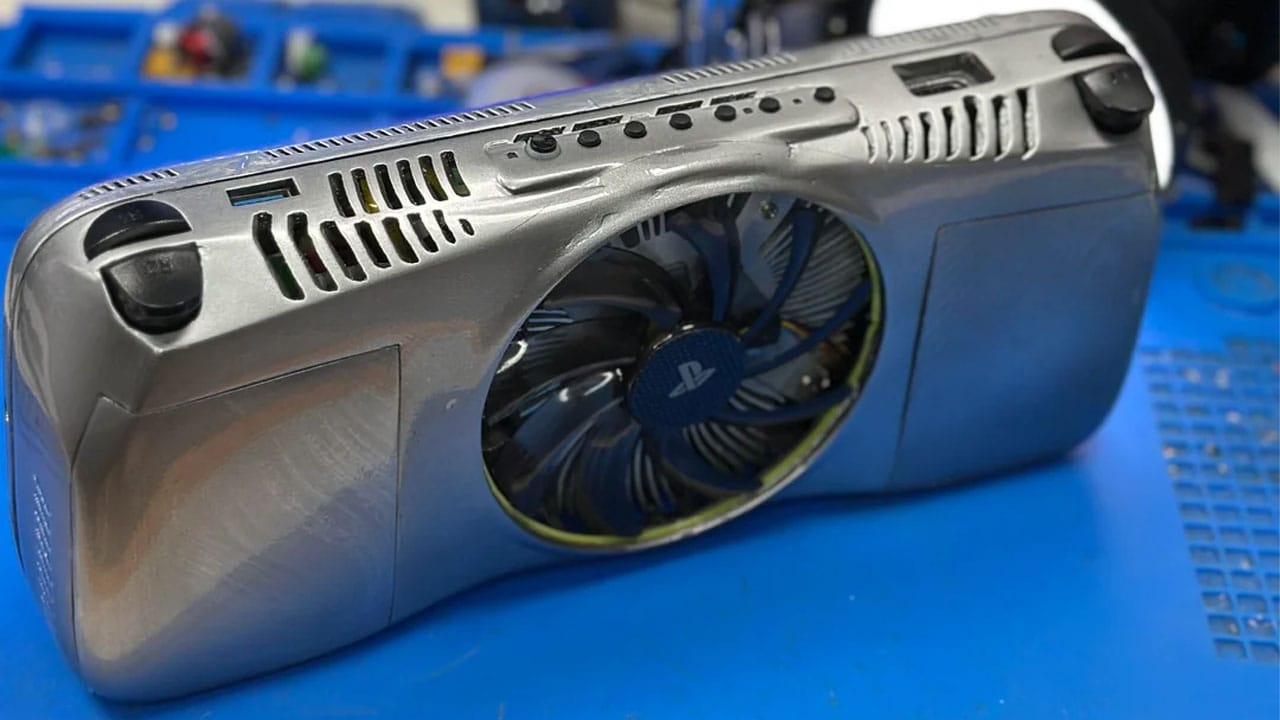
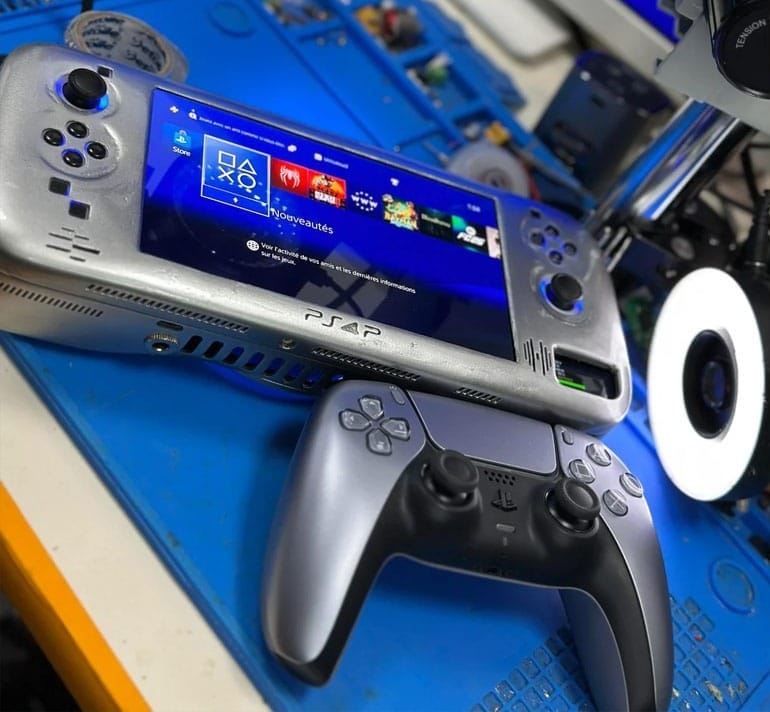
The latest iteration of the PS4 Portable, as reported and analyzed, represents a substantial leap forward from its predecessor. The most striking improvement lies in its redesigned 3D-printed shell. While the first version bore a resemblance to commercially available handheld PCs like those from AYANEO, featuring a rectangular design and a 7-inch 1080p OLED display, the new shell prioritizes ergonomics. Though perhaps less aesthetically sleek than its predecessor, this new casing is engineered for comfort during extended play sessions.
Crucially, the cooling system has undergone a significant overhaul. The original PS4P likely faced considerable thermal challenges, a common issue when cramming high-performance components into a confined space. The updated design features a substantial fan mounted externally on the rear of the unit. This fan, sourced from a GTX 750 graphics card, is a clear indicator of the creator’s commitment to tackling the heat generated by the PS4 motherboard. The fan is also enclosed in a protective casing, a thoughtful addition that prevents accidental damage when the device is set down, a practical consideration for a portable gaming device.
Technical Specifications and Performance
At the heart of the PS4 Portable remains the motherboard of a PlayStation 4 Slim. This choice is fundamental to its ability to run PS4 games natively, as it leverages the console’s original architecture. The retained 7-inch 1080p OLED display ensures a high-quality visual experience, providing vibrant colors and deep blacks, which are ideal for modern gaming graphics.
However, the portability comes with a significant trade-off: weight. The PS4P tips the scales at a considerable 1.3 kilograms. To put this into perspective, this is double the weight of Valve’s Steam Deck, a device that has set a benchmark for premium handheld gaming PCs. This substantial weight suggests that while the device is portable, it is designed for dedicated gaming sessions rather than casual, on-the-go play.

Battery life remains a critical factor for any handheld device. According to the creator, the PS4P offers approximately 3 hours of gameplay on a single charge, consistent with its earlier iteration. This figure, while functional, is on the lower end for extended gaming sessions. To mitigate this, the device supports an external 12v battery pack, allowing users to extend playtime considerably, provided they are willing to carry additional power solutions. This suggests that the device is best suited for situations where a power source is readily available or for shorter gaming bursts.
Design Philosophy and Practical Considerations
The aesthetic of the PS4 Portable, particularly with the prominent rear fan, has been likened to something from the realm of science fiction, perhaps a tool an animated character might use for aerial maneuvers. While not conventionally stylish, the design is driven by functionality. The emphasis on a robust cooling solution, including both internal and the external GTX 750 fan, underscores the immense thermal load of running PS4 hardware in such a compact form. The protective casing for the fan is a nuanced design element, demonstrating an understanding of user experience and the practicalities of portable use.
Market Context and Comparison
The PS4 Portable enters a market that has seen a resurgence in handheld gaming devices. While dedicated handheld consoles from Nintendo have dominated for years, the rise of powerful mobile chipsets and the growing popularity of PC gaming on the go have paved the way for devices like the Steam Deck, AYANEO, and GPD Win series. These devices offer varying levels of performance and target different segments of the market, from hardcore PC gamers to those seeking a more versatile entertainment hub.
Sony’s own foray into the handheld space with the PlayStation Portal, while offering a dedicated streaming experience for PS5 games, differs fundamentally from the PS4P. The Portal relies on remote play capabilities, streaming games from a PS5 console, whereas the PS4P runs games directly from its integrated PS4 hardware. This distinction highlights the different approaches to handheld gaming: one focused on extending an existing console ecosystem, the other on creating a self-contained, albeit DIY, console experience.
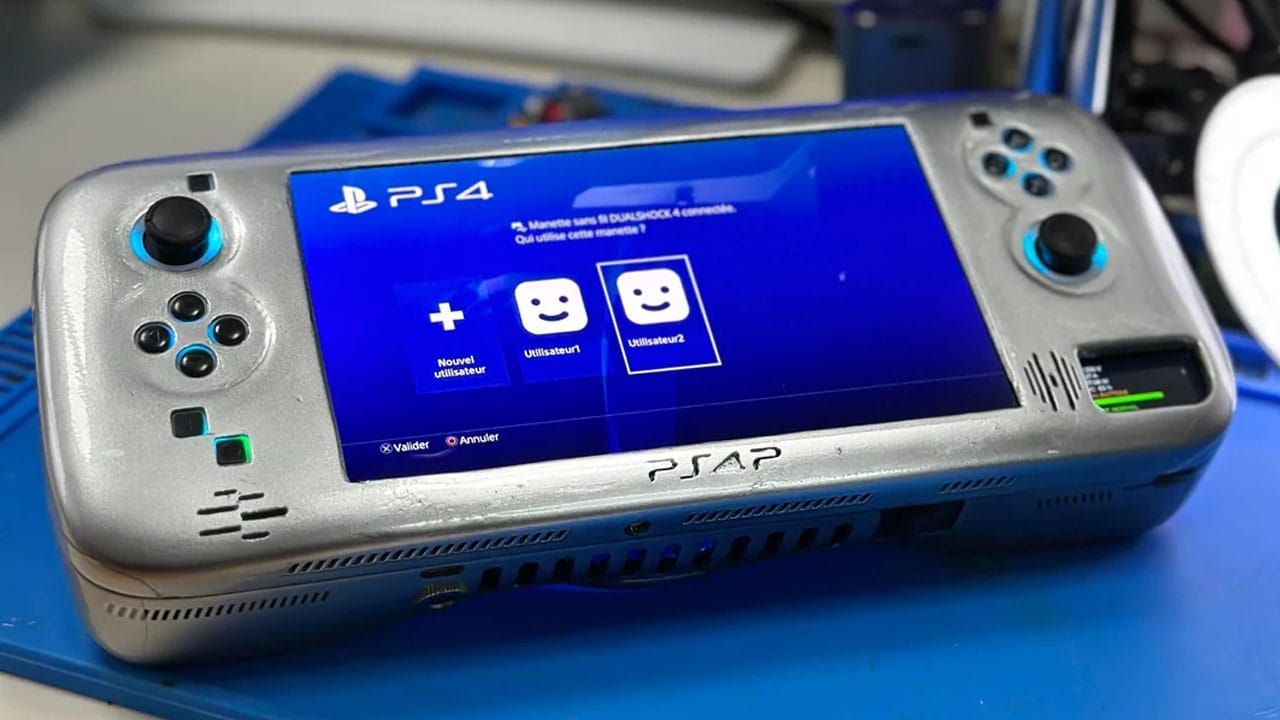
The PS4P’s 1.3kg weight places it in a different category of portability compared to devices like the Nintendo Switch or even the Steam Deck. It suggests a more deliberate approach to its use, perhaps akin to a specialized gaming machine rather than an everyday carry device. The 3-hour battery life further reinforces this, aligning it more with traditional handhelds of a bygone era that often required frequent charging or external power sources.
Future Prospects and Availability
As a homemade creation, the PS4 Portable is not currently slated for commercial release or public sale. This is a common trajectory for ambitious DIY projects, where the creator’s primary motivation is often the challenge and satisfaction of building something unique. However, the possibility of future releases of build plans or schematics remains open. Should "wewillmakeitnow" decide to share the blueprints for this project, it could empower other enthusiasts to embark on similar endeavors, potentially fostering a community of PS4 Portable builders.
Broader Implications and Analysis
The existence of the PS4 Portable raises several interesting points about the future of gaming hardware and the role of independent creators.
Hardware Innovation: Projects like the PS4P demonstrate that significant innovation can still occur outside of major corporations. By repurposing existing console hardware and employing creative engineering solutions, enthusiasts can push the boundaries of what’s considered possible in portable gaming.
The Demand for Dedicated Handhelds: The continued interest in projects like the PS4P, alongside the success of devices like the Steam Deck, suggests a persistent demand for powerful, dedicated handheld gaming experiences that go beyond smartphone gaming.
The Power of the Modding Community: This creation is a prime example of the vibrant and resourceful nature of the modding and DIY community. These individuals often tackle complex technical challenges and produce remarkable results that can inspire and inform the broader tech landscape.
Ethical and Legal Considerations: While this particular project is for personal use, the concept of porting console hardware into custom enclosures can sometimes tread into grey areas regarding intellectual property and hardware modifications. However, in this instance, the creator is utilizing a PS4 Slim motherboard, which is a legal component, and the project appears to be for personal enjoyment and demonstration.
The "What If" Scenario: The PS4 Portable serves as a tangible "what if" for Sony. It presents a vision of a portable PlayStation experience that is distinct from their current offerings. While the commercial viability of such a heavy and power-hungry device for the mass market might be questionable, it highlights the diverse desires and expectations of gamers.
In conclusion, the PS4 Portable, particularly its second iteration, is more than just a novelty. It is a sophisticated and ambitious project that showcases remarkable engineering skill and a deep passion for gaming. While it may not be a product destined for store shelves, it stands as an inspiring testament to the power of individual creativity in the ever-evolving world of video game hardware. The ongoing development and potential sharing of its design could inspire a new wave of ambitious DIY projects in the portable gaming space.