Cecilia Chamidah Nur
Analogue, the acclaimed developer of premium, FPGA-based retro gaming consoles, has officially released 3DOS v1.5.0 for its highly anticipated Nintendo 64 system, the Analogue 3D. This latest firmware update introduces a groundbreaking feature: "Internal Graphical Upscaling," poised to significantly elevate the visual fidelity of classic N64 titles on modern displays while rigorously maintaining the authenticity of the original hardware rendering process. The update, detailed on Analogue’s official support page, represents a pivotal advancement in the company’s ongoing mission to provide the most accurate and visually enhanced retro gaming experiences.
The Promise of Enhanced Fidelity: Deconstructing Internal Graphical Upscaling
The headline feature of 3DOS v1.5.0, "Internal Graphical Upscaling," is described by Analogue as a mechanism that "enhances detail and clarity while remaining faithful to the original hardware rendering process." This sophisticated implementation is not merely a post-processing filter applied to the output signal; rather, it represents a fundamental enhancement to the core processing within the FPGA itself. The update incorporates "extensive enhancements to the RDP and VI for internal upscaling," directly addressing the intricate workings of the Nintendo 64’s Reality Display Processor (RDP) and Video Interface (VI).
Unlike standard external upscalers or modern displays that merely stretch or interpolate a low-resolution image, Analogue’s internal upscaling operates at a hardware level, before the image is even fully rendered and outputted. Specifically, the resolution is "doubled horizontally for twice as many pixels onscreen without affecting 2D graphics." This means that a game originally rendered at, for example, 320×240 pixels might internally be processed at 640×240 pixels before further scaling to a modern display’s native resolution (e.g., 1080p or 4K). The distinction of "without affecting 2D graphics" is crucial, as many N64 games feature a mix of 3D environments and 2D elements like HUDs, menus, and sprites. Maintaining the integrity of 2D elements prevents common visual artifacts associated with aggressive upscaling, such as jagged lines or inconsistent pixel density.
A key assurance from Analogue is that this process introduces "no impact to timing authenticity or performance." This commitment to preserving the original timing and performance is a cornerstone of Analogue’s design philosophy, distinguishing their FPGA-based systems from software emulators that can sometimes introduce input lag or frame timing inaccuracies. Furthermore, Analogue confirms that the internal upscaling is "synergistic with all Analogue Original Display Modes." This ensures that users can continue to utilize the console’s various display options, which meticulously replicate the characteristics of different retro displays (e.g., CRT scanlines, pixel grid effects), alongside the newly enhanced internal resolution. This integration provides unprecedented flexibility, allowing users to tailor their N64 visual experience from a perfectly accurate CRT simulation to a sharper, modernized presentation, all while maintaining the underlying hardware authenticity.
The Analogue 3D: A Commitment to Preservation and Modernization
The Analogue 3D, first announced to much fanfare and subject to significant anticipation, is Analogue’s latest entry in a line of FPGA-based consoles designed to faithfully reproduce classic gaming hardware. Following the success of the Analogue Nt (NES), Super Nt (SNES), Mega Sg (Sega Genesis/Mega Drive), and Pocket (multi-system handheld), the Analogue 3D tackles the complex architecture of the Nintendo 64. The company’s philosophy centers on hardware-level recreation using Field-Programmable Gate Arrays (FPGAs), which are semiconductor devices configured by the customer or designer after manufacturing. This allows Analogue to essentially "rebuild" the original console’s integrated circuits and logic gates at a transistor level, resulting in unparalleled accuracy compared to software emulation.
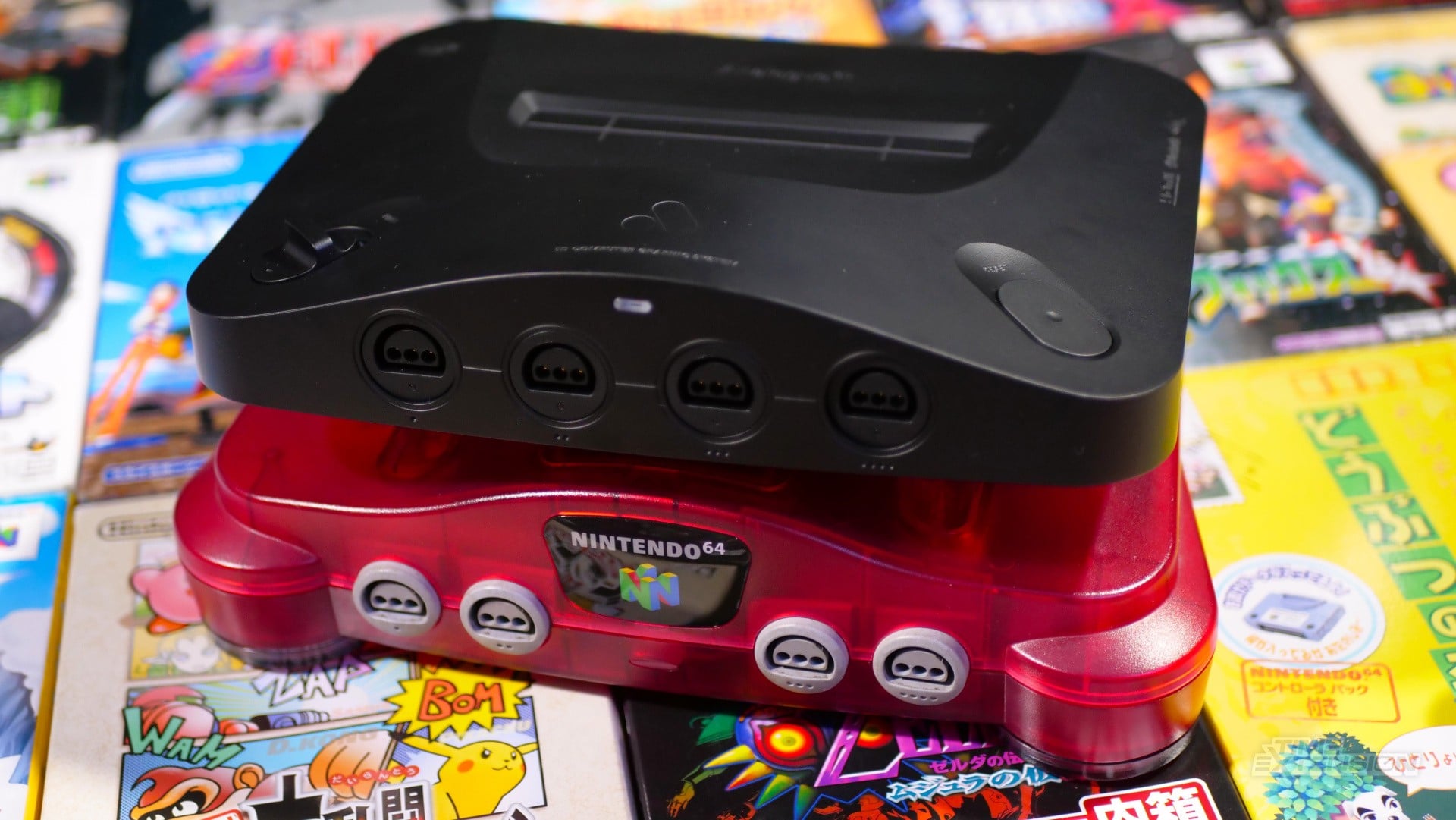
The N64, released in 1996, presented a unique set of challenges for preservation and modernization. Its proprietary cartridge format, distinctive controller, and, critically, its innovative but often misunderstood graphical pipeline, made it a prime candidate for Analogue’s meticulous approach. The console was lauded for its early adoption of 3D graphics, introducing features like perspective-correct texture mapping, mip-mapping, and hardware anti-aliasing. However, these advancements often came with a trade-off: a characteristically soft, sometimes blurry, visual output, particularly when viewed on crisp, high-definition modern displays. This visual signature, born from the N64’s rendering techniques and the standard definition CRT televisions of its era, often proves jarring for contemporary players accustomed to sharp pixel definition.
The Analogue 3D aims to bridge this gap, offering a way to play original N64 cartridges on modern displays without the compromises often associated with emulation or composite video output from original hardware. Its design integrates advanced video output capabilities, including HDMI, and supports a range of display modes tailored to reproduce authentic retro aesthetics or provide a cleaner, modernized look. The introduction of internal graphical upscaling directly addresses one of the most persistent desires of N64 enthusiasts: to experience their beloved games with enhanced clarity, mitigating the "blurriness" often cited as a drawback when moving from CRTs to modern flat panels, all without sacrificing the fundamental N64 visual style.
Navigating the N64’s Visual Legacy: The RDP and VI’s Role
To fully appreciate the significance of Analogue’s "Internal Graphical Upscaling," it’s essential to understand the Nintendo 64’s unique graphics hardware. The console’s visual pipeline was primarily managed by two key components: the Reality Display Processor (RDP) and the Video Interface (VI). The RDP was responsible for all polygon rendering, texture application, and advanced effects like anti-aliasing, mip-mapping, and texture filtering. The N64’s innovative use of hardware-level texture filtering, which smoothed out pixelated textures, was a double-edged sword. While it made for more visually cohesive 3D worlds for its time, it contributed to the "soft" or "blurry" look when viewed without the natural blurring inherent to CRT displays.
The Video Interface (VI) then took the processed image from the RDP and prepared it for output to the display. It handled various output resolutions, typically ranging from 240p to 480i, with many popular titles running at resolutions like 320×240 or 640×480. The VI also managed frame buffering and other display-related tasks.
Analogue’s "extensive enhancements to the RDP and VI" signify a deep, hardware-level intervention. Instead of merely scaling the final output signal, the FPGA core is now designed to process the graphical data at a higher internal resolution before it passes through the VI for final display output. This approach is superior because it leverages the FPGA’s ability to precisely emulate and augment the N64’s internal workings. By doubling the horizontal resolution at this stage, the system can render more pixel information for the 3D geometry and textures, leading to a perceptibly sharper image while retaining the N64’s characteristic texture filtering and anti-aliasing, which are integral to its aesthetic. This avoids the pitfalls of simply disabling filtering, which can result in a blocky, unfaithful appearance. The "synergistic" nature with existing display modes further implies that Analogue’s sophisticated CRT filters and scaling options can now be applied to this internally upscaled image, offering a ‘best of both worlds’ scenario for users seeking both clarity and authentic retro presentation.
Beyond Visuals: Quality-of-Life Improvements in 3DOS v1.5.0
While internal graphical upscaling is undoubtedly the flagship feature of 3DOS v1.5.0, Analogue has also included several significant quality-of-life improvements that enhance the user experience. Among these is the instantaneous loading of ‘Memory’ states. In the context of Analogue’s systems, ‘Memory’ refers to savestates – a feature commonly found in software emulators that allows players to save their game progress at any point, independent of in-game save mechanisms. The ability to quick load these states instantly drastically reduces friction and downtime, making gameplay more fluid and convenient.
Furthermore, the update introduces the option to automatically start up the console from a recent ‘Memory’ state as soon as it’s powered on. This feature is particularly useful for players who frequently jump into specific games or sections, or for those who prefer to pick up exactly where they left off without navigating menus or loading in-game saves. These additions, while seemingly minor compared to graphical enhancements, are highly valued by the retro gaming community as they combine the authenticity of hardware with the convenience often associated with modern gaming platforms or emulators. They underscore Analogue’s commitment to not only replicating the past but also improving upon its accessibility and user-friendliness for contemporary audiences. The full patch notes, available on Analogue’s support page, also detail other general system, core, OS, and controller-related refinements, though specific details beyond the main features were not immediately available in the initial announcement. These typically include bug fixes, performance optimizations, and minor interface improvements that contribute to overall system stability and responsiveness.
The Road to 3DOS v1.5.0: A Timeline of Analogue 3D Development
The Analogue 3D’s journey to this significant firmware update has been marked by anticipation and careful development. Announced in late 2022, the console quickly garnered immense interest from the retro gaming community, with pre-orders selling out rapidly despite its premium price point. Analogue has a reputation for meticulous engineering and often lengthy development cycles, ensuring that their products meet stringent standards for accuracy and quality.
Following its initial release and shipment to customers, the Analogue 3D, like all Analogue consoles, has received iterative firmware updates. These updates typically address initial bugs, optimize performance, and introduce new features based on user feedback and ongoing development. The implementation of internal graphical upscaling is not a trivial task; it requires deep understanding and modification of the N64’s core logic within the FPGA. The time between the console’s release and this particular update suggests a dedicated effort to refine and integrate this complex functionality without compromising the system’s foundational accuracy. The community has long expressed a desire for improved visual clarity for N64 games on modern displays, and this update directly responds to that demand, representing a major milestone in the Analogue 3D’s evolution.
Reactions and Implications: Shaping the Future of N64 Play
The introduction of internal graphical upscaling in Analogue 3D’s 3DOS v1.5.0 update is expected to elicit a largely enthusiastic response from the retro gaming community, particularly N64 purists and hardware enthusiasts. For years, players have sought ways to mitigate the N64’s "blurry" output on modern displays, often resorting to external upscalers, modifications to original hardware, or relying on software emulation with various graphical enhancements. Analogue’s solution offers a compelling alternative, providing hardware-level clarity without the compromises often associated with other methods.
Broader Impact and Implications:
- Setting a New Benchmark: This update establishes a new standard for N64 fidelity on modern displays. By performing upscaling internally within the FPGA, Analogue demonstrates a level of integration and authenticity that surpasses generic external scalers and many software emulators. It validates the "premium" aspect of Analogue’s offerings.
- Solidifying Market Position: The Analogue 3D, with this enhanced visual capability, further solidifies Analogue’s position as a leader in the high-end retro gaming hardware market. It caters to a discerning audience willing to invest in the most accurate and feature-rich way to experience classic games.
- Challenges to Emulation: While software emulation continues to advance, Analogue’s hardware-based approach, especially with features like internal upscaling that maintain timing authenticity, presents a strong counter-argument regarding ultimate accuracy and lag-free performance. It highlights the unique advantages of FPGA technology for true hardware preservation.
- Contribution to Preservation: By making N64 games more visually appealing and accessible on contemporary televisions, Analogue contributes significantly to the ongoing effort of video game preservation. Enhanced clarity can help new generations appreciate the artistry and innovation of N64 titles without the barrier of outdated visual presentation.
- Future Development Potential: This breakthrough in internal graphical processing for the N64 core could pave the way for similar enhancements in other Analogue consoles or future FPGA projects. The underlying techniques developed for the RDP and VI could be adapted to other complex retro systems.
- User Engagement: The combination of enhanced visuals and quality-of-life features like instant savestates is likely to increase user engagement with the Analogue 3D, encouraging players to revisit their N64 libraries with renewed enthusiasm.
In conclusion, the 3DOS v1.5.0 update for the Analogue 3D, with its marquee "Internal Graphical Upscaling" feature, represents a significant milestone in the world of retro gaming hardware. By meticulously enhancing the N64’s visual output at a fundamental hardware level, Analogue has once again demonstrated its unwavering commitment to authentic preservation combined with thoughtful modernization. This update not only promises a superior visual experience for N64 enthusiasts but also reinforces Analogue’s innovative approach to bringing the glories of gaming’s past into the high-definition future, without sacrificing the integrity that defines these iconic systems.